Question
Differentiate between disinfectants and antiseptics.

Answer

Antiseptics are applied to the living tissues whereas disinfectants are applied to inanimate objects/ non-living objects.

Need a full question paper?

Generate a complete, print-ready paper with questions like this in minutes — across 16+ boards, with answer keys.
Start Generating Free

Similar questions

Why is it important to understand the mechanism of drug action and metabolic pathways in the biological systems?
Write down cell reaction of $Ni-Cd$ cell
Which of the following is most effective electrolyte in the coagulation of AgI/Ag+ sol?
$\mathrm{K}_2 \mathrm{SO}_4, \mathrm{MgCl}_2, \mathrm{~K}_4\left[\mathrm{Fe}(\mathrm{CN})_6\right]$
The deficiency of which vitamin causes the disease 'pernicious anaemia'?
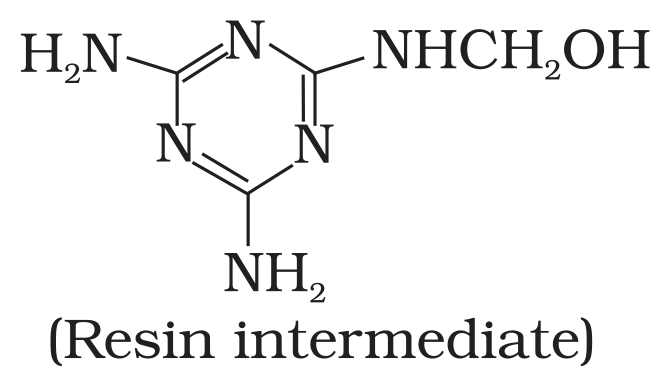
How is the following resin intermediate prepared and which polymer is formed by this monomer unit?
Using IUPAC norms write the formula for the following:
Diamminedichloridoplatinum (II).
Read the given passage and answer the questions number 1 to 5 that follow:
The substitution reaction of alkyl halide mainly occurs by $S_N1$ or $S_N2$ mechanism. Whatever mechanism alkyl halides follow for the substitution reaction to occur, the polarity of the carbon halogen bond is responsible for these substitution reactions. The rate of $S_N1$ reactions are governed by the stability of carbocation whereas for $S_N2$ reactions steric factor is the deciding factor. If the starting material is a chiral compound, we may end up with an inverted product or racemic mixture depending upon the type of mechanism followed by alkyl halide. Cleavage of ethers with HI is also governed by steric factor and stability of carbocation, which indicates that in organic chemistry, these two major factors help us in deciding the kind of product formed.
Predict the stereochemistry of the product formed if an optically active alkyl halide undergoes substitution reaction by $S_N2$ mechanism.
Will equimolar solutions of sugar and KCl becomes isomotic or not? Why?
Write the name of haloalkane from which both methane and ethane can be prepared in the single step. Give equation.
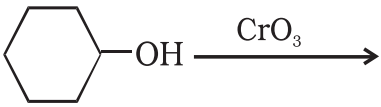
Complete each synthesis by giving missing starting material, reagent or product.