Question
Differentiate between increase in demand and expansion in demand (increase in quantity demanded).
| S. No. | Basis | Increase in Demand | Expansion in Demand | ||||||||||||
| 1. | Meaning | An increase in demand means that consumers now demand more at a given price level. | It states that rise in quantity demanded due to fall in price of the commodity. | ||||||||||||
| 2. | Cause |
|
| ||||||||||||
| 3. | Basis should be Schedule and Price (*) demand (Units) |
|
| ||||||||||||
| 4. | Diagram | 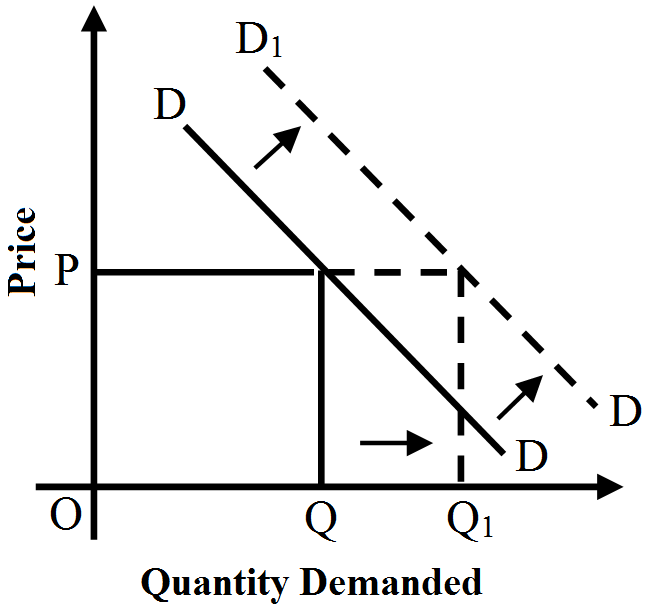 | 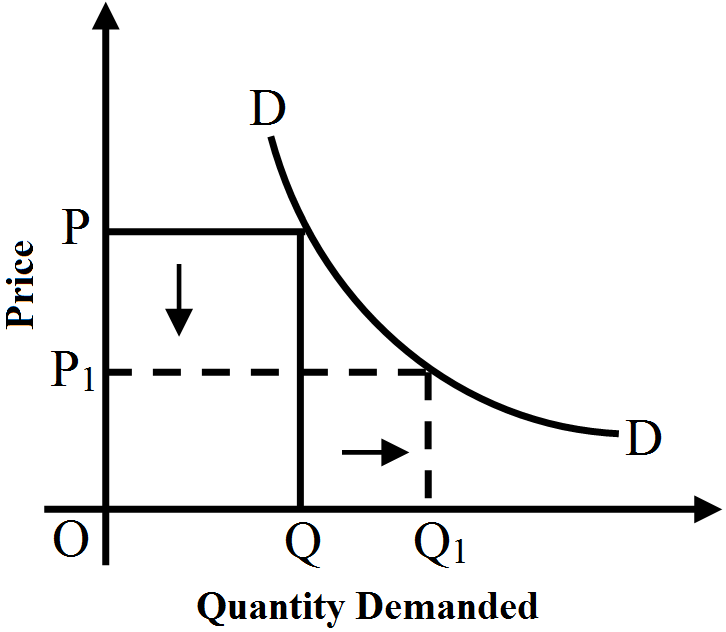 |
Generate a complete, print-ready paper with questions like this in minutes — across 16+ boards, with answer keys.
| (Rs. crores) | ||
| 1 | Current transfers from government. | 25 |
| 2 | Compensation of employees. | 600 |
| 3 | Net current transfers from the rest of the world. | 20 |
| 4 | Rent. | 100 |
| 5 | Consumption of fixed capital. | 50 |
| 6 | Interest. | 120 |
| 7 | Net indirect tax. | 110 |
| 8 | Profit. | 80 |
| 9 | Mixed income of the self-employed. | 200 |
| 10 | Net factor income from abroad. | (-)10 |
| Output (Q) (units) | Price (₹) | Marginal Revenue (₹) | Total Revenue (₹) |
| 1 | - | 10 | 10 |
| 2 | - | 4 | - |
| 3 | - | - | 15 |
| 4 | - | -3 | - |
| Units Sold | 1 | 2 | 3 | 4 | 5 | 6 | 7 |
| TR (₹) | 20 | 36 | 48 | 56 | 60 | 60 | 56 |