Question
Differentiate between obligate categories and intermediate categories. Demonstrate with the help of a flowchart.

Answer

The taxonomic categories from species to kingdom are broad categories or obligate categories. However, taxonomists have also developed sub-categories in this hierarchy to facilitate more sound and scientific placement of various taxa. These sub-categories are sub-species (or varieties), sub-genera, sub-families, sub-orders, sub-classes and sub-phyla. These sub-categories are referred to as intermediate categories.
Obligate categories Intermediate categories
Kingdom Subkingdom
Phylum or Division Subphylum or subdivision and superclass
Class lnfra class and subclass
Orde Superorder and suborder
Family Subfamily and tribe
Genus Subgenus
Species Subspecies, variety or race

Need a full question paper?

Generate a complete, print-ready paper with questions like this in minutes — across 16+ boards, with answer keys.
Start Generating Free

Similar questions

Explain the following terms:
  1. Actinomorphic.
  2. Gamosepalous.
  3. Syncarpous.
For completion of respiration process, write the given steps in sequential manner.
  1. Diffusion of gases (O2 and CO2) across alveolar membrane.
  2. Transport of gases by blood.
  3. Utilisation of O2 by the cells for catabolic reactions and resultant release of CO2 .
  4. Pulmonary ventilation by which atmos-pheric air is drawn in and CO2 rich alveolar air is released out.
  5. Diffusion of O2 and CO2 between blood and tissues.
  1. Name the cranial meninges that cover the brain.
  2. Give one function of the following:
  1. Cerebrum.
  2. Hypothalamus.
  3. Medulla.
  4. Cerebellum.
Describe the influence of temperature on enzyme action.
Write short notes on the function of the following hormone :
Thyroid hormone
Explain the process of gaseous exchange between alveoli and blood, during respiration.
Differentiate between
Glycolysis and Krebs’ cycle
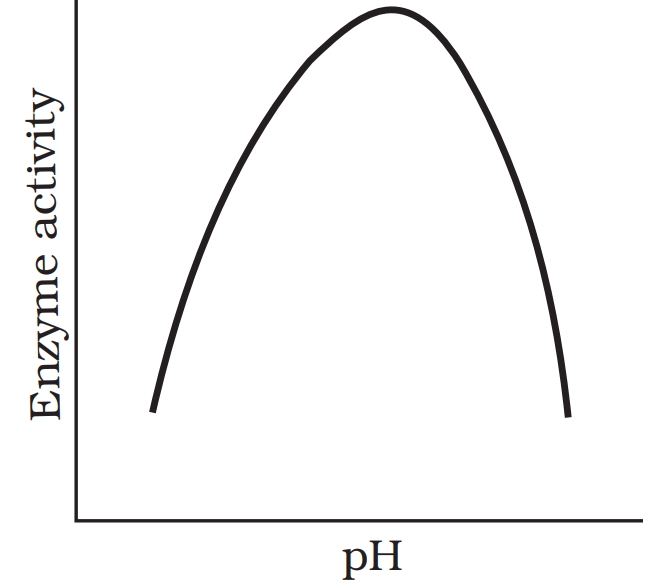
Enzymes are proteins. Proteins are long chains of aminoacids linked to each other by peptide bonds. Aminoacids have many functional groups in their structure. These functional groups are, many of them at least, ionisable. As they are weak acids and bases in chemical nature, this ionization is influenced by pH of the solution. For many enzymes, activity is influenced by surrounding pH. This is depicted in the curve below, explain briefly.

Write the differences between:
Systole and Diastole.
Light plays an important role in the life of all organisms. Name any three physiological processes in plants which are affected by light.