Question
Differentiate between:
  1. Predator and parasite.
  2. S-Shaped and J-Shaped growth curve.

Answer

  1. Predator and parasite.
S. No.
Predator
Parasite
1.
It feeds on another organism called prey.
Itn feeds on another organism called host.
2.
Predator is larger and stronger than the prey.
Parasite is smaller and weaker than tbhe host.
3.
It kills the prey.
Parasite does not immediately kill the host though the latter may die of prolonged exploitation.
4.
Predator feeds on killed prey.
It feeds on living host.
5.
It feeds over the prey from outside.
Parasite may feed over the host from outside or inside.
  1. S-Shaped and J-Shaped growth curve.
S. No.
S-Shaped
J-Shaped
1.
 It comprises the lag phase, exponential phase and stationary phase.
 It comprises only two phases - lag phase and exponential phase.
2.
Population becomes stable with zero growth rate and the curve levels.
Population faces mass mortality, and the curve stops
3.
 It is observed by most species including humans.
It is observed in few organisms such as reindeer and annual plants.

Need a full question paper?

Generate a complete, print-ready paper with questions like this in minutes — across 16+ boards, with answer keys.
Start Generating Free

Similar questions

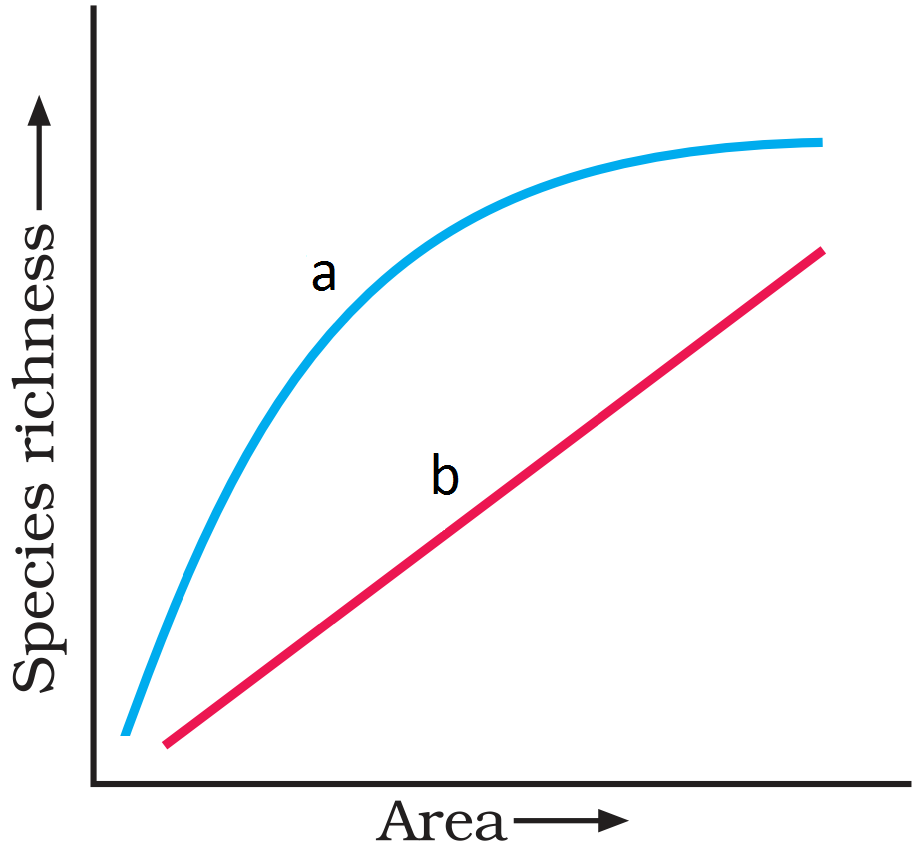
The graph shows species-area relationship:

  1. If b denotes the relationship on log scale-
  1. Describe a and b.
  2. How is slope represented? Give the normal range of slope.
  3. What kind of slope will be observed for frugivorous birds and mammals in a tropical forest?
  1. Species diversity of plants (22%) is much less than that of animals (72%). Analyze the reasons for greater diversity of animals as compared to plants.


Describe the functions of the following:
Seminiferous tubules.
  1. Compare, giving reasons, the J-shaped and S-shaped models of population growth of a species.
  2. Explain "fitness of a species" as mentioned by Darwin.

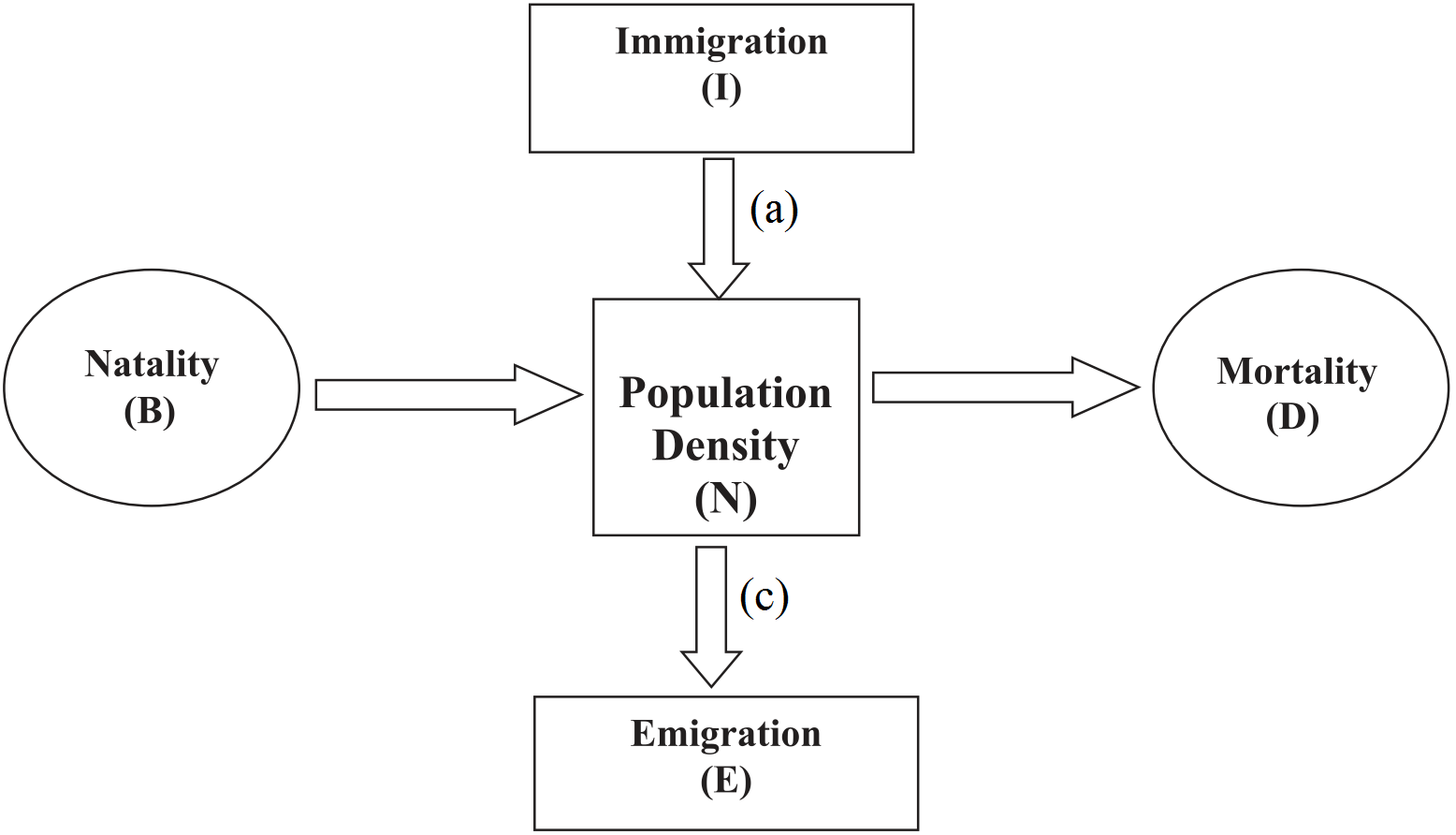
  1. Which of the above represents the increase or decrease of population?
  2. If N is the population density at time t, then what would be its density at time (t + 1)? Give the formula.
  3. In a barn there were 30 rats. 5 more rats enter the barn and 6 out of the total rats were eaten by the cats. If 8 rats were born during the time period under consideration and 7 rats left the barn, find out the resultant population at time (t + 1).
  4. If a new habitat is just being colonized, out of the four factors affecting the population growth, which factor contributes the most?
Describe the functions of the following:
Vagina.
  1. List any four abiotie components that lead to variations in the physical and chemical conditions of different habitats.
  2. Explain the impact of these components distribution of organisms in different habitats.
Explain the two complexities that are observed in the process of transcription in eukaryotes and not in prokaryotes.
  1. A garden pea plant bearing terminal, violet flowers, when crossed with another pea plant bearing axial, violet flowers produced axial, violet flowers and axial, white flowers in the ratio of 3 : 1. Work out the cross showing the genotypes of the parent pea plants and their progeny.
  2. Name and state the law that can be derived from this cross and not from a monohybrid cross.
Enumerate the events in the ovary of a human female during:

Follicular phase.

Describe the experiment conducted by Hershey and Chase on the basis of the result obtained, write the condusion also.