Question
Differentiate between rate of reaction and reaction rate constant.

Answer

S. No Rate of Reaction Reaction Rate Constant
(i) Rate of reaction is the change in concentration of a reactant or product in a unit interval of time. It is the rate of reaction when the molar concentration of each of the reactants is unity.
(ii) The rate of reaction at any instant of time depends upon the molar concentrations of the reactants at that time. The rate constant does not depend upon the concentrations of the reactants.
(iii) Its units are always mol litre$^{–1}$ time$^{–1}.$ Its units depend upon the order of reaction.

Need a full question paper?

Generate a complete, print-ready paper with questions like this in minutes — across 16+ boards, with answer keys.
Start Generating Free

Similar questions

Draw the structures of white phosphorus and red phosphorus. Which one of these two types of phosphorus is more reactive and why?
Calculate the mole fraction of benzene in solution containing $30\%$ by mass in carbon tetrachloride.
Classify the following as amorphous or crystalline solids: Polyurethane, naphthalene, benzoic acid, teflon, potassium nitrate, cellophane, polyvinyl chloride, fibre glass, copper.
(i) How will you prepare methanol from formaldehyde without using a reducing agent?
(ii) Why is Rochelle salt used in Fehling's solution?
What is the repeating unit in the condensation polymer obtained by combining $HO_2CCH_2CH_2CO_2H$ (succinic acid) and $H_2NCH_2CH_2NH_2$ (ethylene diamine).
Propene to propan-2-ol.

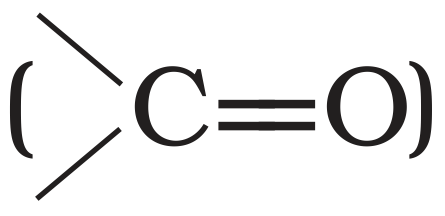
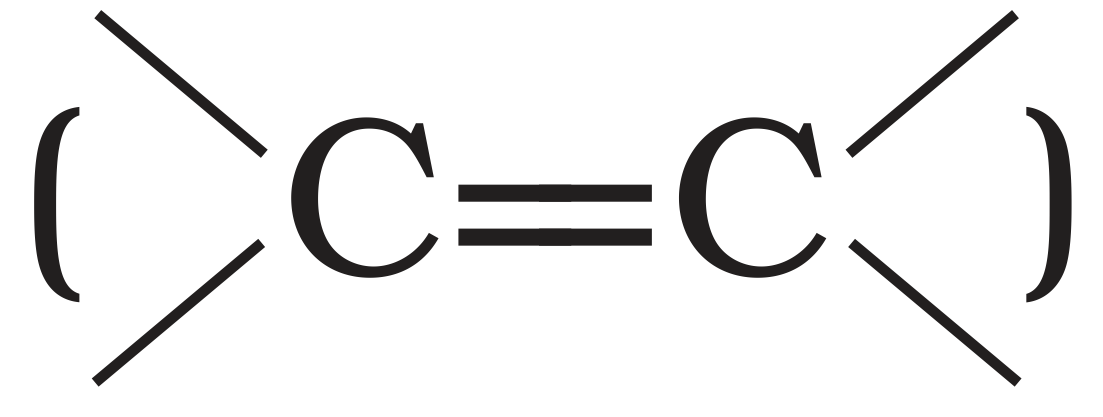
Alkenes and carbonyl compounds , both contain a π bond but alkenes show electrophilic addition reactions whereas carbonyl compounds show nucleophilic addition reactions. Explain.
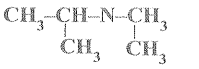
Give the major products that are formed by heating the following ethers with HI.
$ \ \ \ \ \ \ \ \ \ \ \ \ \ \ \ \ \ \ \ \ \ \ \ \ \ \ \ \ \ \ \ \ \ \ \ \ \ \ \ \ \ \ \ \ \ \text{CH}_3\\ \ \ \ \ \ \ \ \ \ \ \ \ \ \ \ \ \ \ \ \ \ \ \ \ \ \ \ \ \ \ \ \ \ \ \ \ \ \ \ \ \ \ \ \ \ \ \text{|}\\\text{CH}_3-\text{CH}_2-\text{CH}_2-\text{O}-\text{C}-\text{CH}_2-\text{CH}_3\\ \ \ \ \ \ \ \ \ \ \ \ \ \ \ \ \ \ \ \ \ \ \ \ \ \ \ \ \ \ \ \ \ \ \ \ \ \ \ \ \ \ \ \ \ \ \ \text{|}\\ \ \ \ \ \ \ \ \ \ \ \ \ \ \ \ \ \ \ \ \ \ \ \ \ \ \ \ \ \ \ \ \ \ \ \ \ \ \ \ \ \ \ \ \ \ \text{CH}_3$
Using IUPAC norms write the formulae for the following :
  1. Potassium trioxalatoaluminate(III)
  2. Dichloridobis(ethane-1,2-diamine)cobalt(III)