Question
Differentiate the following functions with respect to x:
$\sin(\log\text{x})$

Answer

Consider $\text{y}=\sin(\log\text{x})$
Differentiate it with respect to x,
$\frac{\text{dy}}{\text{dx}}=\frac{\text{d}}{\text{dx}}\sin(\log\text{x})$
$=\cos(\log\text{x})\frac{\text{d}}{\text{dx}}(\log\text{x})$
[Using chain rule]
$=\frac{1}{\text{x}}\cos(\log\text{x})$
Hence, the solution is $\frac{\text{d}}{\text{dx}}=(\sin(\log\text{x}))=\frac{1}{\text{x}}\cos(\log\text{x})$

Need a full question paper?

Generate a complete, print-ready paper with questions like this in minutes — across 16+ boards, with answer keys.
Start Generating Free

Similar questions

Prove that the function $f : N \rightarrow N$, defined by $f(x) = x^2 + x + 1$, is one-one but not onto.
Evaluate the definite integral in Exercise:$\int_{1}^{2}(4\text{x}^{3}-5\text{x}^{2}+6\text{x}+9)\text{dx}$
An integer m is said to be related to another integer n if m is a multiple of n.Check if the relation is symmetric, reflexive and transitive.
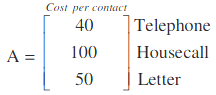
In a legislative assembly election, a political group hired a public relations firm to promote its candidate in three ways: telephone, house calls, and letters. The cost per contact (in paise) is given in matrix A as

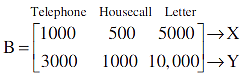
The number of contacts of each type made in two cities X and Y is given by

Find the total amount spent by the group in the two cities X and Y.
Find the shortest distance between the following given lines $l_1$ and $l_2$
$\vec{r}=\hat{i}+2 \hat{j}-4 \hat{k}+\lambda(2 \hat{i}+3 \hat{j}+6 \hat{k})$
$\text { and } \vec{r}=3 \hat{i}+3 \hat{j}-5 \hat{k}+\lambda(2 \hat{i}+3 \hat{j}+6 \hat{k})$
Give examples of two one-one functions $f_1$ and $f_2$ from $R$ to $R,$ such that $f_1 + f_2 : R \rightarrow R.$ defined by $(f_1 + f_2)(x) = f_1(x) + f_2(x)$ is not one-one.
An unbiased die is thrown twice. A success is getting a number greater than 4. Find the probability distribution of the number of successes.
Prove that $\left[\begin{array}{lll}\overrightarrow{\mathrm{a}}+\overrightarrow{\mathrm{b}} & \overrightarrow{\mathrm{b}}+\overrightarrow{\mathrm{c}} & \overrightarrow{\mathrm{c}}+\overrightarrow{\mathrm{a}}\end{array}\right]=2\left[\begin{array}{ll}\overrightarrow{\mathrm{a}} & \overrightarrow{\mathrm{b}} \overrightarrow{\mathrm{c}}\end{array}\right]$.
A box contains 13 bulbs, out of which 5 are defective. 3 bulbs are randomly drawn, one by one without replacement, from the box. Find the probability distribution of the number of defective bulbs.
By using the properties of definite integrals, evaluate the integral $\int\limits_0^a {\frac{{\sqrt x }}{{\sqrt x + \sqrt {a - x} }}} dx$