Question
Digital movie projectors work on the principle of

Answer

(a)

Digital movie projectors need parabolic mirrors to converge all incident rays fo a point.

Need a full question paper?

Generate a complete, print-ready paper with questions like this in minutes — across 16+ boards, with answer keys.
Start Generating Free

Similar questions

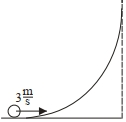
A hollow spherical ball of uniform density rolls up a curved surface with an initial velocity $3\, m / s$ (as shown in figure). Maximum height with respect to the initial position covered by it will be $...........cm$.
The relative permeability is represented by $\mu_r$ and the susceptibility is denoted by $\chi$ for a magnetic substance. Then for a paramagnetic substance
A motor boat is travelling with a speed of $3.0 m/sec$. If the force on it due to water flow is $500 N$, the power of the boat is
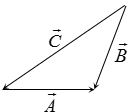
For the figure
A rod of mass $m$ and length $l$ is placed on smooth floor pivoted at its centre. A gun is mounted at one end, of mass $m$ without a shot. It fires a shot of mass $\frac{m}{{10}}$ with velocity $v$ relative to gun. The angular velocity of the rod will be
A sphere of density $\rho $ , specific heat capacity $c$ and radius $r$ is hung by a thermally insulating thread in an enclosure which is kept at a lower temperature than the sphere. The temperature of the sphere starts to drop at a rate which depends upon the temperature difference between the sphere and the enclosure and the nature of the surface of sphere and is proportional to
$\mathrm{C}_{\mathrm{v}}$ and $\mathrm{C}_{\mathrm{p}}$ denote the molar specific heat capacities of a gas at constant volume and constant pressure, respectively. Then

$(A)$ $\mathrm{C}_{\mathrm{p}}-\mathrm{C}_{\mathrm{v}}$ is larger for a diatomic ideal gas than for a monoatomic ideal gas

$(B)$ $\mathrm{C}_{\mathrm{p}}+\mathrm{C}_{\mathrm{v}}$ is larger for a diatomic ideal gas than for a monoatomic ideal gas

$(C)$ $\mathrm{C}_{\mathrm{p}} / \mathrm{C}_{\mathrm{v}}$ is larger for a diatomic ideal gas than for a monoatomic ideal gas

$(D)$ $\mathrm{C}_{\mathrm{p}} \cdot \mathrm{C}_v$ is larger for a diatomic ideal gas than for a monoatomic ideal gas

What is the cause of Green house effect?
An $\alpha$-particle, a proton and an electron have the same kinetic energy. Which one of the following is correct in case of their De-Broglie wavelength:
Among the four graphs, there is only one graph for which average velocity over the time interval $(0, T)$ can vanish for a suitably chosen T. Which one is it?