Question
Discuss how diseases are categorised

Answer

Disease can be catagorized on the basis of:(i) Extent of occurrence
(ii) Infectious nature
(iii) Type of pathogen
(iv) Transmitting Agent(i) Extent of occurrence :
  • Endemic diseases – Found in the certain geographical area affects the fewer number of people, E.g. Goitre in sub = Himalayan region.
  • Epidemic diseases – Disease which breaks out and affects a large number of people in a particular geographical region and spreads at the same time. E.g. Influenza.
  • Pandemic disease – Widely distributed on a global scale. E.g. AIDS.
  • Sporadic disease – Occasional occurrence of a disease. E.g. Cholera and malaria.
(ii) Infectious nature:1. Infectious disease are communicable diseases. Caused by external factors pathogenic organisms. E.g. Chickenpox and malaria.2. Non-Infectious disease:
  • Non-communicable diseases.
  • Caused by internal factors like :
  • Malfunctioning of organs and genetic causes. Hormonal imbalance and immune system defect. E.g. Diabetes, coronary heart diseases, obesity, cancer, goitre etc.
(iii) Types of pathogen :
  • Bacterial diseases
  • Viral diseases
  • Fungal diseases
  • Protozoan diseases
(iv) Transmitting agent:
  • Airborne diseases: Due to continuous inhalation of contaminated air.
    E.g. Tuberculosis.
  • Waterborne diseases: Microbes present in the contaminated water cause various infectious diseases.
    E.g. Cholera, typhoid, etc.
  • Vector-borne diseases: Vector is an agent that acts as an intermediate carrier of the pathogen.
    E.g. Malaria, filaria, chikungunya.

Need a full question paper?

Generate a complete, print-ready paper with questions like this in minutes — across 16+ boards, with answer keys.
Start Generating Free

Similar questions

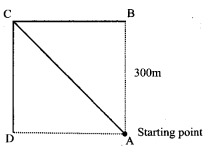
In a long-distance race the athletes were expected to take four rounds of the track such that the line of finish was same as the line of start. Suppose the length of the track was 300m,Image(i) What is the total distance to be covered by the athletes?
What is the total displacement of the athletes when they touch the finish line?
(iii) Is the motion of the athletes uniform or non- D .^starting point uniform?
(iv) Is the displacement & distance moved by an athlete at the end of the race equal?
Explain Tyndall effect and Brownian movement with suitable diagram. 
What conclusions were made from the observations of Gold foil experiment?
Differentiate between tropic and nastic movements
Derive an expression for Pressure due to the Liquid column.
Higher Order Thinking Skills.

When a ray of light passes from air into glass, is the angle of refraction greater than or less than the angle of incidence?

Verify experimentally the laws reflection of sound.
Two immiscible liquids are taken in the above funnel for separation. Which is denser, X or Y? Suggest any one example for X and one for Y. A third liquid Z which is soluble only in Y is added to the mixture and contents in the funnel are shaken well. How many layers will you observe now? How will you separate the three liquids? Boiling point of X is 98°C, that of Y is 43°C and that of Z is 75°C.
Numerical Problem.

How much heat energy is required to change 2 kg of ice at 0°C into water at 20°C? (Specific latent heat of fusion of water = 3,34,000 J/kg, Specific heat capacity of water = 4200 JKg–1K–1).

Explain the history of computers.