Question
Discuss the following:
Chipko Movement.

Answer

Chipko Movement: Chipko movement (Hug the Trees Movement) was an organised resistance to the destruction of forests. It started in 1974 in Reni village of Garhwal. A contractor was allowed to cut trees in a forest near the village. When the contractor’s workers appeared, the women of the village reached the forest quickly and clasped the tree trunks with their arms, preventing the workers from cutting down the trees. Mr. Sunder Lal Bahuguna, a Gandhian activist and philosopher was the leader of Chipko Movement.
Need a full question paper?

Generate a complete, print-ready paper with questions like this in minutes — across 16+ boards, with answer keys.

Start Generating Free

Similar questions

  1.  
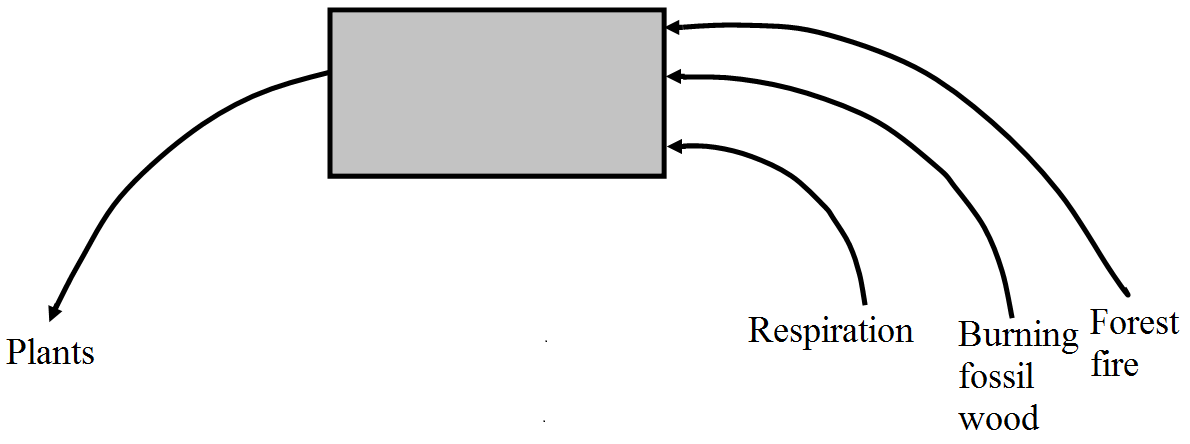
  1. Name the biogeochemical (nutrient) cycle shown below:
  2. Name an activity of the living organisms not depicted in the cycle by which this nutrient is returned to the atmosphere.
  1. How would the flow of nutrient in the cycle be affected due to large scale deforestation? Explain giving reasons.
  2. Describe the effect of an increased level of this nutrient in the atmosphere on our environment.
Represent schematically the life cycle of a malarial parasite.
What are the two groups of cells that work for specific immunity? Explain four unique features of specific immunity.
Explain the process of divergent evolution in detail. Also, write down the driving force behind it.
What evidence for biological evolution is obtained from, comparative anatomy? Describe in detail
Why ozone hole forms over Antarctica? How will enhanced ultraviolet radiation affect us?
What is meant by the term 'breed'? What are the objectives of animal breeding?
What do you understand by infertility? Discuss in detail about techniques related with its solution.
A tall pea plant with yellow seeds (heterozygous for both the traits) is crossed with a dwarf pea plant with green seeds. Using a Punnett square work out the cross to show the phenotypes and the genotypes of $F_1$ generation.
Write a short note on the following :
(i) Chargaff's equivalence rule
(ii) Replication in semi-conservative mode
(iii) Clover leaf model
(iv) Spliceosome
(v) Termination Codon
(vi) Reverse transcription
(vii) Polyribosome
(viii) hn-RNA