Question
Diseases like dysentery, cholera, typhoid etc., are more common in over crowded human settlements. Why?

Answer

Overcrowded human settlements are usually unhygienic because of overload on the infrastructure and on hygiene workers. Let us compare two situations to understand this. A person has a bathroom for his exclusive use. He can easily maintain a high level of cleanliness in his bathroom. Another person has to share a bathroom with fifty other people. Maintaining a good hygiene level in such a bathroom would be almost impossible. This will lead to higher risk of getting communicable diseases. Even a simple disease like common cold has more chances of spreading to many people in overcrowded places because the germs would be able to infect more number of people in shorter time span.

Need a full question paper?

Generate a complete, print-ready paper with questions like this in minutes — across 16+ boards, with answer keys.

Start Generating Free

Similar questions

A vector is a way to take a sequence of DNA, usually, and introduce it into another place. So what vectors do is allow you to propagate the DNA you're interested in, in the organism you've chosen to propagate it in. So the simplest one is the origins of recombinant DNA technology: They made copies of RNAs, and they were able to insert these into what is known as plasmids.
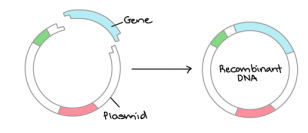
Image
Unless the vector and source DNA are cut, fragments separated and joined, the desired recombinant vector molecule cannot be created.
i. How are the desirable DNA sequences cut?
ii. Explain the technique used to separate the cut fragments.
iii. How are the resultant fragments joined to the vector DNA molecule?
Answer the following questions with respect to recombinant DNA technology:
i. Why is plasmid considered to be an important tool in rDNA technology? From where can plasmids be isolated? (Any two sources)
ii. Explain the role of ori and selectable marker in a cloning vector.
iii. r-DNA technology cannot proceed without restriction endonuclease. Justify.
Draw a neat diagram of the female reproductive system and label the parts associated with the following (a) production of gamete, (b) site of fertilisation (c) site of implantation and, (d) birth canal.
List the attributes that populations but not individuals possess.
Who gave theory of use and disuse of organs? Discuss in detail the inheritance acquired character?
What is meant by ozone shield? Name two ozone depleting substances. How do the ozonedepleting substances affect the ozone shield? Write one damaging effects of ozone depletion on humans and plants respectively.
The relation between species richness and area for a wide variety of taxa turns out to be a rectangular hyperbola. Give a brief explanation.
Explain the difference between the following :
(i) Nucleoside and nucleotide
(ii) DNA and RNA
(iii) Codon and anticodon
(iv) Transcription and translation
(v) Inductive regulation and inhibitory regulation
(vi) RNA splicing and RNA editing
Draw a labelled diagram of the sectional view of a mature pollen grain of angiosperms. Explain the function of any two of its parts.
Describe in detail the steps involved in the replication of DNA.