Question
Distinguish between:
  1. Hexagonal and monoclinic unit cells.
  2. Face-centred and end-centred unit cells.

Answer

  1.  
Hexagonal unit cell Monoclinic unit cell
a=b≠c a≠b≠c
α = β = 90° α = γ = 90°
γ = 120° β ≠ 90°
  1.  
Face-centred unit cell End-centred unit cell
A Face-centred unit cell the constituent particles are present at the corners and one at the centre of each face. An End-centred unit cell contains particles at the corners and one at the centre of any two opposite faces.
Total no of particles in a face centered unit cell= 4 Total no. of particles in an end centered unit cell = 2

Need a full question paper?

Generate a complete, print-ready paper with questions like this in minutes — across 16+ boards, with answer keys.

Start Generating Free

Similar questions

Explain the following phenomena with the help of Henry’s law.
Why soda water bottle kept at room temperature fizzes on opening?
Define the terms, ‘osmosis’ and ‘osmotic pressure’. What is the advantage of using osmotic pressure as compared to other colligative properties for the determination of molar masses of solutes in solutions?
How will you bring the following conversions? Phenol to aspirin.
A compound forms hexagonal close-packed structure. What is the total number of voids in 0.5 mol of it? How many of these are tetrahedral voids?
Which alkyl halide from the following pairs would you expect to react more rapidly by an $S_N2$ mechanism? Explain your answer.
$\ \ \ \ \ \ \ \ \ \ \ \ \ \ \ \ \ \ \ \ \ \ \ \ \ \ \ \ \ \ \ \ \ \ \ \ \ \ \ \ \ \ \ \ \ \ \text{CH}_3\\\ \ \ \ \ \ \ \ \ \ \ \ \ \ \ \ \ \ \ \ \ \ \ \ \ \ \ \ \ \ \ \ \ \ \ \ \ \ \ \ \ \ \ \ \ \ \ \mid\\\text{CH}_3\text{CH}_2\text{CH}\text{CH}_3\ \text{or}\ \text{H}_3\text{C}-\text{C}-\text{Br}\\\ \ \ \ \ \ \ \ \ \ \ \ \ \ \ \ \mid\ \ \ \ \ \ \ \ \ \ \ \ \ \ \ \ \ \ \ \ \ \ \ \ \ \ \ \mid\\\ \ \ \ \ \ \ \ \ \ \ \ \ \ \ \text{Br}\ \ \ \ \ \ \ \ \ \ \ \ \ \ \ \ \ \ \ \ \ \ \ \ \ \ \text{CH}_3$
Give conversion: Ethene into butane.

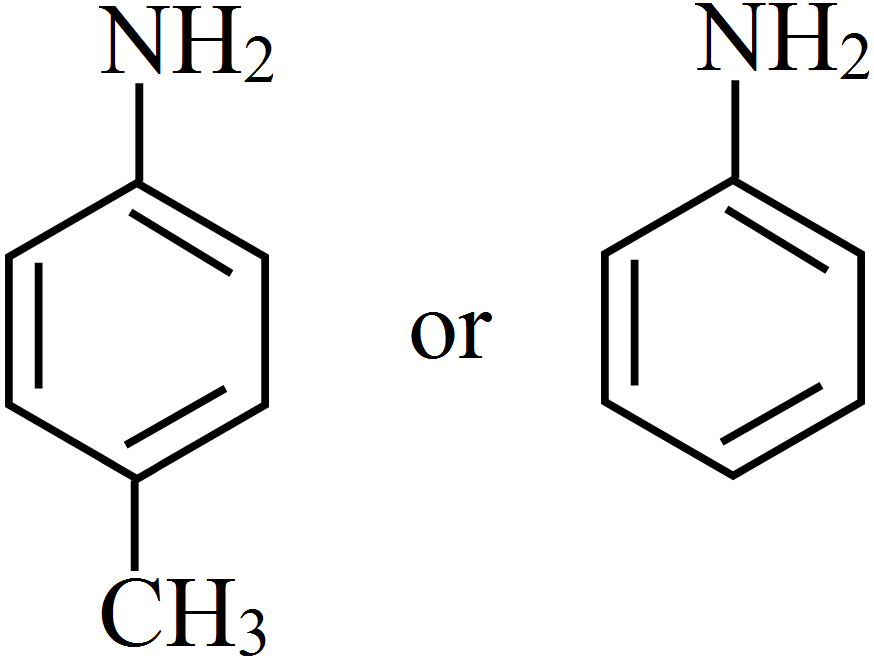
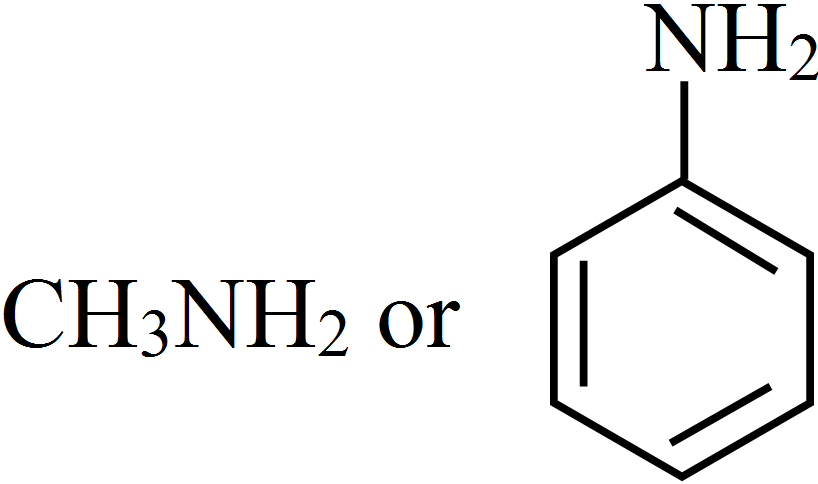
In the following pairs which one is more basic and why?
  1.  
  1.  
  1.  
  1. How does vulcanization change the character of natural rubber$?$
  2. Why are the numbers $66$ and $6$ put in the names of nylon$-66$ and nylon$-6?$
How are the following conversions carried out?
Propanol to 1-propoxypropane
Which aerosols deplete ozone?