MCQ
Dobernier traids is :-
  • A
    $Na, K, Rb$
  • B
    $Mg, S, As$
  • $Cl, Br, I$
  • D
    $P, S, As$

Answer

Correct option: C.
$Cl, Br, I$
c

Need a full question paper?

Generate a complete, print-ready paper with questions like this in minutes — across 16+ boards, with answer keys.
Start Generating Free

Similar questions

Noble gases do not react with other elements because
Which of the following is correct expression for electrode potential of a cell
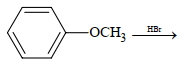
In the reaction $Image$ the products are
$10$ $d{m^3}$of ${N_2}$ gas and $10$ $d{m^3}$ of gas $X$ at the same temperature contain the same number of molecules. The gas $X$ is
$HO - \mathop {C{H_2}}\limits_{(2)}  - \mathop {C{H_2}}\limits_{(3)}  - F$

Which conformer of above compound is most stable across $C_2 - C_3$ ?

The flucculation value of $\mathrm{HCl}$ for arsenic sulphide sol. is $30\; \mathrm{m}\; mole \;\mathrm{L}^{-1} .$ If $\mathrm{H}_{2} \mathrm{SO}_{4}$ is used for the flocculation of arsenic sulphide, the amount, in grams, of $\mathrm{H}_{2} \mathrm{SO}_{4}$ in $250\; \mathrm{ml}$ required for the above purpose is (molecular mass of $\left.\mathrm{H}_{2} \mathrm{SO}_{4}=98 \;\mathrm{g} / \mathrm{mol}\right)$
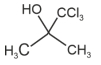
Reaction of iso-propylbenzene with $O _2$ followed by the treatment with $H _3 O ^{+}$forms phenol and a by-product $P$. Reaction of $P$ with $3$ equivalents of $Cl _2$ gives compound $Q$. Treatment of $Q$ with $Ca ( OH )_2$ produces compound $R$ and calcium salt $S$.

The correct statement($s$) regarding $P , Q , R$ and $S$ is(are)

$(A)$ Reaction of $P$ with $R$ in the presence of $KOH$ followed by acidification gives

$(B)$ Reaction of $R$ with $O _2$ in the presence of light gives phosgene gas

$(C)$ $Q$ reacts with aqueous $NaOH$ to produce $Cl _3 CCH _2 OH$ and $Cl _3 CCOONa$

$(D)$ $S$ on heating gives $P$
In an adiabatic process, no transfer of heat takes place between system and surroundings. Choose the correct option for free expansion of an ideal gas under adiabatic condition from the following
According to modern periodic law the properties of elements repeat at regular intervals  when the elements are arranged in order of
Among $B _2 H _6, B _3 N _3 H _6, N _2 O , N _2 O _4, H _2 S _2 O _3$ and $H _2 S _2 O _8$, the total number of molecules containing covalent bond between two atoms of the same kind is. . . .