Question
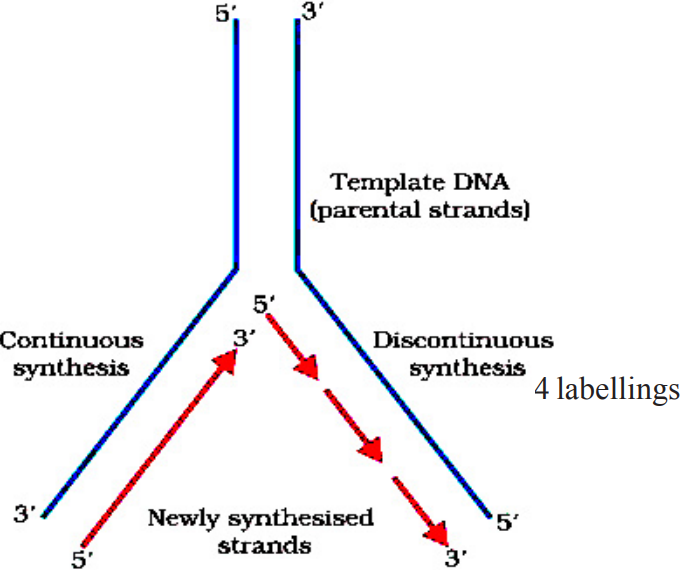
  1. Draw a labelled schematic diagram of a replication fork showing continuous and discontinuous replication of DNA strands.
  2. State a reason why is the replication continuous and discontinuous in the diagram drawn.
Answer

  1.  

  1. 2 strands are antiparallel , DNA polymerase acts only in one direction i.e. 5' $\rightarrow $ 3'

Need a full question paper?

Generate a complete, print-ready paper with questions like this in minutes — across 16+ boards, with answer keys.
Start Generating Free

Similar questions

On world population day, Rohit and his friends arranged an awareness campaign on population explosion programme in their locality. Some elderly people tried to stop the children and asked them not to talk on such things in public. The children convinced the elders about the need for the programme and on understanding their point of view, the elders also joined the campaign.
  1. Why is such awareness programme necessary?
  2. What role has the government played in controlling population explosion?
  3. When were reproductive health programmes initiated in India?
  4. What values did Rohit and his friends show on the occasion?
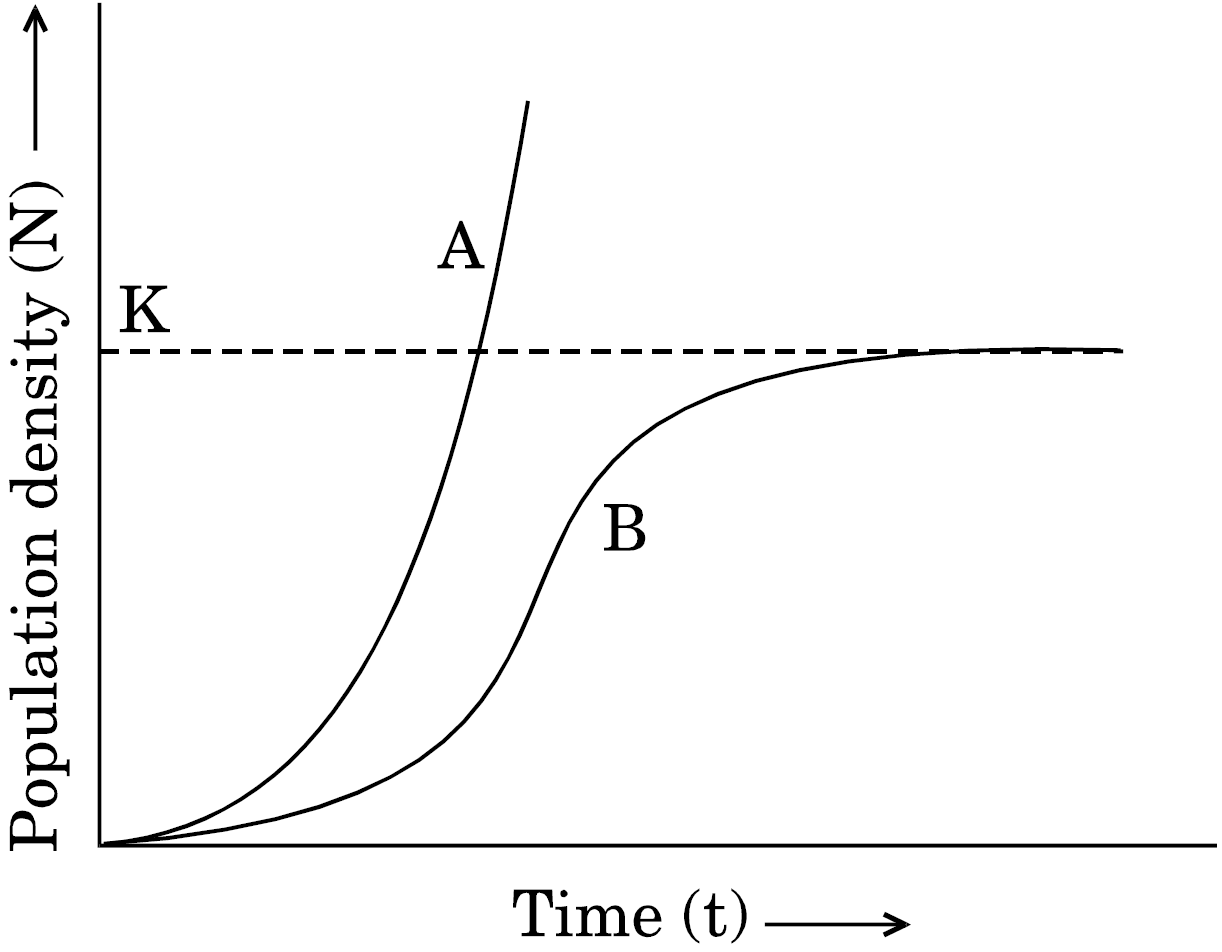
Study the population growth curve given below and answer the questions that follow:

  1. Identify ‘A’ and ‘B’ shown in the graph.
  2. When and why do such curves occur in a population?
Vivipary automatically limits the number of offsprings in a litter. How?
What do you mean by reproductive health? Mention the different ways in which people are made aware of the significance of reproductively healthy society.
Draw a diagram of the microscopic structure of human sperm. Label the following parts in it and write their functions.
  1. Acrosome.
  2. Nucleus.
  3. Middle piece.
If origin of life is in progress in any other planet, what would be the condition there?
A non–haemophilic couple was informed by their doctor that there is possibility of a haemophilic child be born to them. Explain the basis on which the doctor conveyed this information. Give the genotypes and the phenotypes of all the possible children who could be born to them.
A typical mammalian cell has 2.2m long DNA molecule, whereas the nucleus in which it is packed measures about 10m. Explain how such a long DNA molecule is packed within a tiny nucleus in the cell.
How is the amplification of a gene sample of interest carried out using Polymerase Chain Reaction (PCR)?
Explain into how many categories the endangered species have been classified on the basis of threatened species.