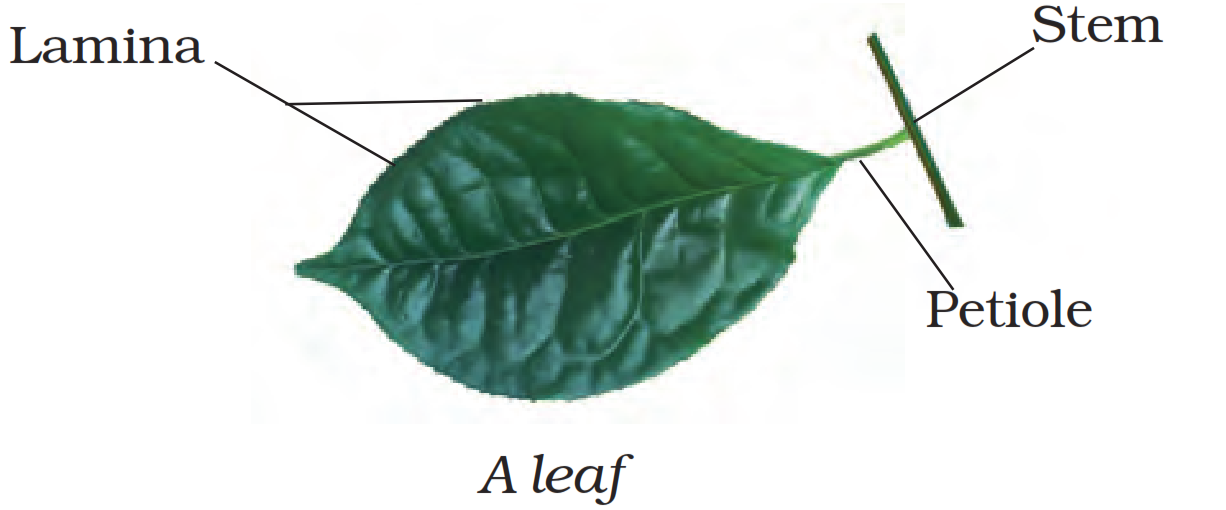
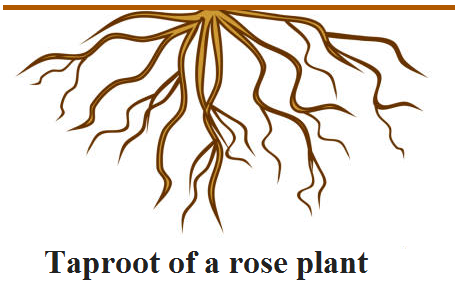
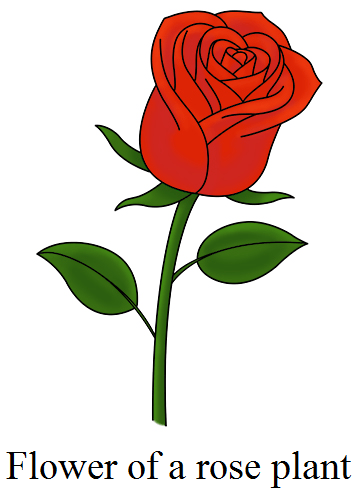
Question
Draw:
  1. a leaf.
  2. a taproot.
  3. a flower.
you have studied for Table.

Answer

  1.  
  1.  
  1.  

Need a full question paper?

Generate a complete, print-ready paper with questions like this in minutes — across 16+ boards, with answer keys.

Start Generating Free

Similar questions

Rahul and Sonia were playing with blocks and each of them made a train out of them. Both of them thought of measuring the length of the train using their handspan. By that time Rahul's friend Anupam came and suggested them to measure with a measuring tape for fair result.
$(a)$ What is a handspan?
$(b)$ Why Anupam asked both of them to use measuring tape?
$(c)$ What value of Anupam is shown here?
Match the following items given in Column $A$ with that in Column $B$:
S.No.
Column $A$
S.No.
Column $B$
$(a)$
Creeper
$(i)$
Absorption of mineral and water.
$(b)$
Herb
$(ii)$
Manufacture food.
$(c)$
Shrub
$(iii)$
Transport food, water and mineral.
$(d)$
Tree
$(iv)$
Reproduction.
$(e)$
Root
$(v)$
Need support to stand up.
$(f)$
Stem
$(vi)$
Hard and thick stem.
$(g)$
Leaf
$(vii)$
Green and tender stem.
$(h)$
Flower
$(viii)$
Hard but thin stem.
How will you test that ‘tea dust’ is not adulterated with iron powder?
Match Column $I$ with Column $II$ (One option of $A$ can match with more than one option of $B$)
  $COLUMN\ I$   $COLUMN\ II$
$(a)$ Magnet attracts $(i)$ resis along a particular direction
$(b)$ Magnet can be repelled $(ii)$ iron
$(c)$ Magnet if suspended freely $(iii)$ by another magnet
$(d)$ Poles of the magnet can be identified by $(iv)$ iron filing
Explain the characteristics oflimng organisms
Draw a labelled diagram of a flower.
If a plant has fibrous root, what type of venation do its leaves have?
What can we do to minimise overuse of plastics and deal with garbage?
How will you separate the components of the following?
  1. Tea leaves from tea.
  2. Pebbles from rice.
  3. Butter from milk.
  4. Sand and husk.
  5. Water and kerosene oil.
  6. Mud and water.
Read the function of parts of a plant given below:
  1. Fixes plant to the soil.
  2. Prepares starch.
  3. Takes part in reproduction.
  4. Supports branches and bears flowers.
In the diagram given in fig, write the names of the parts whose functions you have just read at the appropriate space.