Question
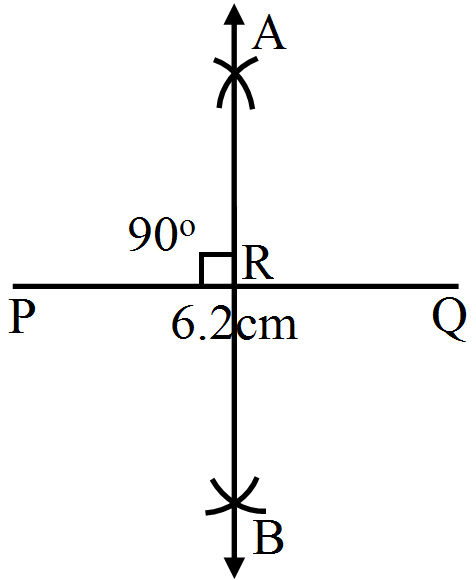
Draw a line segment $PQ = 6.2\ cm$. Draw the perpendicular bisector of $PQ.$

Answer


Steps for construction:
$i.\ $Draw a line segment $PQ$, which is equal $6.2\ cm.$
$ii.\ $With $P$ as the centre and radius more than half of $PQ$, draw arcs, one on each side of $PQ.$
$iii.\ $With $Q$ as the centre and the same radius as before, draw arcs cutting the perviously drawn arcs at $A$ and $B,$ respectively.
$iv.\ $Draw $AB$, meeting $PQ$ at $R.$

Need a full question paper?

Generate a complete, print-ready paper with questions like this in minutes — across 16+ boards, with answer keys.
Start Generating Free

Similar questions

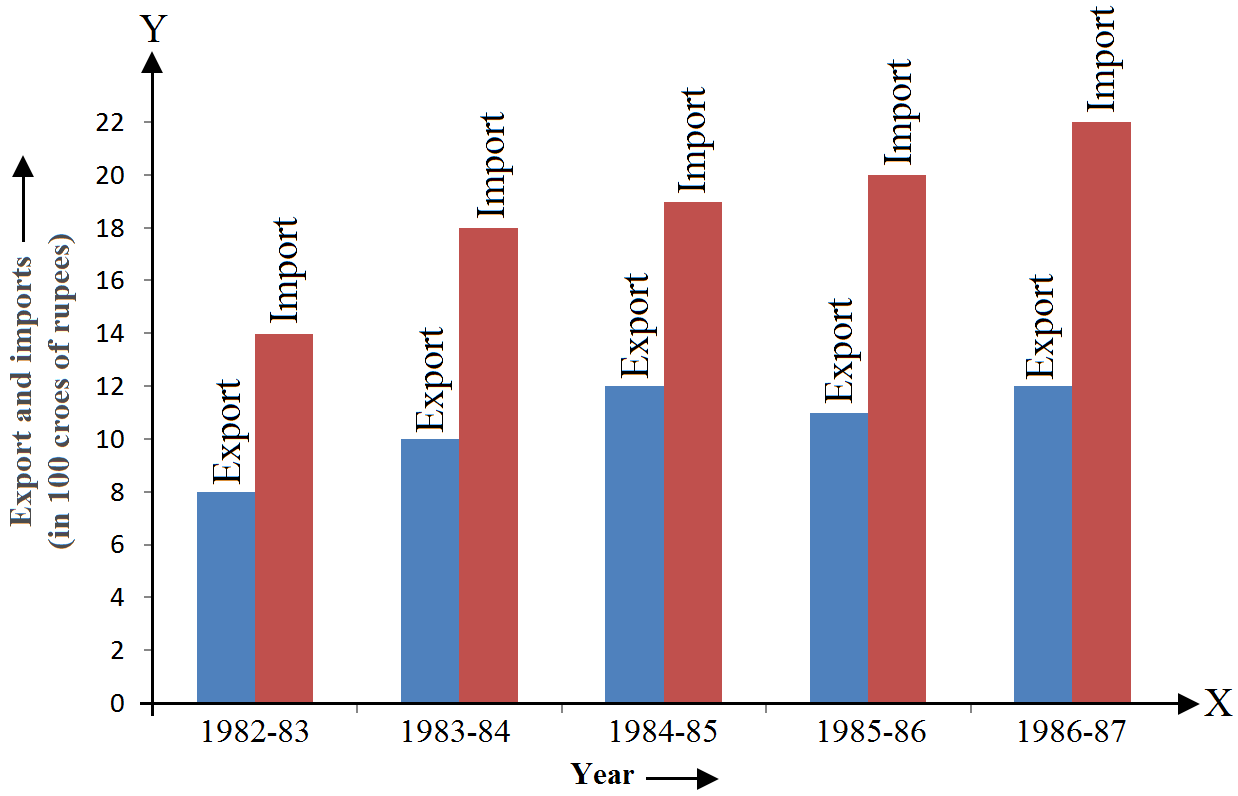
Read the following bar graph and answer the following questions:

$i.\ $What information is given by the bar graph?
$ii.\ $In which year the export is minimum?
$iii.\ $In which year the import is maximum?
$iv.\ $In which year the difference of the value of export and import is maximum?
Find the cost of fencing a rectangular park of length 175m and breadth 125m at the rate of ₹12 per meter.
Find. Write and indicate how you solved this. Is $\frac9{16}$ equal to$\frac59$?
Use a pair of compasses and construct the following angles: $150^\circ $
The ratio of boys and girls in a school is $12 : 5.$ If there are $840$ girls in the school, then the number of boys is:
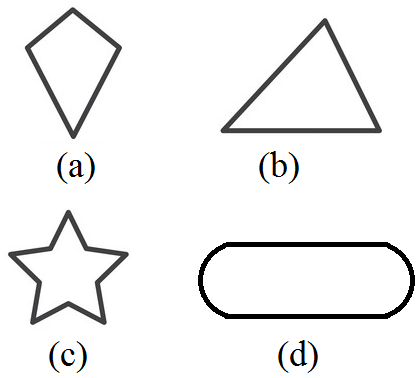
Which of the following are polygons?
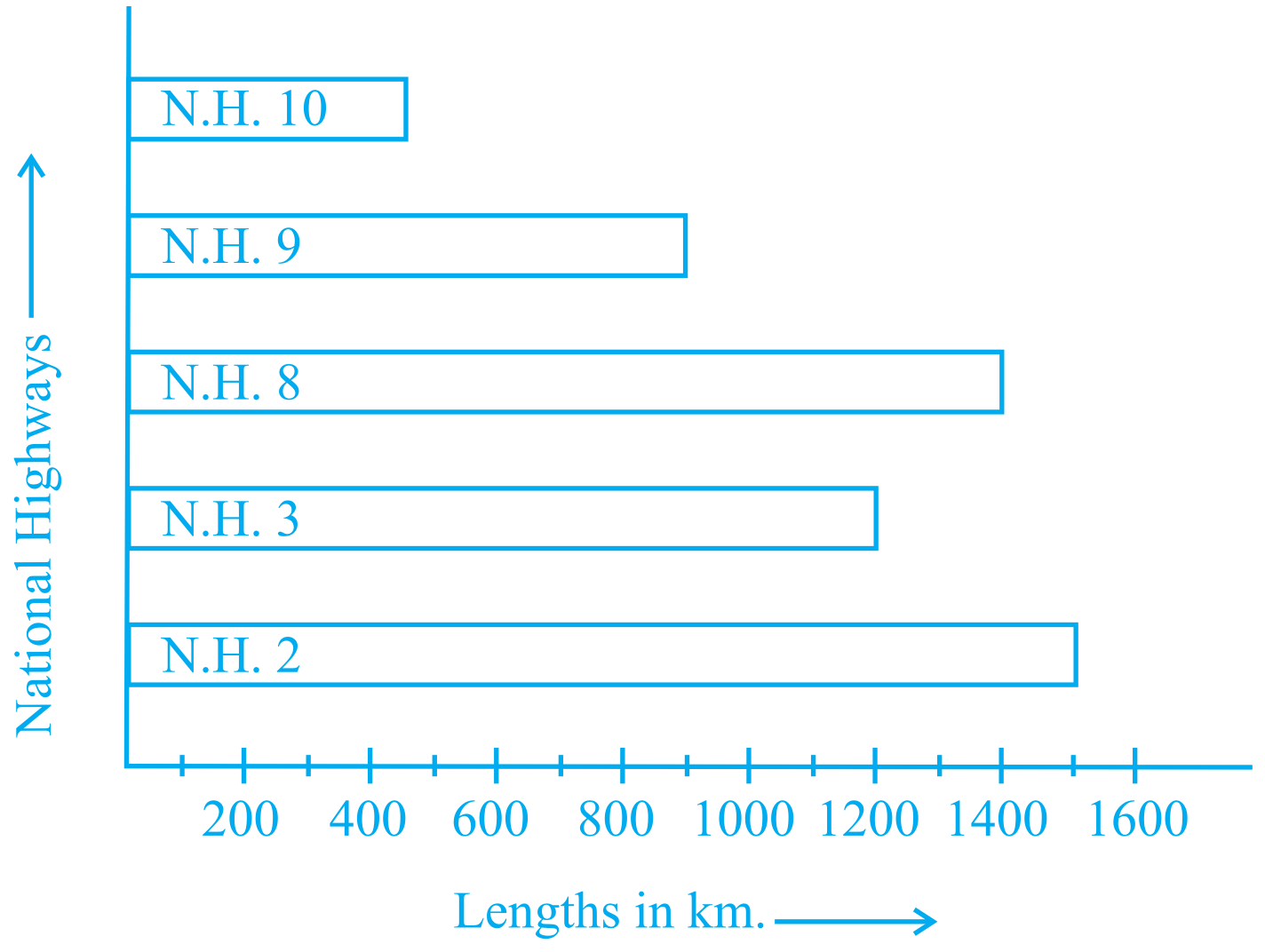
The bar graph given below represents approximate length $($in kilometres$)$ of some National Highways in India. Study the bar graph and answer the following questions: Scale: $1$ unit length $= 200\ km$ 

$a.\ $Which National Highway $(N.H.)$ is the longest among the above$?$
$b.\ $Which National Highway is the shortest among the above$?$
$c.\ $What is the length of National Highway $9?$
$d.\ $Length of which National Highway is about three times the National Highway$10?$
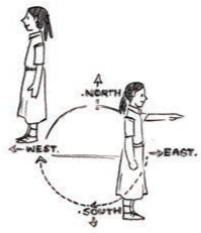
Which direction will you face if you start facing east and make $\frac{1}{2}$ of a revolution clockwise?
Find the least $5-$digit number which is exactly divisible by $20, 25, 30.$
In each of the following cases, state whether you can draw line segments on the given surfaces:
(i) The face of a cuboid.
(ii) The surface of an egg or apple.
(iii) The curved surface of a cylinder.
(iv) The curved surface of a cone.
(v) The base of a cone.