Question
  1. Draw a simplified model of phosphorus cycling in a terrestrial ecosystem.
  2. Write the importance of such cycles in ecosystems.

Answer

  1. Refer to Fig. 14.5 in the text.
  2. The nutrients are cycled such that they are brought back to soil from where producers can taken them.

Need a full question paper?

Generate a complete, print-ready paper with questions like this in minutes — across 16+ boards, with answer keys.

Start Generating Free

Similar questions

What is spermatogenesis? Explain the process briefly.
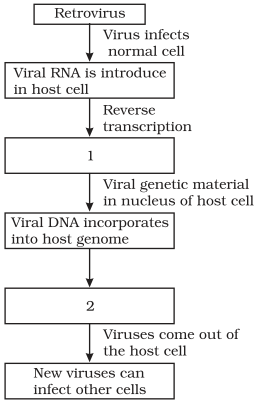
In the given flow diagram, the replication of retrovirus in a host is shown. Observe and answer the following questions,
  1. Fill in (1) and (2).
  2. Why is the virus called retrovirus?
  3. Can the infected cell survive while viruses are being replicated and released?
Represent schematically the life cycle of a malarial parasite.
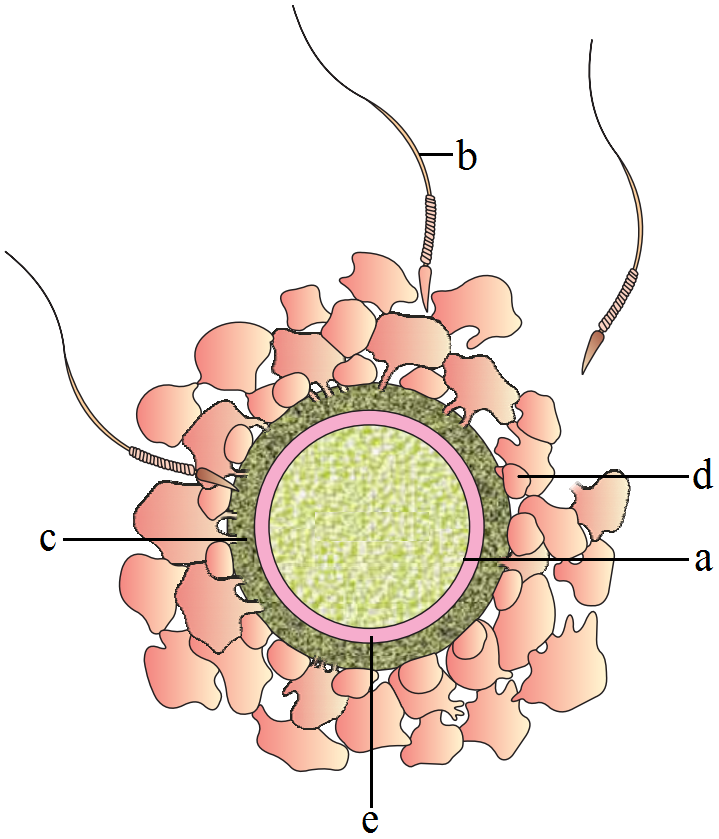
Study the illustration given and answer the questions that follow:
Explain the role of hormones in the formation and release of ‘a’.
What is endosperm and how is it formed? Describe the various types of endosperm found in angiosperms.
A person in your colony has recently been diagnosed with AIDS. People/residents in the colony want him to leave the colony for the fear a spread of AIDS.
  1. Write your view on the situation, giving reasons.
  2. List the possible preventive measures that you would suggest to the residents of your locality in a meeting organised by you so that they understand the situation.
  3. Write the symptoms and the causative agent of AIDS.
Following is the sequence of nucleotide in two strands of DNA. Observe the strands and answer the preceding questions.
5' - GAATTC - 3'
3' - CTTAAG - 5'
  1. Name the special term used for such an arrangement of nucleotide.
  2. Name the special type of enzymes which work/ function at this specific points.
  3. Name the enzyme, that cut DNA between GA sequence.
  4. Name the single strands produced after the action of the enzyme.
Read the following and answer any four questions from (i) to (v) given below:
Transgenic animals can serve as factories that in some cases, may produce large amount of proteins more efficiently. Transgenic mice have been engineered to express human antibodies by introducing large segment of human DNA encoding human immunoglobulin genes. In transgenic large animals such as cow or sheep proteins of pharmaceutical value can be produced in large quantities in milk which is later purified. Transgenesis can be used to alter many phenotypic properties including growth rate, fat composition, milk production, hair texture, etc.
  1. The production of transgenic animals includes
  1. Identification and separation of desired gene.
  2. Combining the desired gene with appropriate vector.
  3. Introduction of vector in cells, tissues or embryos.
  4. All of these.
  1. In transgenic animals, i.e., cow and sheep proteins of pharmaceutical value are produced in large quantities in the
  1. Blood.
  2. Accumulated fat.
  3. Mammary glands.
  4. None of these.
  1. Mouse is mostly preferred animal for studies on gene transfer because.
  1. Short oestrous cycle.
  2. Long gestation period.
  3. Short generation time.
  4. Production of one or two offspring per pregnancy.
  1. Both (A) and (C)
  2. Both (A) and (B)
  3. Only D
  4. Both (C) and (D).
  1. Transgenic genes alter many phenotypic properties including:
  1. Growth rate.
  2. Fat composition.
  3. Milk production.
  4. All of these.
  1. Assertion: Transgenic mice have been engineered to express human antibodies.
Reason: Large segment of human DNA encoding human immunoglobulin have been transferred to mice.
  1. Both assertion and reason are true and reason is the correct explanation of assertion.
  2. Both assertion and reason are true but reason is not the correct explanation of assertion.
  3. Assertion is true but reason is false.
  4. Both assertion and reason are false.
What is cancer? How is a cancer cell different from normal cell? How do normal cells attain cancerous nature?
Angiosperm flowers may be monoecious, cleistogamous or show self-incompatibility. Describe the characteristic features of each one of them and state which one of these flowers promotes inbreeding and outbreeding respectively.