MCQ
During depression of freezing point in a solution the following are in equilibrium
  • Liquid solvent, solid solvent
  • B
    Liquid solvent, solid solute
  • C
    Liquid solute, solid solute
  • D
    Liquid solute solid solvent

Answer

Correct option: A.
Liquid solvent, solid solvent
a
During the depression of freezing point in a solution, liquid solvent and solid solvent are in equilibrium. During freezing of a solution, only the solvent freezes out and the equilibrium exists between solid and liquid forms of the solvent. Vapour pressure of the solid and liquid forms must be the same at freezing point, because otherwise, the system would not be at equilibrium, the lowering of the vapour pressure leads to the lowering of temperature at which the vapour pressures of the liquid and frozen forms of the solution will be equal.

Need a full question paper?

Generate a complete, print-ready paper with questions like this in minutes — across 16+ boards, with answer keys.

Start Generating Free

Similar questions

The homologue of ethyne is
$S{n^{ +2 }}$ loses two electrons in a reaction. What will be the oxidation number of tin after the reaction
Alcohols react with Grignard reagent to form
Consider separate solutions of $0.500\, M\, C_2H_5OH\,(aq),$ $0.100\,M\,Mg_3(PO_4)_2\, (aq), $ $0.250\, M\,KBr\,(aq)$ and $0.125\, M\,Na_3PO_4\,(aq)$ at $25^o C.$ Which statement is true about these solutions, assuming all salts to be strong electrolytes ?
Select the correct matching
List $-I$ List $-II$
$A$ $XeF_4$ $1.$ Pyramidal
$B$ $XeF_6$ $2.$ $T-$ shape
$C$ $XeO_3$ $3.$ Distorted octahedral
$D$ $XeOF_2$ $4.$ Square planar
Given below are two statements :

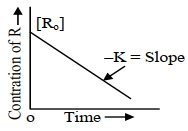
Statement $I$ : The rate law for the reaction $A+B \rightarrow C$ is rate $(r)=k[A]^2[B]$. When the concentration of both $\mathrm{A}$ and $\mathrm{B}$ is doubled, the reaction rate is increased " $\mathrm{x}$ " times.

Statement $II$ :

(Image)

The figure is showing "the variation in concentration against time plot" for a $"y"$ order reaction. The value of $x+y$ is . . . . . . 
Arrange the following solutions in order of decreasing freezing points

$(a)\,0.075\,\,M\,CuS{O_4}$                 $(b)\,0.060\,\,M\,(NH_4)_2SO_4$

$(c)\,0.14\,\,M\,urea$                         $(d)\,0.04\,M\,MgCl_2$

Shape of ${O_2}{F_2}$ is similar to that of
Ratio of energy of photon of wavelength $3000\,\mathop A\limits^o $ and $6000\,\mathop A\limits^o $ is
$S{O_2}$ acts as temporary bleaching agent but $C{l_2}$ acts as permanent bleaching agent. Why