MCQ
Electrode potentials of five elements $A,\,B,\,C,\,D$ and $E$ are respectively $-1.36 , -0.32, 0, -1.26$  and $ -0.42$. The reactivity order of these elements are in the order of
  • $A, D, E, B$ and $ C$
  • B
    $C, B, E, D$ and $A$
  • C
    $B, D, E, A$  and $C$
  • D
    $C, A, E, D $ and $B$

Answer

Correct option: A.
$A, D, E, B$ and $ C$
a
(a)Greater the oxidation potential, greater is the reactivity.

Need a full question paper?

Generate a complete, print-ready paper with questions like this in minutes — across 16+ boards, with answer keys.

Start Generating Free

Similar questions

Which of the following diagrams is correct for the change of sulphur compounds
$\begin{array}{*{20}{c}}
  {{{(C{H_3})}_2}C.C{H_2}.CO.C{H_3}} \\ 
  {\,\,\,\,|\,\,\,\,\,\,\,\,\,\,\,\,\,} \\ 
  {\,\,\,\,N{H_2}\,\,\,\,\,\,\,} 
\end{array}$  is
Of the following four aqueous solutions, total number of those solutions whose freezing point is lower than that of $0.10\, \mathrm{M} \mathrm{C}_{2} \mathrm{H}_{5} \mathrm{OH}$ is (Integer answer)

$(i)$ $0.10\, \mathrm{M} \,\mathrm{Ba}_{3}\left(\mathrm{PO}_{4}\right)_{2}$            $(ii)$ $0.10\, \mathrm{M}\, \mathrm{Na}_{2} \mathrm{SO}_{4}$             $(iii)$ $0.10\, \mathrm{M}\, \mathrm{KCl}$          $(iv)$ $0.10 \,\mathrm{M} \,\mathrm{Li}_{3} \mathrm{PO}_{4}$

The quantum numbers $+1/2$ and $-1/2$ for the electron spin represent
Which does not show inert pair effect ?
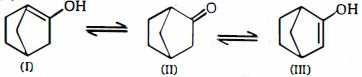
Correct stability order of the given tautomers is
Given below are two statement:
Statement $I:$ Bromination of phenol in solvent with low polarity such as $CHCl_3$ or $CS_2$ requires Lewis acid catalyst.
Statement $II:$ The lewis acid catalyst polarises the $+$ bromine to generate $Br ^{+}$ .
Arrange in decreasing acidic strength

$A.\,\,F -CH_2\,\,CH_2\,\,COOH$

$\begin{array}{*{20}{c}}
  {B.\,\,Cl - CH - C{H_2} - COOH} \\ 
  {|\,\,\,\,\,\,\,\,\,\,\,\,\,\,\,\,\,\,\,\,\,\,\,\,\,\,\,} \\ 
  {\,\,Cl\,\,\,\,\,\,\,\,\,\,\,\,\,\,\,\,\,\,\,\,\,\,\,\,\,\,\,\,} 
\end{array}$

$C.\,\,F -CH_2 -COOH$

$D.\,\,Br -CH_2-CH_2 -COOH$

Correct answer is

To neutralise $20\, ml $ of $M/10$ sodium hydroxide, the volume of $M/20$ hydrochloric acid required is .............. $\mathrm{ml}$
Which of these species has a standard enthalpy of formation equal to zero?