Question
Electromagnetic waves are produced by:
  1. A static charge.
  2. A moving charge.
  3. An accelerating charge.
  4. Chargeless particles.

Answer

  1. An accelerating charge.
Explanation:
A static charge produces an electrostatic field. A moving charge produces a magnetic field. Electromagnetic waves are produced by an accelerating charge.

Need a full question paper?

Generate a complete, print-ready paper with questions like this in minutes — across 16+ boards, with answer keys.
Start Generating Free

Similar questions

When cathode rays (tube voltage ~ 10 kV) collide with the anode of high atomic weight then we get(a) Positive rays(b) X-rays(c) Gamma rays(d) Canal rays
       
Polarization of light confirms :
The momentum of a photon in an $X-$ray beam of  $10^{-10}$  metre wavelength is
A vertical straight conductor carries a current vertically upwards. A point P lies to the east of it at a small distance and another point Q lies to the west in the same direction. The magnetic field at P is:
The output of OR gate is 1(a) If both inputs are zero(b) If either or both inputs are 1(c) Only if both input are 1(d) If either input is zero
   
   
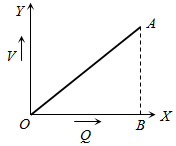
Change $Q$ on a capacitor varies with voltage $V$ as shown in the figure, where $Q$ is taken along the $X-$axis and $V$ along the $Y-$axis. The area of triangle $\text{OAB}$ represents
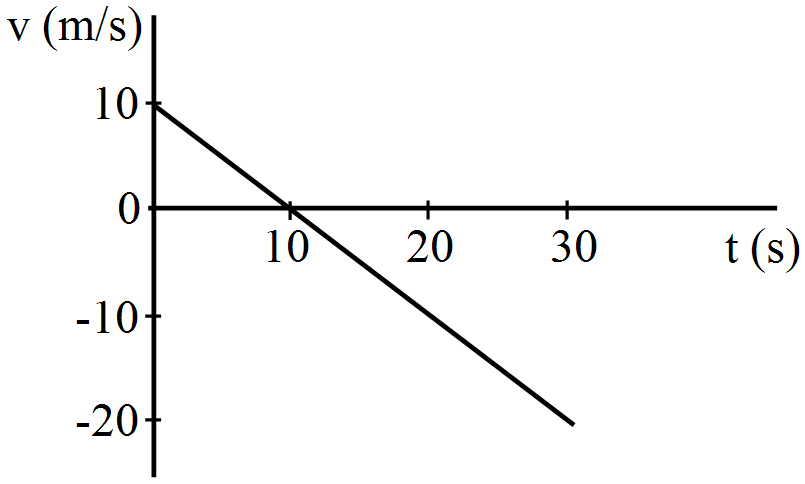
The velocity-time plot for a particle moving on a straight line is shown in the figure:
  1. The particle has a constant acceleration.
  2. The particle has never turned around.
  3. The particle has zero displacement.
  4. The average speed in the interval 0 to 10s is the same as the average speed in the interval 10s to 20s.
Materials suitable for permanent magnet, must have which of the following properties?
Two long wires are hanging freely. They are joined first in parallel and then in series and then are connected with a battery. In both cases, which type of force acts between the two wires (a) Attraction force when in parallel and repulsion force when in series(b) Repulsion force when in parallel and attraction force when in series(c) Repulsion force in both cases(d) Attraction force in both cases


Einstein was awarded Noble prize for: