Question

Electroplating does not help in

(a) Fine finish to the surface

(b) Shining appearance

(c) Metals to become hard

(d) Protect metal against corrosion

Answer

(c) Metals to become hard

Need a full question paper?

Generate a complete, print-ready paper with questions like this in minutes — across 16+ boards, with answer keys.

Start Generating Free

Similar questions

Among the following properties describing diamagnetism identify  the property that is wrongly stated

(a) Diamagnetic material do not have permanent magnetic moment

(b) Diamagnetism is explained in terms of electromagnetic induction

(c) Diamagnetic materials have a small positive susceptibility

(d) The magnetic moment of individual electrons neutralize each other

Antinodal curves correspond to _____ interference.

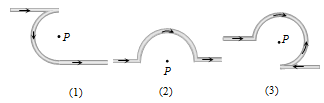
The magnetic field at the centre of a circular coil of radius r is π  times that due to a long straight wire at a distance r from it, for equal currents. Figure here shows three cases : in all cases the circular part has radius r and straight ones are infinitely long. For same current the B field at the centre P in cases 1, 2, 3 have the ratio

(a)   :  

(b)    

(c) -  :

(d)  

Two strings A and B, made of same material, are stretched by same tension. The radius of string A is double of the radius of B. A transverse wave travels on A with speed $\nu_\text{A}$ and on B with speed $\nu_\text{B}.$ The ratio $\frac{\nu_\text{A}}{\nu_\text{B}}$ is:

  1. $\frac{1}{2}$

  2. $2$

  3. $\frac{1}{4}$

  4. $4.$

The magnetic flux linked with coil, in weber is given by the equation,  The induced emf in the coil in the fourth second is

(a) 10 V

(b) 30 V

(c)  45 V

(d) 90 V

One of the specialties of nuclear reactions is that in their disintegrated or fused part :
Magnetic lines of force due to a bar magnet do not intersect because:

The lateral displacement depends on ______:

Consider a long, straight wire of cross-sectional area A carrying a current i. Let there be n free electrons per unit volume. An observer places himself on a trolley moving in the direction opposite to the current with a speed $\text{v}=\frac{\text{i}}{\text{nAe}}$ and separated from the wire by a distance r. The magnetic field seen by the observer is very nearly:
  1. $\frac{\mu_0\text{i}}{2\pi\text{r}}$
  2. $\text{Zero}$
  3. $\frac{\mu_0\text{i}}{\pi\text{r}}$
  4. $\frac{2\mu_0\text{i}}{\pi\text{r}}.$
The forbidden energy gap for germanium crystal at 0 K is: