MCQ
Energy of photon whose frequency is $10^{12} \ \mathrm{MHz},$ will be
  • A
    $4.14 \times 10^3 \mathrm{keV}$
  • B
    $4.14 \times 10^2 \mathrm{eV}$
  • C
    $4.14 \times 10^3 \mathrm{keV}$
  • $4.14 \times 10^3 \mathrm{eV}$

Answer

Correct option: D.
$4.14 \times 10^3 \mathrm{eV}$

Need a full question paper?

Generate a complete, print-ready paper with questions like this in minutes — across 16+ boards, with answer keys.
Start Generating Free

Similar questions

A convex lens of focal length 25 cm and a concave lens of focal length 10 cm are joined together.  The power of the combination will be(a) – 16 D (b) + 16 D(c) – 6 D   (d) + 6 D
       
A radioactive sample has $N_0$ active atoms at $t = 0.$ If the rate of disintegration at any time is $R$ and the number of atoms is $N,$ then the ratio $R/N$ varies with time as
A magnet makes $40$ oscillations per minute at a place having magnetic field intensity of $0.1 \times 10^{–5} T$. At another place, it takes $2.5 \sec$ to complete one vibration. The value of earth’s horizontal field at that place is
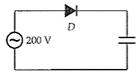
In the circuit given in the figure, an a.c. source of 200 V is connected through a diode D to a capacitor. The potential difference across the capacitor will be

Image
 Dielectrics are _____________?
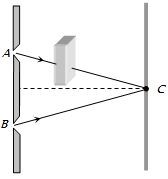
In Young’s experiment, monochromatic light is used to illuminate the two slits $A$ and $B.$ Interference fringes are observed on a screen placed in front of the slits. Now if a thin glass plate is placed normally in the path of the beam coming from the slit
Force of attraction between the plates of a parallel plate capacitor is
A radioactive decay chain starts from ${ }^{93^{ Np ^{237}}}$ and produces ${ }^{93^{ Np ^{287}}}$ by successive emissions. The emitted particles can be
A very long bar magnet is placed with its north pole coinciding with the centre of a circular loop carrying as electric current i. The magnetic field due to the magnet at a point on the periphery of the wire is B. The radius of the loop is a. The force on the wire is:
A solid sphere moves at a terminal velocity of $20m/s$ in air at a place where $g = 9.8m/s^2$. The sphere is taken in a gravity free hall having air at the same pressure and pushed down at a speed of $20m/s.$
  1. Its initial acceleration will be $9.8m/s^2$ downward.
  2. Its initial acceleration will be $9.8m/s^2$ upward.
  3. The magnitude of acceleration will decrease as the time passes.
  4. It will eventually stop.