Question
Evaluate: $(3x - 2y)(4x + 3y) (8x - 5y)$

Answer

$(3x - 2y)(4x + 3y)(8x - 5y)$
$= 3x (4x + 3y) - 2y (4x + 3y)(8x - 5y)$
$= (12x^2 + 9xy - 8xy - 6y^2)(8x - 5y)$
$= (12x^2 + xy - 6y^2 )(8x - 5y)$
$= 8x (12x^2 + xy - 6y^2 ) - 5y (12x^2 + xy - 6y^2 )$
$= 96x^3 + 8x^2y - 48xy^2 - 60x^2y - 5xy^2 + 30y^3$
$= 96x^3 + 8x^2y - 60x^2y - 48xy^2- 5xy^2 + 30y^3$
$= 96x^3 - 52x^2y - 53xy^2 + 30y^3$

Need a full question paper?

Generate a complete, print-ready paper with questions like this in minutes — across 16+ boards, with answer keys.

Start Generating Free

Similar questions

A shoe store sells pairs of shoes of different sizes. The number of pairs of various sizes sold on a particular day are given below :
Size of shoes 1234567891011
Number of pairs sold 35128243552
What is the modal shoe-size?
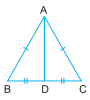
In the adjoining figure, $\triangle A B C$ is an isosceles triangle in which $A B=A C$ and $A D$ is a median.
Prove that :
(i) $\triangle ADB \cong \triangle ADC$
(ii) $\angle BAD =\angle CAD$
Image
Following data shows the weekly wages (in ₹) of 10 workers in a factory.
3500, 4250, 4000, 4250, 4000, 3750, 4750, 4000, 4250 and 4000
(i) Prepare a frequency distribution table.
(ii) What is the range of wages (in ₹)?
(iii) How many workers are getting maximum wages?
The circumferences of two circles are in the ratio 5: 7, find the ratio between their radius.
Evaluate: $\left(\frac{-4}{5} \times \frac{3}{2}\right)+\left(\frac{9}{-5} \times \frac{10}{3}\right)-\left(\frac{-3}{2} \times \frac{-1}{4}\right)$
Evaluate: $3 \frac{5}{12}-1 \frac{2}{3}$
Divide 468 g of rice into three heaps containing the quantities in the ratio $\frac{1}{6}: \frac{1}{8}: \frac{1}{12}$.
Insert three fractions between
$\frac{2}{5} \text { and } \frac{4}{9}$
Construct an isosceles Δ ABC such that:
Base AB = 6.2 cm and base angle = 45°. Measure the other two sides of the triangle.
Two coins are tossed simultaneously 100 times and the outcomes are as given below:
Outcomes Two heads
(H, H)
Exactly one head
(H T or T H)
No head
(T T)
No. of times 21 55 24
If the same pair of coins is tossed again at random, find the probability of getting:
(i) two heads
(ii) exactly one head
(iii) no head.