Question
$\text{Evaluate: } \int\frac{x^{2}}{1 + x^{3}} \text{dx}$

Answer

$\text{Let} I \int\frac{x^{2}}{1 + x^{3}} \text{dx}$$\text{Putting 1} + x^{3} = t$
$\Rightarrow 3x^{2}\text{dx = dt}$
$\text{or x}^{2} dx = \frac{dt}{3} $
$\therefore I = \frac{1}{3} \int \frac{dt}{3} = \frac{1}{3}\log |t| + C $
$= \frac{1}{3} \log | 1 + x^{3}| + C$

Need a full question paper?

Generate a complete, print-ready paper with questions like this in minutes — across 16+ boards, with answer keys.
Start Generating Free

Similar questions

Find the differential equation representing the family of curves $\text{v} = \frac{\text{A}}{\text{r}} + \text{B},$ where A and B are arbitrary constants.
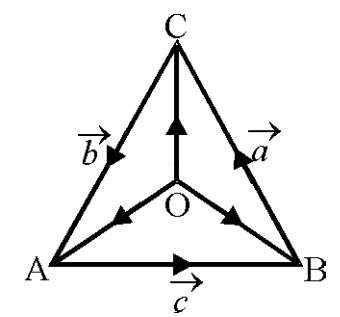
OABC is a tetrahedron. Write the vectors $\overrightarrow{ BC }, \overrightarrow{ CA }, \overrightarrow{ AB }$ in terms of $\overrightarrow{ OA }, \overrightarrow{ OB }$ and $\overrightarrow{ OC }$.
Image
If R = {(x, y) : x + 2y = 8} is a relation on N, write the range of R.
Find a vector of magnitude $\sqrt{171}$ which is perpendicular to both of the vectors  $\overrightarrow{\text{a}} = \hat{\text{i}} + 2\hat{\text{j}} - 3\hat{\text{k}}$  $\text{and} \overrightarrow{\text{b}} = 3\hat{\text{i}} - \hat{\text{j}} + 2\hat{\text{k}}.$
Show that the function given by f (x) = sin x is neither increasing nor decreasing in (0, $\pi$)
Find the value of the expression $\tan \left( {{{\sin }^{ - 1}}\frac{3}{5} + {{\cot }^{ - 1}}\frac{3}{2}} \right)$.
Determine order and degree (if defined) of differential equations given in Exercise.
$\bigg(\frac{\text{ds}}{\text{dt}}\bigg)^4 + 3\text{s} \frac{\text{d}^2\text{s}}{\text{dt}^2} =0$
$\text{If}\ \text{P}(\text{A})=0.8,\ \text{P}(\text{B})=0.5\ \text{and}\ \text{P}(\text{B}|\text{A})=0.4,\ \text{find}:$
$\text{P}(\text{A}\cap\text{B})$
If A and B are two events such that $\text{P}(\text{A})=\frac{1}{4},\ \text{P}(\text{B})=\frac{1}{2}\ \text{and}\ \text{P}(\text{A}\cap\text{B})=\frac{1}{8},$ find P(not A and not B).
Classify the following measures as scalars and vectors. $10^{-19}$ coulomb