Question
Evaluate $\int_{0}^{\frac{\pi}{4}} \sin ^{3} 2 t \cos 2 t d t$ 

Answer

Let $I=\int_{0}^{\frac{\pi}{4}} \sin ^{3} 2 t \cos 2 t d t$.
Consider $\int \sin ^{3} 2 t \cos 2 t d t$ 
Put sin 2t = u so that 2 cos 2t dt = du or cos 2t dt = $\frac{1}{2}$du
So $\int \sin ^{3} 2 t \cos 2 t d t=\frac{1}{2} \int u^{3} d u$ 
= $\frac{1}{8}\left[u^{4}\right]=\frac{1}{8} \sin ^{4} 2 t=\mathrm{F}(t)$ 
Therefore, by the second fundamental theorem of integral calculus
$I=F\left(\frac{\pi}{4}\right)-F(0)=\frac{1}{8}\left[\sin ^{4} \frac{\pi}{2}-\sin ^{4} 0\right]=\frac{1}{8}$ 
 

Need a full question paper?

Generate a complete, print-ready paper with questions like this in minutes — across 16+ boards, with answer keys.
Start Generating Free

Similar questions

Examine if Rolle’s theorem is applicable to any of the following functions. Can you say some thing about the converse of Rolle’s theorem from these example?$\text{f(x)}=[\text{x}]\text{ for x}\in[5,\ 9]$
Let $A = {1, 2, 3}$. Then show that the number of relations containing $(1, 2)$ and $(2, 3)$ which are reflexive and transitive but not symmetric is three.
For what value of ‘k’ is the function $\text{f(x)} = \begin{cases} \frac{\sin \text{5x}}{\text{3x}} + \cos \text{x}, & \text{if }& \text{x} \neq 0 \\ \text{ }\text{ }\text{ }\text{ } \text{k}, & \text{if } & \text{x = 0}\\ \end{cases}$ continuous at x = 0?
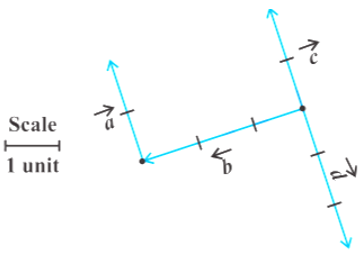
In the Figure, which are the Collinear vector.

In a meeting, 70% of the members favour and 30% oppose a certain proposal. A member is selected at random and we take X = 0 if he opposed, and X = 1 if he is in favour. Find E(X) and Var (X).
One card is drawn at random from a well shuffled deck of 52 cards.
In which of the following cases are the events E and F independent?
E: the card drawn is a king or queen
F: the card drawn is a queen or jack
Find the interval of the function that is strictly increasing or decreasing: $(x + 1)^3 (x - 3)^{3 }$
If the matrix $A$ is both symmetric and skew symmetric, then
Is the function $f$ defined by  $f(x)=\left\{\begin{array}{ll} {x,} & {\text { if } x \leq 1} \\ {5,} & {\text { if } x>1} \end{array}\right.$   continuous at $x = 0$ ? At $x = 1$ ? At $x = 2$ ?
Find the area under the given curves and given lines: $y = x^4, x = 1, x = 5$ and $x-$axis