Question
Evaluate the following integrals:$\int\frac{\sec^2\text{x}}{1-\tan^2\text{x}}\text{dx}$

Answer

$\int\frac{\sec^2\text{x dx}}{1-\tan^2\text{x}}$
Let $\tan\text{x = t}$
$\Rightarrow\sec^2\text{x dx = dt}$
Now, $\int\frac{\sec^2\text{x dx}}{1-\tan^2\text{x}}$
$=\int\frac{\text{dt}}{1-\text{t}^2}$
$=\frac{1}{2}\log\bigg|\frac{1+\text{t}}{1-\text{t}}\bigg|+\text{C}$
$=\frac{1}{2}\log\bigg|\frac{1+\tan\text{x}}{1-\tan\text{x}}\bigg|+\text{C}$

Need a full question paper?

Generate a complete, print-ready paper with questions like this in minutes — across 16+ boards, with answer keys.
Start Generating Free

Similar questions

Show that f : R → R, given by f(x) = x - [x], is neither one-one nor onto.
Find the value of $x$ if the area of $\triangle$ is $35 \ cm^2$ with vertices $(x, 4), (2, -6)$ and $(5, 4).$
A random variable $X$ can take all non negative integral values and the probability that $X$ takes the value is proportional to $5^{-r}$. Find $P(X<3)$
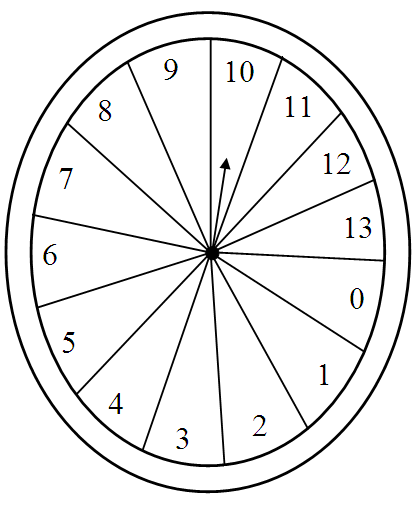
In roulette, Figure, the wheel has 13 numbers 0, 1, 2,...., 12 maked on equally spaced slots. A player sets Rs 10 on a given number. He recieves Rs 100 from the organiser of the game if the ball comes to rest in this slot; otherwise he gets nothing. If X denotes the players net gain/loss, Find E(X).
If either $\vec{\text{a}}=\vec{0}$ or $\vec{\text{b}}=\vec{0},$ then $\vec{\text{a}}\times\vec{\text{b}}=\vec{0}.$ is the converse true? justify your answer with an example.
Find the value of $\lambda$ so that the following vectors are coplanar:
$\vec{\text{a}}=\hat{\text{i}}+2\hat{\text{j}}-3\hat{\text{k}},\vec{\text{b}}=3\hat{\text{i}}+\lambda\hat{\text{j}}+\hat{\text{k}},\vec{\text{c}}=\hat{\text{i}}+2\hat{\text{j}}+2\hat{\text{k}}$
If $\text{x}\begin{bmatrix}2\\3 \end{bmatrix}+\text{y}\begin{bmatrix}-1\\1 \end{bmatrix}=\begin{bmatrix}10\\5 \end{bmatrix},$ find the value of x.
By Using properties of definite integral, evaluate the following integral in Exercise:
$\int^{\text{a}}_{0}\frac{\sqrt{\text{x}}}{\sqrt{\text{x}+\sqrt{\text{a}-\text{x}}}}\text{dx}$
In a bank, the principal increases continuously at the rate of $r\%$ per year. Find the value of r if $Rs.100$ double itself in $10$ years $(log_{e}^2 = 0.6931).$
Prove that $\tan^{-1}\frac{1}{4}+\tan^{-1}\frac{2}{9}=\sin^{-1}\frac{1}{\sqrt{5}}.$