Question
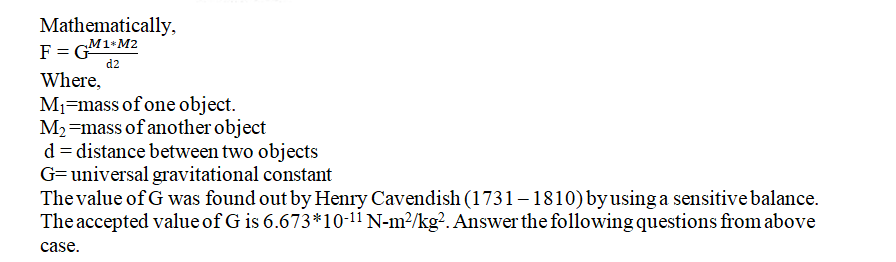
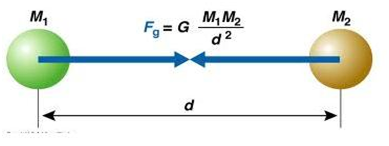
Every object in the universe attracts every other object with a force which is proportional to the product of their masses (m1*m2) and inversely proportional to the square of the distance (d2) between them. The force is along the line joining the centers of two objects.

(i)Gravitational force does not depend on

(a) Masses of objects

(b) Separation between objects

(c) Charges on objects

(d) None of these

(ii) Force of gravitation varies with masses of object as

(a) Product of masses

(b) Sum of masses

(c) Difference of masses

(d) None of these

(iii) When mass of one body is doubled then force of gravitation will become

(a) Force will remain same

(b) Force will become double

(c) Force will become halved

(d) None of these

(iv)What is universal gravitational constant? What is its SI unit?

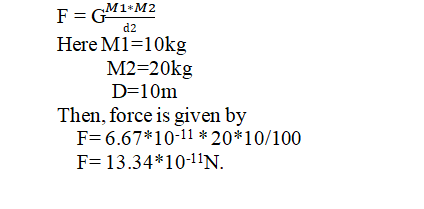
(v) Two objects of masses 10kg and 20kg separated by distance 10m. What is gravitational force between them?

Need a full question paper?

Generate a complete, print-ready paper with questions like this in minutes — across 16+ boards, with answer keys.

Start Generating Free

Similar questions

The covering or protective tissues in the animal body are epithelial tissues. Epithelium covers most organs and cavities within the body. External and Internal covering of the body and organs are all made of epithelial tissue.

Epithelial tissue cells are tightly packed and form a continuous sheet. They have only a small or almost no intercellular spaces.it plays an important role in regulating the exchange of materials between the body and the external environment and also between different parts of the body.

Simple squamous epithelial cells are extremely thin and flat and form a delicate lining. The oesophagus and the lining of the mouth are also covered with squamous epithelium. The skin, which protects the body, is also made of squamous epithelium.

Where absorption and secretion occur, as in the inner lining of the intestine, tall epithelial cells are present. This columnar (meaning ‘pillar-like’) epithelium facilitates movement across the epithelial barrier. In the respiratory tract, the columnar epithelial tissue also has cilia, which are hair-like projections on the outer surfaces of epithelial cells. These cilia can move, and their movement pushes the mucus forward to clear it. This type of epithelium is thus ciliated columnar epithelium.

Cuboidal epithelium (with cube-shaped cells) forms the lining of kidney tubules and ducts of salivary glands, where it provides mechanical support. Epithelial cells often acquire additional specialisation as gland cells, which can secrete substances at the epithelial surface. Sometimes a portion of the epithelial tissue folds inward, and a multicellular gland is formed. This is glandular epithelium.

(1) The ciliated columnar epithelium is present in

(a) Respiratory tract

(b) Bile duct and oesophagus

(c) Fallopian tube and urethra

(d) Eustachian tube and stomach lining

(2) The cuboidal epithelium is present in

(a) Bronchioles

(b) Bile duct and oesophagus

(c) Fallopian tube and urethra

(d) Kidney tubules ducts of salivary glands

(3) External and Internal covering of the body and organs are all made of ________

(a) Skin Tissue

(b) Epithelial Tissue

(c) Nerves Tissue

(d) Connective Tissue

(4) How are cells arranged in epithelial tissue?

(a) Loosely packed  

(b) Closely packed

(c) Arranged in discontinuous form   

(d) Both a and c

(5) Enlist the types of Epithelial Tissue?
There are three states of matter – solid, liquid and gas.

Solids have a definite shape, distinct boundaries and fixed volumes, that is, have negligible compressibility. Solids have a tendency to maintain their shape when subjected to outside force. Solids may break under force but it is difficult to change their shape, so they are rigid.

Liquids have no fixed shape but have a fixed volume. They take up the shape of the container in which they are kept. Liquids flow and change shape, so they are not rigid but can be called fluid.

Gas as has indefinite shape, no fixed volume. Gas gets the shape and volume of container.

Gas has very low density hence are light. Gas can flow easily and hence are called fluid.

i.) Which of the following state of matter takes shape of container in which it is filled?

a.) Solid

b.) Liquid

c.) Gas

d.) Both b and c

ii.) Distance between particles of matter least in

a.) Solid

b.) Liquid

c.) Gas

d.) None of these

iii.) Compressibility is least in case of

a.) Solid

b.) Liquid

c.) Gas

d.) None of these

iv.) Give properties of solids.

v.) Give properties of Gases.

What happens inside the matter during change of state? On increasing the temperature of solids, the kinetic energy of the particles increases. Due to the increase in kinetic energy, the

Particles start vibrating with greater speed. The energy supplied by heat overcomes the forces of attraction between the particles. The particles leave their fixed positions and start moving more freely. A stage is reached when the solid melts and is converted to a liquid. The minimum temperature at which a solid melts to become a liquid at the atmospheric pressure is called its melting point.

The temperature of the system does not change after the melting point is reached, till all the ice melts. This happens even though we continue to heat the beaker, that is, we continue to supply heat. This heat gets used up in changing the state by overcoming the forces of attraction between the particles. The amount of heat energy that is required to change 1 kg of a solid into liquid at atmospheric pressure at its melting point is known as the latent heat of fusion. So, particles in water at 00 C (273 K) have more energy as compared to particles in ice at the same temperature.

The temperature at which a liquid starts boiling at the atmospheric pressure is known as its boiling point. Boiling is a bulk phenomenon. Particles from the bulk of the liquid gain enough energy to change into the vapour state. A change of state directly from solid to gas without changing into liquid state is called sublimation and the direct change of gas to solid without changing into liquid is called deposition.

i.) A change of state directly from solid to gas without changing into liquid state is called

a.) Sublimation

b.) Deposition

c.) Boiling point

d.) None of these

ii.) The direct change of gas to solid without changing into liquid is called

a.) Sublimation

b.) Deposition

c.) Boiling point

d.) None of these

iii.) The energy supplied by heat to solid is used to overcome the forces of attraction between the particles. True or false

a.) True

b.) False

c.) None of these

iv.) Define melting point and boiling point

v.) Define latent heat of fusion

The given mixture contains three constituents A, B and C. The constituent A is a yellow coloured, solid element which dissolves in a liquid D. The constituents B is a blue coloured salt which is insoluble in liquid D but dissolves easily in another liquid E. The constitudent C is a liquid wlich is used in coolking food and forms a solid fat on hydrogenation.
  1. What do you think could (i) constituent A, and (ii) liquid D be?
  2. What could (i) constituent B, and (ii) liquid E be?
  3. What could liquid C be?
  4. How will you separate the mixture containing A, B and C.
Three mixtures A, B and C are obtained by stirring three different solids in water taken in separate beakers. When mixture A is allowed to stand for some time, then its particles settle at the bottom of the beaker. When a beam of light is passed through mixture A in a dark room, the path of light becomes visible when observed from the side of the beaker. When mixture B is allowed to stand for a considerable time, even then its particles do not settle down. Mixture B, however, scatters the beam of light just like mixture A. The particles of mixture C do not settle down on keeping and it also does not scatter a beam of light passing through it.
  1. What are the mixtures like A known as?
  2. What are the mixtures like B known as?
  3. What are the mixtures like C known as?
  4. Name the phenomenon exhibited by A and B which occurs on passing a beam of light through them.
  5. Name one mixture each which is like (i) A (ii) B, and (iii) C.
The liquid air has three components X, Y and Z whose boiling points are: -186°C, -183°C and -196°C, respectively. When liquid air is fed into a tall fractional distillation column from near its bottom and warmed up slowly:
  1. Which component will be collected from near the bottom of the fraction distillation column? Why?
  2. Which component will be collected from the top part of the fractional distillation column? Why?
  3. Which component will be collected from the middle part of the fractional distillation column? Why?
  4. What could the component X, Y and Z be?
Protons are present in the nucleus of an atom. It is the number of protons of an atom, which determines its atomic number. It is denoted by ‘Z’. All atoms of an element have the same atomic number, Z. In fact, elements are defined by the number of protons they possess. For hydrogen, Z = 1, because in hydrogen atom have only one proton is present in the nucleus. Therefore, the atomic number is defined as the total number of protons present in the nucleus of an atom.

The mass of an atom is practically due to protons and neutrons alone. These are present in the nucleus of an atom. Hence protons and neutrons are also called nucleons. Therefore, the mass of an atom resides in its nucleus. For example, mass of carbon is 12 u because it has 6 protons and 6 neutrons, 6 u + 6 u = 12 u. Similarly, the mass of aluminium is 27 u (13 protons+14 neutrons). The mass number is defined as the sum of the total number of protons and neutrons present in the nucleus of an atom. It is denoted by ‘A’.

(1) Atomic number is denoted by

(a) X

(b) Y

(c) Z

(d) z

(2) The sum of the total number of protons and neutrons present in the nucleus of an atom.

(a) Atomic number

(b) Mass number

(c) Atomic weight

(d) None of the above

(3) Mass number is denoted by

(a) A

(b) a

(c) Z

(d) z

(4) Identify the correct statement

Statement 1 – Protons are present in the nucleus of an atom.

Statement 2 – Atomic number is the number of protons of an atom.

Statement 3 – Atomic number is denoted by ‘Z’.

Statement 4 – The mass of an atom is due to protons and neutrons alone.

(a) Only 2

(b) Both 3 & 4

(c) Both 1 & 2

(d) All of the above

(5) Why mass of carbon is 12 u give the reason?


A moving object can do work. An object moving faster can do more work than an identical object moving relatively slow. A moving bullet, blowing wind, a rotating wheel, a speeding stone can do work. How does a bullet pierce the target? How does the wind move the blades of a windmill? Objects in motion possess energy. We call this energy kinetic energy.

Thus, the kinetic energy possessed by an object of mass, m and moving with a uniform velocity, v is

KE = ½ *mv2

The energy possessed by an object is thus measured in terms of its capacity of doing work. The unit of energy is, therefore, the same as that of work, that is, joule (J).

(i) Energy possessed by body which is in motion is called

(a) Potential energy

(b) Kinetic energy

(c) Nuclear energy

(d) None of these

(ii) Which of the following has same unit?

(a) Potential energy and Force

(b) Kinetic energy and work

(c) Both a and b

(d) None of these

(iii) Kinetic energy depends

(a) Inversely on velocity of body

(b) Directly on square of velocity of body

(c) Directly on  velocity of body

(d) None of these

(iv) Define kinetic energy of body. Give its SI unit

(v) Is kinetic energy scalar or vector? Justify your answer

Tincture of iodine is a mixture of two materials X and Y. The material Y has a property that its solid form can be converted directly into vapours on heating by a process called Z.
  1. What could X be?
  2. What could Y be?
  3. Name the process Z.
  4. Which process would you use to recover both the components X and Y from tincture of iodine?
  5. Which process can be used to recover only component Y from tincture of iodine?
Newton’s first law of motion states that a body at rest will remain at rest position only and a body which is in motion continues to be in motion unless otherwise they are acted upon by an external force. In other words, all objects resist a changein their state of motion. In a qualitative way, the tendency of undisturbed objects to stayat rest or to keep moving with the same velocity is called inertia. This is why, the firstlaw of motion is also known as the law of inertia. Answer the following questions.

(i) The first law of motion is also known as

(a)law of inertia/p>

(b)law of thermodynamics

(c)both a and b

(d)none of these

(ii) If no external force acts on object which is at rest. it will

(a)remain at rest

(b)start to move

(c)both a and b can possible

(d)none of these

(iii) If no external force acts on moving object. it will

(a)stop moving

(b)continue to move with same speed in same direction

(c)changes its direction of motion

(d)none of these

(iv) State Newton’s first law of motion.

(v) why Newton’s first law of motion is called law of inertia