Question
Evolution indicates the forever evolving life on the Earth. Give a statement supporting the above claim.

Answer

"Evolution is the process of progress in all forms of life over generations, and evolutionary science is the study of how evolution occurs. Biological populations develop through genetic changes that correspond to changes in the organisms' observable traits.
Genetic changes incorporate mutations, which are caused by harm or replication errors in organisms' DNA.
As the genetic variation of a populace drifts randomly over generations, normal selection step by step leads traits to end up pretty much basic based on the relative regenerative success of organisms with those traits.
As per the evidence like morphological evidence, interfacing links, embryological evidence, and so forth are showing the similarities in initial stages demonstrate a typical origin of every one of these animals."
Need a full question paper?

Generate a complete, print-ready paper with questions like this in minutes — across 16+ boards, with answer keys.

Start Generating Free

Similar questions

A compound $X$ is formed by the reaction of a carboxylic acid $C _2 H _4 O _2$ and an alcohol in presence of a few drops of $H _2 SO _4$. The alcohol on oxidation with alkaline $KMnO _4$ followed by acidification gives the same carboxylic acid as used in this reaction. Give the names and structures of:
a. Carboxylic acid.
b. Alcohol.
c. The compound X. Also, write the reaction.
Draw a labelled diagram of:
  1. A xylem vessel.
  2. A sieve tube (or phloem).
Describe sexually transmitted diseases and mention the ways to prevent them.
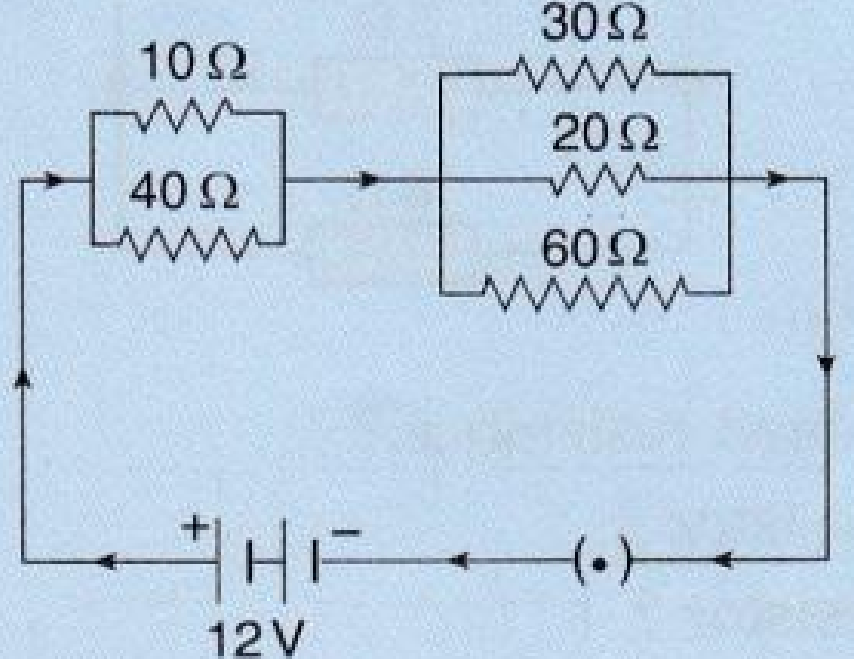
In the circuit diagram given below five resistances of $10 Ω, 40 Ω, 30 Ω, 20 Ω\ \text{and}\ 60 Ω$ are connected as shown to a 12V battery.
Calculate:
  1. Total resistance in the circuit.
  2. Total current flowing in the circuit.
What are the scientific names for the following receptors in animals?
  1. Receptors for light.
  2. Receptors for heat.
  3. Receptors for sound.
  4. Receptors for smell.
  5. Receptors for taste.
Describe sexually transmitted diseases and mention the ways to prevent them.
Three incandescent bulbs of 100W each are connected in series in an electric circuit. In another circuit another set of three bulbs of the same wattage are connected in parallel to the same source.
  1. Will the bulb in the two circuits glow with the same brightness? Justify your answer.
  2. Now let one bulb in both the circuits get fused. Will the rest of the bulbs continue to glow in each circuit? Give reason.
Distinguish between photosynthesis and respiration.
Mendeleev predicted the existence of certain elements not known at that time and named two of them as eka - aluminium, and eka - silicon.
  1. Name the element which has taken the place of (i) eka - aluminium, and (ii) eka - silicon.
  2. Mention the period/ periods of these elements in the modern periodic table.
  3. Write the group/ groups of these elements in the modern periodic table.
  4. Classify these elements as metals, non - metals or metalloids.
  5. How many valence electrons are present in the atoms of each of these elements?​​​​​​
Explain the principle of dialysis with the help of a labelled diagram.