Question
Examine whether the following statement pattern is a tautology, a contradiction or a contingency.
(p ∧ ~ q) → (~ p ∧ ~ q)
(p ∧ ~ q) → (~ p ∧ ~ q)
| p | q | ~p | ~q | p∧~q | ~p∧~q | (p∧~q)→(~p∧~q) |
| T | T | F | F | F | F | T |
| T | F | F | T | T | F | F |
| F | T | T | F | F | F | T |
| F | F | T | T | F | T | T |
The truth values in the last column are not identical.
Hence, it is contingency.
Generate a complete, print-ready paper with questions like this in minutes — across 16+ boards, with answer keys.
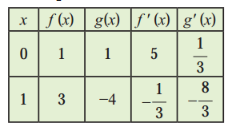
(i) The derivative of f[g(x)] w.r.t. x at x = 0 is _______ (ii) The derivative of g[f(x)] w.r.t. x at x = 0 is _______
(iii) The value of $\left[\frac{d}{d x}\left[x^{10}+f(x)\right]^{-2}\right]_{x=1}$ is
(iv) The derivative of f[(x+g(x))] w.r.t. x at x = 0 is _______
$\left(1-x^2\right) \frac{d y}{d x}+2 x y=x\left(1-x^2\right)^{\frac{1}{2}}$