Question
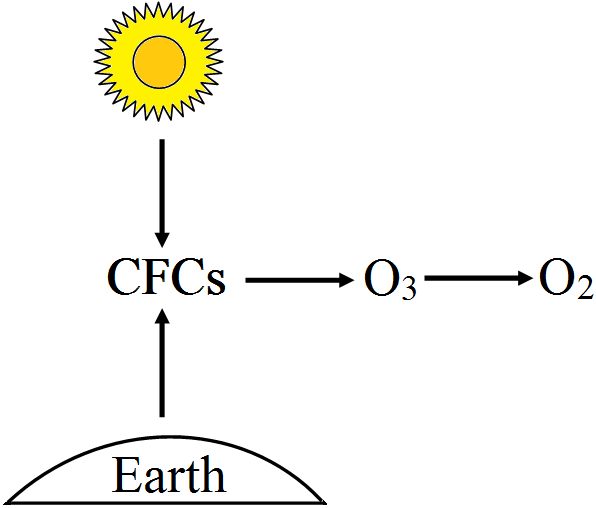
  1. Expand CFC.
  2. How does it reduce ozone to oxygen?

Answer

  1. Chlorofluorocarbons.
  2. In stratosphere, UV rays act on CFCs thereby releasing Cl, which degrades ozone, releasing molecular oxygen. Cl atoms act merely as catalyst and are not consumed in the reaction. A single chlorine atom can convert 1 lakh molecules of ozone into oxygen.

Need a full question paper?

Generate a complete, print-ready paper with questions like this in minutes — across 16+ boards, with answer keys.
Start Generating Free

Similar questions

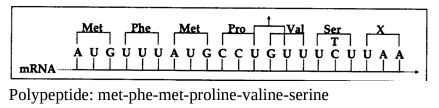
Read the sequence of the nucleotides in the given segment of mRNA and the respective amino acid sequence in the polypeptide chain.
Image
i. Provide the triplet of bases (codon) for
a. valine
b. proline
ii. Write the nucleotide sequence of the DNA strand from which this mRNA was transcribed
iii. What does the last codon of this RNA stand for?
What is double fertilisation? Mention its significance.
What is IUCN red list? Give any two uses of this list.
The red spotted newt Notophthalmus viridescens secretes toxins from its skin that make predators avoid it. The red salamander Pseudotriton ruber has no such secretions but resembles the red spotted newt and gains protection from this resemblance. What is this an example of? Who is the model, the mimic, and the dupe?
Name the interaction in each of the following:
  1. Cuscuta growing on a shoe flower plant.
  2. Mycorrhizae living on the roots of higher plants.
  3. Clownfish living among the tentacles of sea anemone.
  4. Koel laying her eggs in crow’s nest.
Explain the steps that ensure cross pollination in an autogamous flower.
A patient showed symptoms of constipation, abdominal pain and stools with excess mucus and blood clots. Name the disease and its pathogen. Where do these pathogens live in the victim's body? Name the mechanical carrier that transmits this pathogen.
Suggest two features of plants that will prevent insect and pest infestation.
Name a bioactive molecule, its source organism and the purpose for which it is given to organ transplant patients.
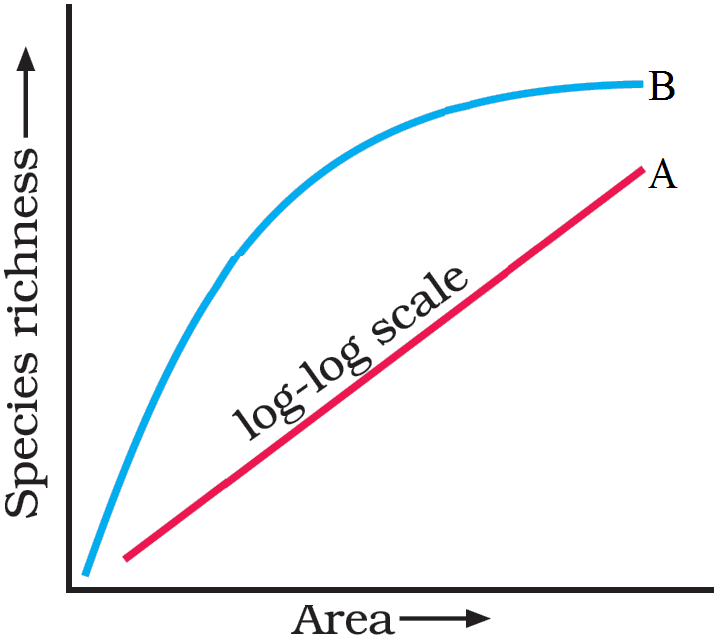
The following graph shows the species-area relationship. Answer the following questions as directed.
  1. Name the naturalist who studied the kind of relationship shown in the graph. Write the observations made by him.
  2. Write the situations as discovered by the ecologists when the value of Z (slope of the line) lies between (a) 0.1 and 0.2 (b) 0.6 and 1.2. What does Z stand for?
  3. When would the slope of the line 'B' become steeper?