Question
Explain any three physiological factors determining strength.

Answer

The various physiological factors which determine the strength of an individual are stated below:
  1. Size of the Muecle: The strength of the muscle largely depends upon the size of the muscle. It is a well known fact that bigger and larger muscles can produce more force. The force produced by the same size of muscle in males and females is approximately same but males are found to be stronger because they 'have larger and bigger muscles in comparison to females. With the help of different methods of strength training such as weight training, the size of the muscle can be increased and thereby strength is improved. So, the strength is determined by the size of the muscle.
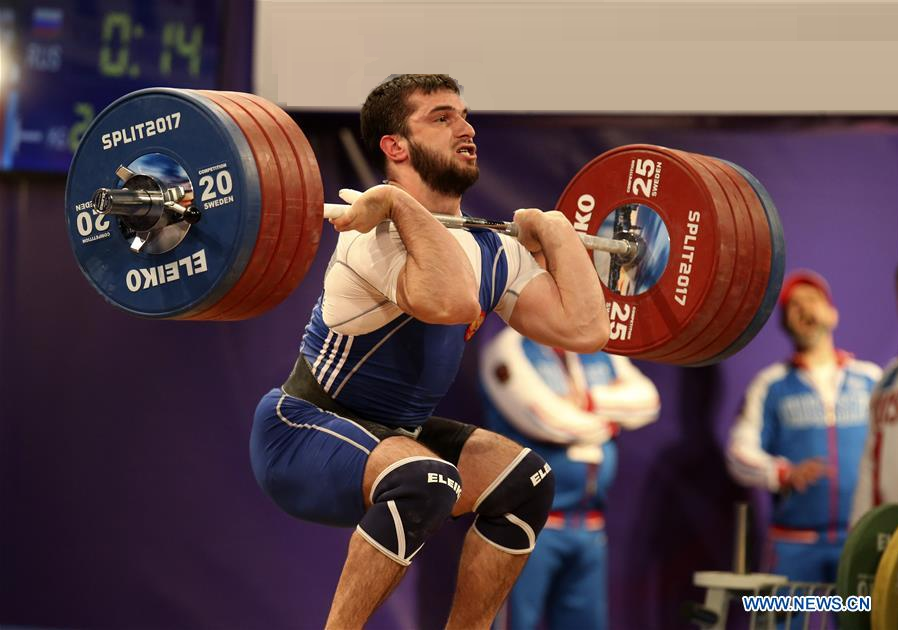
  2. Body Weight: It is also a well known fact that the individuals who are heavier are generally stronger than the individuals who are lighter. There is a positive correlation between body weight and strength among international weightlifters. The heavier weightlifters lift heavier weights. So, body weight also determines the strength of an individual.
  3. Muscle Composition: Each muscle consists of basically two types of muscle fibres, i.e., fast twitch fibres (white fibres) and slow twitch fibres (red fibres). The fast twitch fibres are capable to contract faster and therefore they can produce more force. On the contrary, the slow twitch fibres are not capable of contracting faster although they are capable of contracting for a longer duration. The muscles which have more percentage of fast twitch fibres can produce more strength. The percentage of fast twitch fibres and slow twitch fibres is genetically determined and cannot be changed through training. So, it can be said that the percentage of these fibres determines the strength of a person.

Need a full question paper?

Generate a complete, print-ready paper with questions like this in minutes — across 16+ boards, with answer keys.

Start Generating Free

Similar questions

Read the following text carefully and answer the questions that follow:
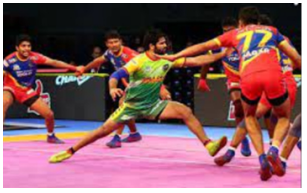
As Mr. Kiren Rijuju, Sports Minister has ordered to popularize the game of Kabaddi among school students to develop their physical ability, Mr. Gopi, Physical Education Teacher of a reputed CBSE school has decided to conduct an Inter School Kabaddi tournament in his school premises after proper drawing of fixtures. He consulted the Management and the Principal to conduct the Tournament of Pro Kabaddi pattern but the PE teacher was not aware of pro Kabaddi Tournament. So he discussed with the National Kabaddi Referee Association.
Image
1. Which is the best method to organize this kind of tournament?
a) League tournament
b) Knock out tournament
c) Round robin tournament
d) Group stage tournament
2. The Knock out tournament is also known as:
a) League tournament
b) Elimination tournament
c) Round robin tournament
d) Group stage tournament
3. If 17 teams are participating in this tournament, how many teams will get bye?
a) 13
b) 15
c) 16
d) 17
4. The formula for calculating the number of matches in a knockout tournament is:
a) $N / 2$
b) $N -1$
c) $2 N-1$
d) $N +1$
Explain the meaning and concept of correct posture.
What do you mean by friction? Describe various types of friction.
Describe exercise guidelines at different stages of growth in children. Give suitable examples for every stage.
Explain about asthma.
What do you mean by joint injuries? Enumerate the types of dislocations of joints.
A survey in an inclusive school setup found the discrepancies between the participation of normal and special child during annual sports meet. Study the table given below carefully -
S.No.EventsNormal Child (150)Special Child (10)
1100 Mtr.405
2400 Mtr.252
3Long Jump200
4High Jump151
5Rely Race84
Based on the above study and your knowledge, answer the following questions:
a. As per the above table, in ____________ event, there is no participation of Special Child.
b. Participation of students with disabilities in regular physical education classes is known as ____________
c. Enlist any two strategies to make physical activities accessible for children with special needs.
d. Motto of Special Olympic is ____________
OR
e. The motto of Paralympic is ____________
Discuss the concept of women's participation in sports in lndia.
How does angle of projection help as a factor for athletes in games and sports?
Read the following text carefully and answer the questions that follow:
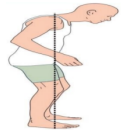
Sheethal spent her weekend checking the health status of all the security guards of her huge gated community as a part of project work assigned by PE teachers. She found out that more than half of them have shown a significant deformity in the upper part of their vertebral column.
Image
1. The term used to define this deformity is:
a) Lordosis
b) Kyphosis
c) Scoliosis
d) Spinal stenosis
2. Which are the asana/s that help in rectifying such condition/s?
a) Trikonasana, Vrikshasana, and Shavasana
b) Chakrasana, Dhanurasana, and Bhujangasana
c) Bhujangasana, Vrikshasana, and Shavasana
d) Trikonasana, Dhanurasana, and Shavasana
3. Bending head backward in standing position helps in getting rid of:
a) Kyphosis
b) Spinal stenosis
c) Scoliosis
d) Lordosis
4. Due to Covid Pandemic, most of the children attending online classes with bad sitting posture may experience which condition later in their life?
a) Scoliosis
b) Lordosis
c) Kyphosis
d) Spinal stenosis