Question
Explain co-evolution with reference to parasites and their hosts. Mention any four special adaptive features evolved in parasites for their parasitic mode of life.

OR

Explain parasitism and co-evolution with the help of one example of each.

Answer

Co-evolution is a phenomenon where many parasites have evolved to be host-specific in such a way that both the host and parasite tend to co-evolve, i.e. if the host develops/evolves special mechanism for rejecting or resisting the parasite the parasite has to evolve mechanism to counteract and neutralise them to succeed with the same host species. Parasites have special adaptations according to their lifestyles such as; loss of unnecessary sense organs, presence of adhesive organs or suckers, loss of digestive system, and high reproductive system.

Need a full question paper?

Generate a complete, print-ready paper with questions like this in minutes — across 16+ boards, with answer keys.

Start Generating Free

Similar questions

Using a Punnett Square, workout the distribution of phenotypic features in the first filial generation after a cross between a homozygous female and a heterozygous male for a single locus.
Explain the pyramid of energy in ecosystem. ###What is meant by ecological pyramid? Describe an ideal pyramid of energy with diagram.
DNA separated from one cell, when introduced into another cell is able to bestow some of the properties of former to the latter. What is this change called in technical terms? Describe the experimental evidences which led to the discovery of the above phenomenon.
Why is it difficult for DNA to pass through cell membranes? How can E.coli cells be made competent and who developed this method?
Define pollination. Explain any two contrivances of self-pollination.


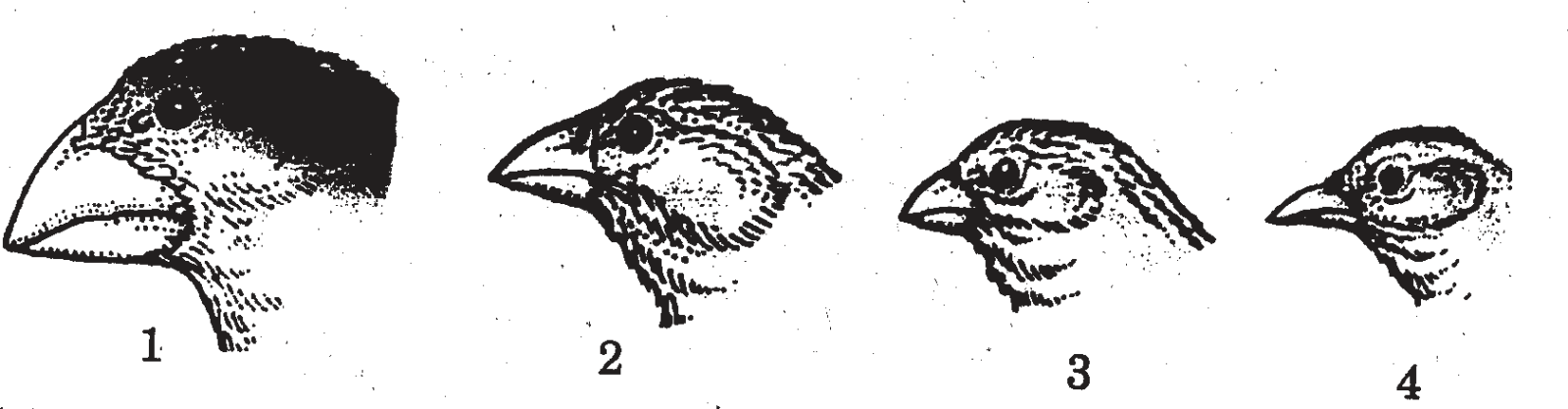
  1. Write your observations on the variations seen in the Darwin’s finches shown above.
  2. How did Darwin explain the existence of different varieties of finches on Galapagos Islands?
The enzyme DNA polymerase in E.coli is a DNA dependent polymerase and also has the ability to proof-read the DNA strand being synthesised. Explain. Discuss the dual polymerase.
  1. A DNA segment has a total of 1000 nucleotides, out of which 240 of them are adenine containing nucleotides. How many pyrimidine bases this DNA segment possesses?
  2. Draw a diagrammatic sketch of a portion of DNA segment to support your answer.
Explain the different organs of flower by drawing longitudinal section (L.S.) of a typical flower.
  1. Draw a diagram of pistil showing pollen tube growth in angiosperm and label;
  1. Stigma.
  2. Male gametes.
  3. Micropyle.
  4. Ovule.
  1. Write the function of micropyle.