Question
Explain co-evolution with reference to parasites and their hosts. Mention any four special adaptive features evolved in parasites for their parasitic mode of life.

Answer

Co-evolution can be defined as reciprocal adaptations in the two interacting organisms that brings about the evolutionary change in both of them. In terms of the relation of host and parasite, it can be explained as follows:
A parasite is an organism that is totally dependent on the host organism for its survival, but in doing so, it also harms the host. The host evolves over a long period of time to protect itself from parasite, while parasite evolves so that it can find another way to derive nutrition from the host and hence, the cycle continues.
Four special adaptive features evolved in parasites for their parasitic mode of life are as follows:
  1. Parasites have organs for attachment such as suckers that help them to firmly attach to the host body and derive nutrition from them. For example, hooks and suckers in Taenia solium.
  2. Parasites are covered by protective body covering, that is, cuticle (in case of Ascaris lumbricoides) and tegumen (in case of Taenia solium) to protect them from harmful effects of digestive enzymes of the host.
  3. All parasitic organisms are usually devoid of locomotory structures; they do not require to move in search of food.
  4. Parasitic organisms have high reproductive capacity to ensure the continuation of parasitic race.

Need a full question paper?

Generate a complete, print-ready paper with questions like this in minutes — across 16+ boards, with answer keys.
Start Generating Free

Similar questions

  1. Trace the development of an endosperm after fertilisation with reference to coconut. Mention the importance of endosperm development.
  2. Write the importance of 'pollen bank'.
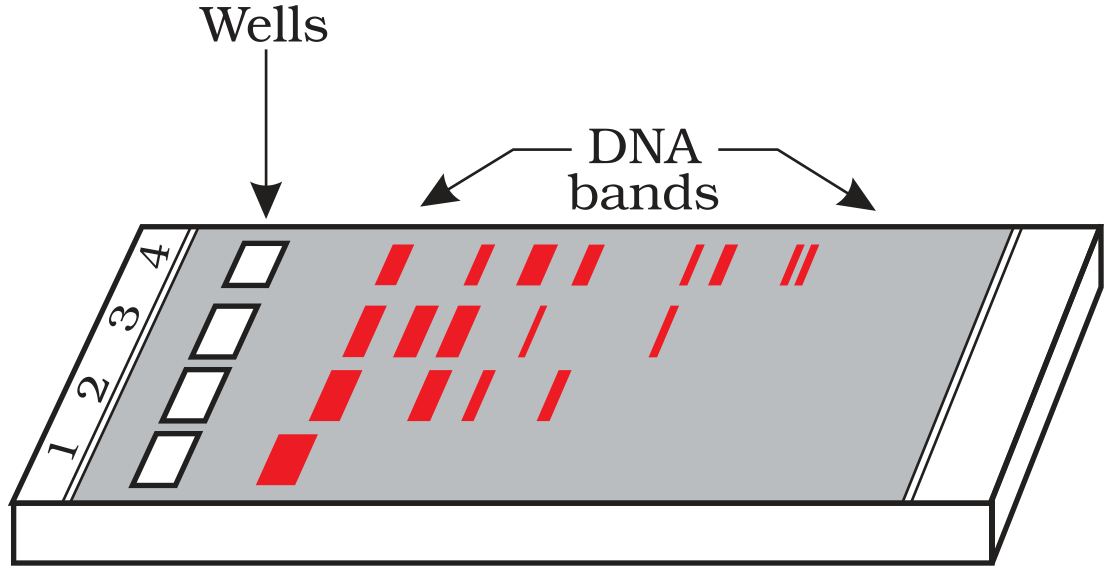
Rajesh was doing gel electrophoresis to purify DNA fragments. Given below is the sketch of the observations of the experiment performed by him.

  1. At which end he would have loaded the samples and where?
  2. Analyse the reason for different positions taken up by the DNA bands.
  3. Elaborate the step he would have followed to visualise DNA bands.
Mention the functions of LAB that are useful to man
Name and explain three adaptations of mangroves to the conditions prevailing in Sunderbans (West Bengal).
In relation to energy transfer in ecosystem, explain the statement "10kg of deer's meat is equivalent to 1kg of lion's flesh".
How do scientists extrapolate the total number of species on Earth?
During his studies on genes in Drosophila that were sex-linked. T.H. Morgan found population phenotypic ratios deviated from expected 9 : 3 : 3 : 1. Explain the conclusion he arrived at.
What are the shortcomings of ecological pyramids in the study of ecosystem?
Three water samples namely river water, untreated sewage water and secondary effluent discharged from a sewage treatment plant were subjected to BOD test. The samples were labelled A, B and C but the laboratory attendant did not note which was which. The BOD values of the three samples A, B and C were recorded as 20 mg/L, 8 mg/L and 400 mg/L respectively. Which sample of the water is most polluted? Can you assign the correct label to each assuming the river water is relatively clean?
What are the suggested reasons for population explosion?