Question
Explain exponential growth equation with well labeled diagram.###Explain exponential growth.

Answer

→ Resource (food and space) availability is obviously essential for the growth of a population.
→ Ideally, when resources in the habitat are unlimited, each species has the ability to realise fully its innate potential to grow in number, as Darwin observed while developing his theory of natural selection.
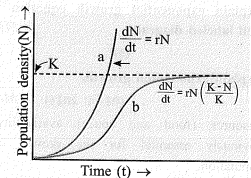
→ Then the population grows in an exponential or geometric fashion.
→ If in a population of size N, the birth rates (not total number but per capita births) are represented as band death rates (again, per capita death rates) as d, then the increase or decrease in N during a unit time period t
(dN/dt) will be
dN/dt = (b - d) × N
Let (b - d) = r,
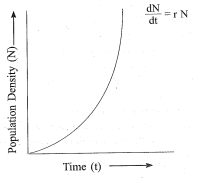
Then dN/dt=rN
→ The r in this equation is called the 'intrinsic rate of natural 'increase' and is a very important parameter chosen for assessing impacts of any. biotic or abiotic factor on population growth.
→ The above equation describes the exponential or geometric growth pattern of a population and results in a J-shaped curve when we plot N in relation to time.
Image
→ The integral form of the exponential growth equation as $Nt = N _0 e ^{ rt }$
Image
Where $N_t$ Population density after time t
$N _0$ = Population density at time zero
r = intrinsic rate of natural increase
e = the base of natural logarithms (2.71828)
→ Any species growing exponentially under unlimited resource conditions can reach enormous population densities in a short time.
→ Darwin showed how even a slow growing animal like elephant could reach enormous numbers in the absence of checks.
→ The following is an anecdote popularly narrated to demonstrate dramatically how fast a huge population could build up when growing exponentially.
→ r values, for the Norway rat the r is 0.015, and for the flour beetle it is 0.12.
→ In 1981, the r value for human population in India was 0.0205 and in 2011 r = 0.0135

Need a full question paper?

Generate a complete, print-ready paper with questions like this in minutes — across 16+ boards, with answer keys.

Start Generating Free

Similar questions

Read the following and answer any four questions from (i) to (v) given below:

DNA replication is a complex multistep process that requires enzymes, protein factors and metal ions. DNA replication in eukaryotes occurs in the nucleus during the S-phase of the cell cycle. It is semidiscontinuous in eukaryotes. in prokaryotes, replication takes place in the cytoplasm. DNA replication in bacteria occurs prior to fission. Nucleoid or viral chromosome is a single molecule of nucleic acid, it may be linear of circular. Nucleic acid in a virus is either DNA or RNA but never both.
  1. In viral DNA, how many origin of replication are present?
  1. Single
  2. Twice
  3. Multiple
  4. None
  1. Select the main enzyme involved in DNA replication.
  1. DNA ligase
  2. DNA dependent DNA polymerase
  3. Topoisomerase
  4. Helicase
  1. Read the given statement and select the option that correctly fill in the blanks. Enzyme (i) acts over the Ori site and unwinds the two strands of DNA by destroying (ii) bonds.
  1. (i)-Helicase (ii) Glycosidic
  2. (i)-Helicase (ii)-Hydrogen
  3. (i)-Unwindase (ii)-Phosphodiester
  4. (i)-Unwindase (ii)-Glycosidic
  1. DNA strand, built up of Okazaki fragments, is called.
  1. Lagging strand.
  2. Leading strand.
  3. Complementary strand.
  4. Parental strand.
  1. Select the incorrect statement about DNA polymerase in eukaryotes.
  1. Polymerase $\alpha$ is required for initiation of replication.
  2. When the RNA primer gets removed the gap is filled by DNA polymerase $\beta$ in eukaryotes.
  3. Polymerase $\in$ helps in elongation of lagging strand.
  4. Polymerase $\delta$ is largest and main enzyme for DNA replication in eukaryotes.
Read the following text carefully and answer the questions that follow:
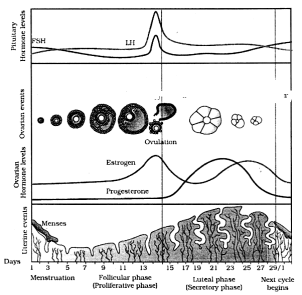
The reproductive cycle in female primates (e.g. monkeys, apes and human beings) is called the menstrual cycle. In human females, menstruation is repeated at an average interval of about 28/29 days, and the cycle of events starting from one menstruation till the next one is called the menstrual cycle Anita has show Diagrammatic presentation of various events during a menstrual cycle.
Image
i. What role do pituitary gonadotropins play during the follicular and ovulatory phases of the menstrual cycle? (1)
ii. The first half of the menstrual cycle is called the proliferative phase as well as the follicular phase. Give reason.(2)
iii. Why does corpus luteum stay active throughout pregnancy and in the absence of fertilization, is active only for 10-12 days?
OR
What happens to corpus luteum in human female if the ovum is (2)
a. fertilised,
b. not fertilised?
Read the following and answer any four questions from (i) to (v) given below:

Over population causes number of family problems. Strategies like birth control methods help to control population explosion. Natural methods of birth control do not involve medications or devices to prevent pregnancy, but rather rely on behavioural practices and/ or making observations about menstrual cycle.

  1. Which method helps in contraception by temporary absence of sex?
  1. Coitus interruptus.
  2. Withdrawal method.
  3. Rhythm method.
  4. Lactational amenorrhea method.
  1. Assertion: The effectiveness of coitus interruptus method is limited.

Reason: Some sperms may pass into vagina before ejaculation.
  1. Both assertion and reason are true, and reason is the correct explanation of assertion.
  2. Both assertion and reason are true, but reason is not the correct explanation of assertion.
  3. Assertion is true, but reason is false.
  4. Both assertion and reason are false.
  1. Why is lactational amenorrhea effective for about 4-5 months after parturition?
  1. Ovulation occurs on about the 14th day of menstruation.
  2. Ovulation does not occur during intense lactation.
  3. This method inhibits mobility of sperms.
  4. Both (b) and (c).
  1. Which fact is not the basis of periodic absence method of birth control?
  1. Ovum remains alive for about 1-2 days.
  2. Ovulation occurs on about 14th day of menstruation.
  3. Sperms survive for about 3 days.
  4. Alteration in uterine endometrium.
  1. On which days of menstrual cycle should coitus be avoided to prevent fertilisation?
  1. 10-17
  2. 6-13
  3. 1-5
  4. 15-28
Explain the inheritance of one gene by Punnett Square ?
Read the following and answer any four questions from (i) to (v) given below:

A typical angiospermic ovule is a small structure attached to the placenta by means of a stalk called funicle. The body of the ovule fuses with funicle in the region called hilum. Each ovule has one or two protective envelopes called integuments. Integuments encircle the nucellus except at the tip where a small opening called the micropyle is formed. Mature ovules are classified on the basis of funiculus. It can be orthotropous, anadromous, hernitropous, campylotropous, etc.

  1. The body of the ovule consists of a mass of parenchymatous cells called:
  1. Integuments.
  2. Nucellus.
  3. Hilum.
  4. Funiculus.
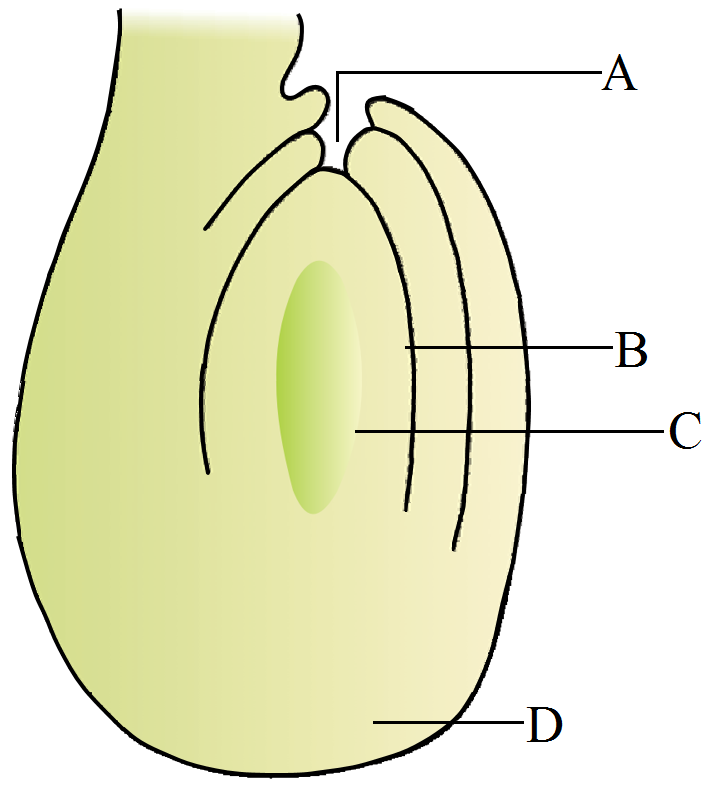
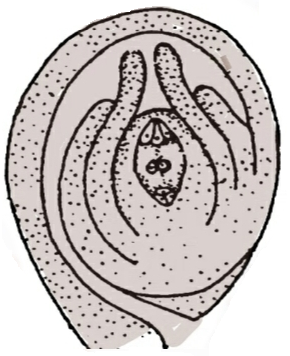
  1. Refer to the given figure and select the correct statement regarding it.

  1. This type of ovule is found in cactus.
  2. The micropyle comes to lie close to the funiculus due to unilateral growth of ovule.
  3. It is most common type of ovule found in the members of Chenopodiaceae.
  4. It is half inverted ovule.
  1. Identify the parts labelled as A, B, C and D in the given figure and select the correct option.

S. No A B C D
(a) Chalaza Female gametophyte Embryo sac Micropyle
(b) Chalaza NuceIIus Embryo sac Micropyle
(c) Micropyle Egg Embryo sac Chalaza
(d) Micropyle Nucellus Embryo sac Chalaza
  1. Mature ovules are classified on the basis of funiculus. If micropyle lie close to the funiculus, the ovule is termed as:
  1. Orthotropous.
  2. Anatropous.
  3. Hemitropous.
  4. Campylotropous.
  1. In Asphodel us, ovule is:
  1. Unitegmic.
  2. Tritegmic.
  3. Bitegmic.
  4. Ategmic.
What is sewage? Describe secondary treatment (biological treatment) in Sewage Treatment plant.
Read the following text carefully and answer the questions that follow:
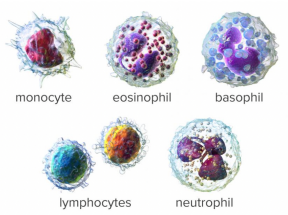
A lymphocyte isa type of white blood cell. Enlarge. Blood cells. Blood contains many types of cells: white blood cells (monocytes, lymphocytes, neutrophils, eosinophils, basophils, and macrophages), red blood cells (erythrocytes), and platelets. Blood circulates through the body in the arteries and veins.
Image
i. Why are the antigens called antibody-generating chemicals? (1)
ii. Which two types of lymphocytes are involved in immunity? (1)
iii. Give the common site of formation of two types of lymphocytes. (2)
OR
What is the site of differentiation of two types of lymphocytes? (2)
Read the following and answer any four questions from (i) to (v) given below:
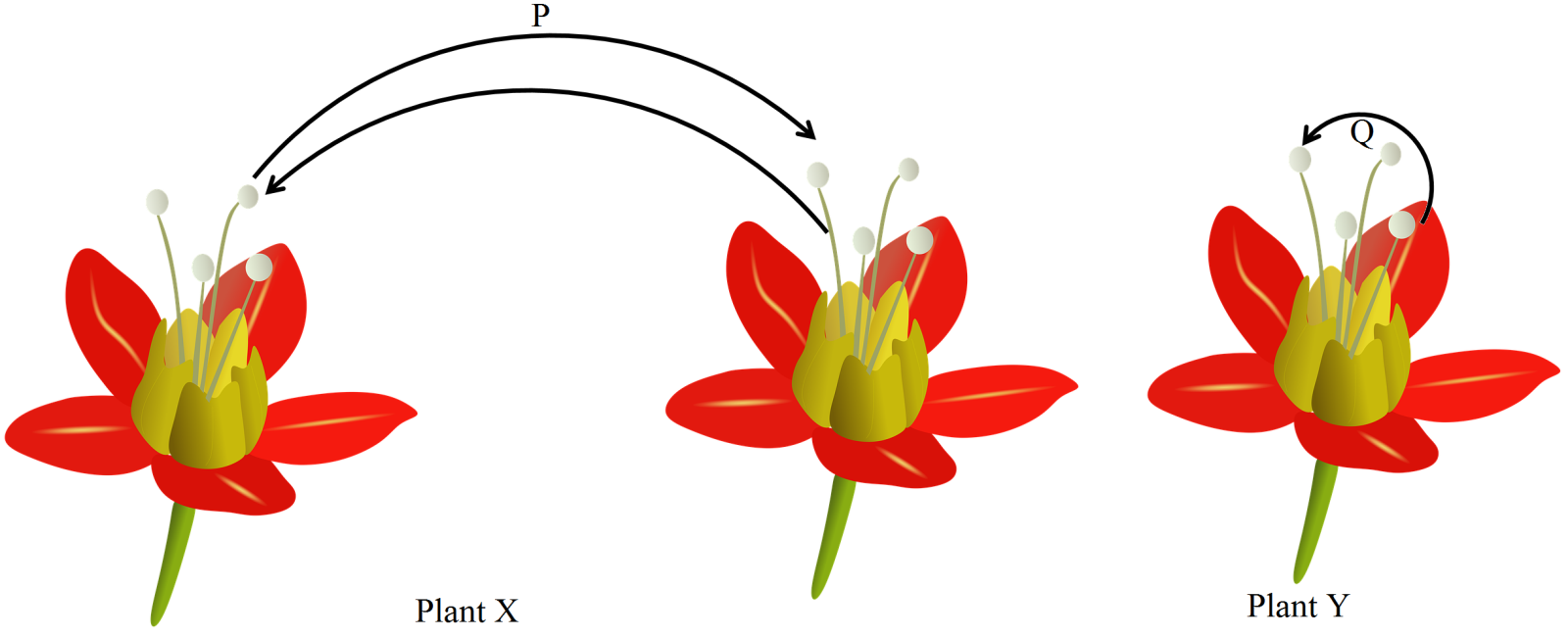
In angiosperms, the pollen grains are being transferred from the anther to the stigma and is termed pollination. This phenomenon was first discovered by Camerarius (1694) in the end of seventeenth century. Pollen grains are immobile. They cannot reach the stigma by themselves. An external agent is required for this. The pollination is mainly of two types-self pollination and cross pollination. The diagram given below shows two plants of the same species showing different types of pollination.

  1. What is transferred between the plants in the process indicated by arrow P?
  1. Ova.
  2. Pollen.
  3. Nutrients.
  4. Seeds.
  1. Which of the following statements is correct regarding processes P, Q and R?
  1. Processes P, Q and R introduce genetic variability in the offspring of sexually reproducing plants X and Y.
  2. Wind serves as agent for process Q if plants X and Y belong to Genus Salvia.
  3. Flowers of plants X and Y need to produce odour and nectar for completion of processes P and Q if they are entomophilous.
  4. If plants X and Y belong to Genus Cannabis, then their flowers need to produce sticky and heavy pollens in very small amount for accomplishment of process Q.
  1. Identify the processes P, Q and R.
S. No
P
Q
R
(a)
Geitonogamy
Xenogamy
Autogamy
(b)
Allogamy
Chasmogamy
Cleistogamy
(c)
Autogamy
Geitonogamy
Xenogamy
(d)
Geitonogamy
Allogamy
Autogamy
  1. In Catliarantl1us, the growth of style brings the stigma in contact of ripe anthers present on the mouth of corolla tube. This is an example of:
  1. Homogamy.
  2. Cleistogamy.
  3. Geitonogamy.
  4. Xenogamy.
  1. Which of the given processes represents a type of pollination that would result in greater adaptability of the particular species to potential environmental changes?
  1. P.
  2. Q.
  3. R.
  4. All of these.
Explain structure and working of biogas plant with diagram.
Read the following and answer any four questions from (i) to (v) given below:

A young couple married for 5 years is unable to bear a child in spite of not practicing any birth control method. Upon consultation, doctor advised them an assisted reproductive technology involving transfer of gametes into oviducts.

  1. Identify the technique adopted by the couple.
  1. ZIFT
  2. JUI
  3. GIFT
  4. ICSI
  1. What is the pre-requisite of this technique?
  1. Gamete formation should be normal.
  2. Fallopian tubes should be normal.
  3. Female should have thick endometrial lining.
  4. Male should be able to copulate the female.
  1. Assertion: GIFT is an in-vitro fertilisation technique.

Reason: In GIFT, gametes are fertilised outside the female body.
  1. Both assertion and reason are true, and reason is the correct explanation of assertion.
  2. Both assertion and reason are true, but reason is not the correct explanation of assertion.
  3. Assertion is true, but reason is false.
  4. Both assertion and reason are false.
  1. The procedure advised to couple involves the transfer of:
  1. Fertilised ovum.
  2. Embryo with 8 blastomeres.
  3. Sperms and unfertilised ovum.
  4. Embryo with 16 blastomeres.
  1. What is the success rate of this procedure?
  1. 30-50%
  2. < 20%
  3. 80-85%
  4. 27-30%