Question
Explain five primary groups in Tally.

Answer

primary groups in Tally:
  1. Capital: Owner's Capital, Partner's Capital, Equity Share Capital, Preference Share Capital comes under it. It is a primary group.
  • Reserve & Surplus: It is the sub group of Capital A/c. It includes General reserve, Capital Reserve etc.
  1. Loans: It is used to keep the record of the Loans taken by the Company. It is a primary group which contains following sub groups:
  • Bank Overdraft: Bank overdraft and cash credit facility taken from bank are placed under this group.
  • Secured Loans: The Loans which are taken against a security like mortgage, pledge etc. are placed under it.
  • Unsecured Loans: Apart from Secured Loans rest loans are unsecured which come under this subgroup.
  1. Current Liabilities: It is a primary group which has three subgroups:
  • Duties & Taxes: The accounts related to duties & taxes you collect or pay through sale and purchase come under it.
  • Provisions: All the provisions which are made for the future e.g., Provision for tax, proposed dividend, Bad debts.
  • Sundry Creditors: All traders, suppliers which provide goods on credit basis to business.
  • Other Current Liabilities: Place all other current liabilities in this group like Outstanding Exp, Provident Fund, Tax Deducted at Source (TDS) etc.
  1. Fixed Assets: Immovable properties like patents, Trade Rights, Plant, Goodwill, Building etc.
  2. Investment: Investment Ledger account relates to Shares, Bonds, Govt. Securities and investment in other company.

Need a full question paper?

Generate a complete, print-ready paper with questions like this in minutes — across 16+ boards, with answer keys.
Start Generating Free

Similar questions

Distinguish between Current Assets and Fixed Assets.
Creditors on 1st April, 2017 were ₹ 15,000, Purchases on credit were ₹ 30,000, Cash paid to Creditors during 2017-18 was ₹ 20,000, Returns Outward (regarding credit purchases) were ₹ 1,000 and Bills Payable accepted during the year ₹ 10,000. Find the balance of Creditors on 31st March, 2018.
Give any three advantages of Single Entry System of Accounting.
What is the role of Computer in Accounting?
What do you understand by relationship type? How is it different from relationship instance and relationship set?
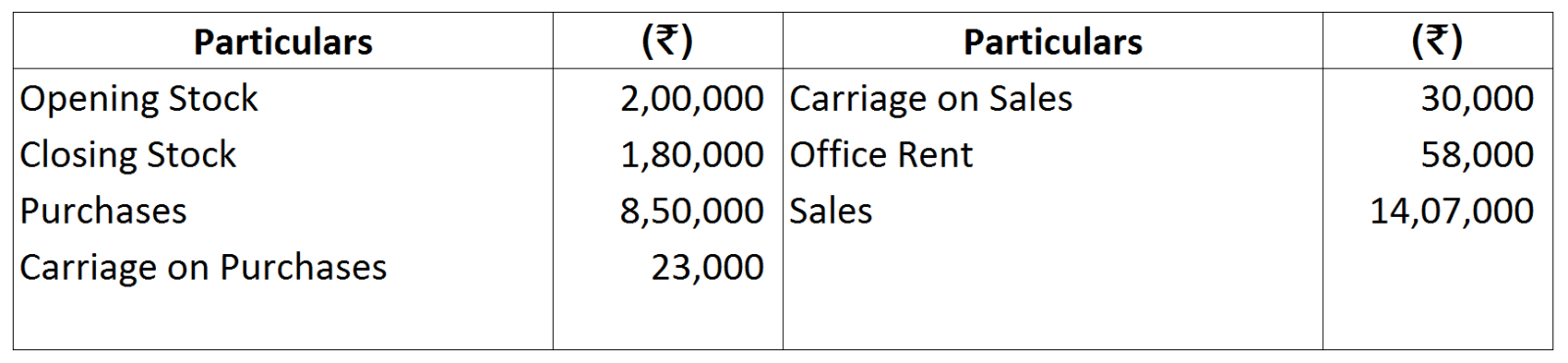
Ascertain Gross Profit from the following:
On 1st January, 2019, A draws a bill on B for ₹ 1,000 payable after 3 months. Immediately after its acceptance, A sends the bill to his bank for collection. On the due date, the bill was dishonoured. Record the transactions in the Journals of A and B.
What are Direct Expenses? Give two examples.
Pass Journal entries rectifying the following errors:
  1. A cheque for ₹ 10,000 was received from Ranjan on which ₹ 200 Cash Discount was allowed. The cheque was not honoured on due date and the amount of discount was credited to Discount Received Account.
  2. ₹ 2,000 paid as wages for machinery installation was debited to Wages Account.
  3. ₹ 5,000 received from Rakesh were credited to his Personal Account. The amount had been written off as bad debts earlier.
  4. Repair bill of machinery was recorded as ₹ 100 against the bill amount of ₹ 1,000.
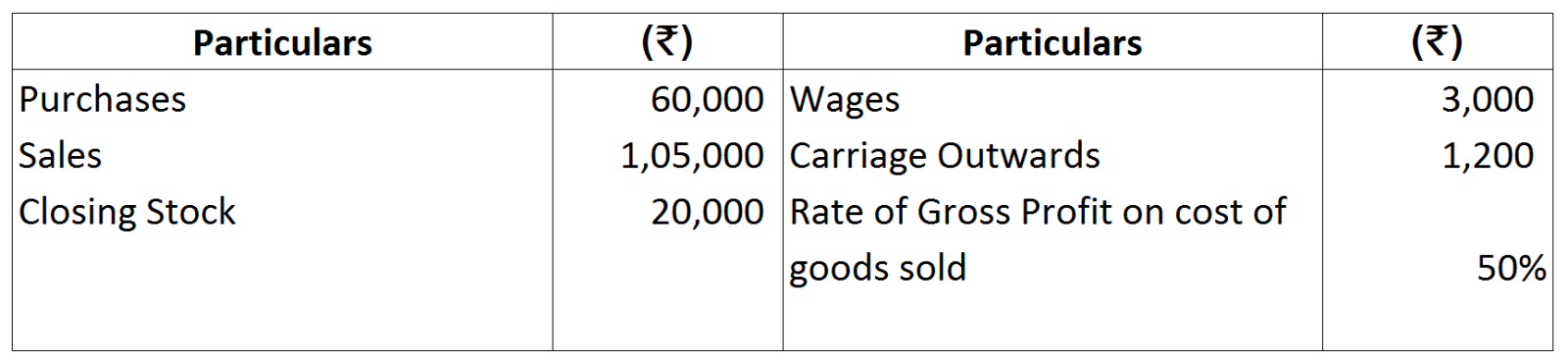
From the following particulars, ascertain the value of Opening Stock: