Question
Explain five primary groups in Tally.

Answer

primary groups in Tally:
  1. Capital: Owner's Capital, Partner's Capital, Equity Share Capital, Preference Share Capital comes under it. It is a primary group.
  • Reserve & Surplus: It is the sub group of Capital A/c. It includes General reserve, Capital Reserve etc.
  1. Loans: It is used to keep the record of the Loans taken by the Company. It is a primary group which contains following sub groups:
  • Bank Overdraft: Bank overdraft and cash credit facility taken from bank are placed under this group.
  • Secured Loans: The Loans which are taken against a security like mortgage, pledge etc. are placed under it.
  • Unsecured Loans: Apart from Secured Loans rest loans are unsecured which come under this subgroup.
  1. Current Liabilities: It is a primary group which has three subgroups:
  • Duties & Taxes: The accounts related to duties & taxes you collect or pay through sale and purchase come under it.
  • Provisions: All the provisions which are made for the future e.g., Provision for tax, proposed dividend, Bad debts.
  • Sundry Creditors: All traders, suppliers which provide goods on credit basis to business.
  • Other Current Liabilities: Place all other current liabilities in this group like Outstanding Exp, Provident Fund, Tax Deducted at Source (TDS) etc.
  1. Fixed Assets: Immovable properties like patents, Trade Rights, Plant, Goodwill, Building etc.
  2. Investment: Investment Ledger account relates to Shares, Bonds, Govt. Securities and investment in other company.

Need a full question paper?

Generate a complete, print-ready paper with questions like this in minutes — across 16+ boards, with answer keys.
Start Generating Free

Similar questions

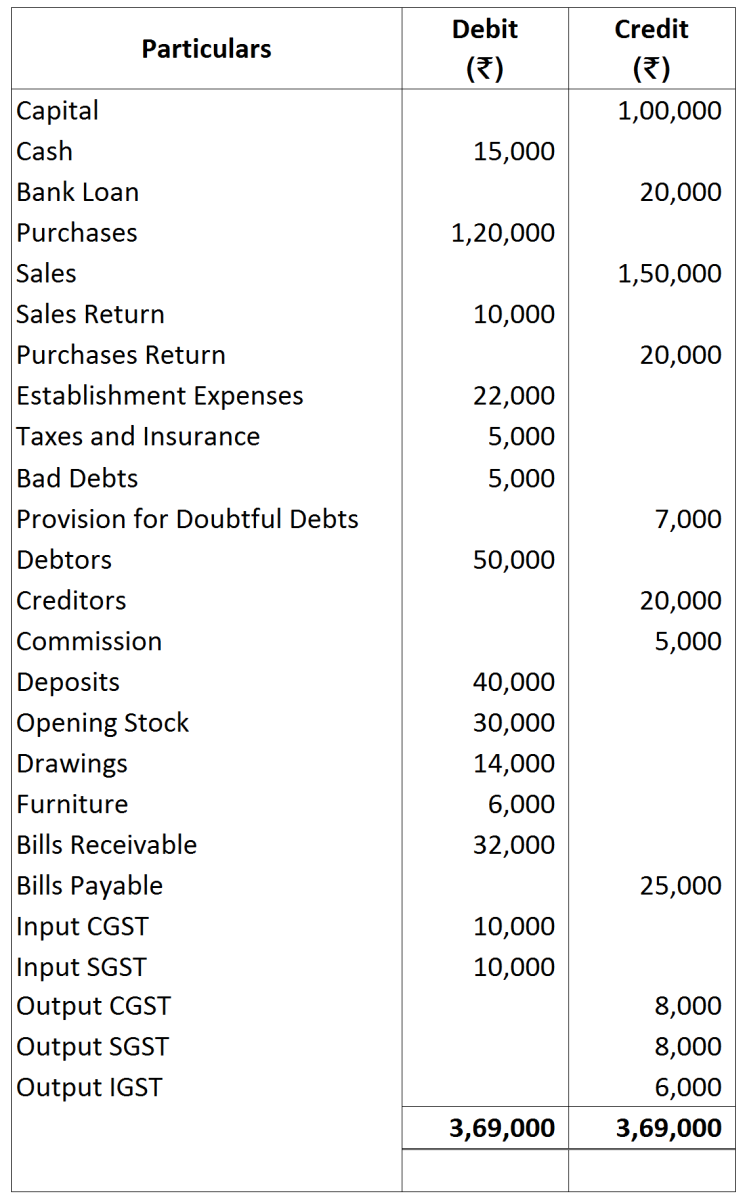
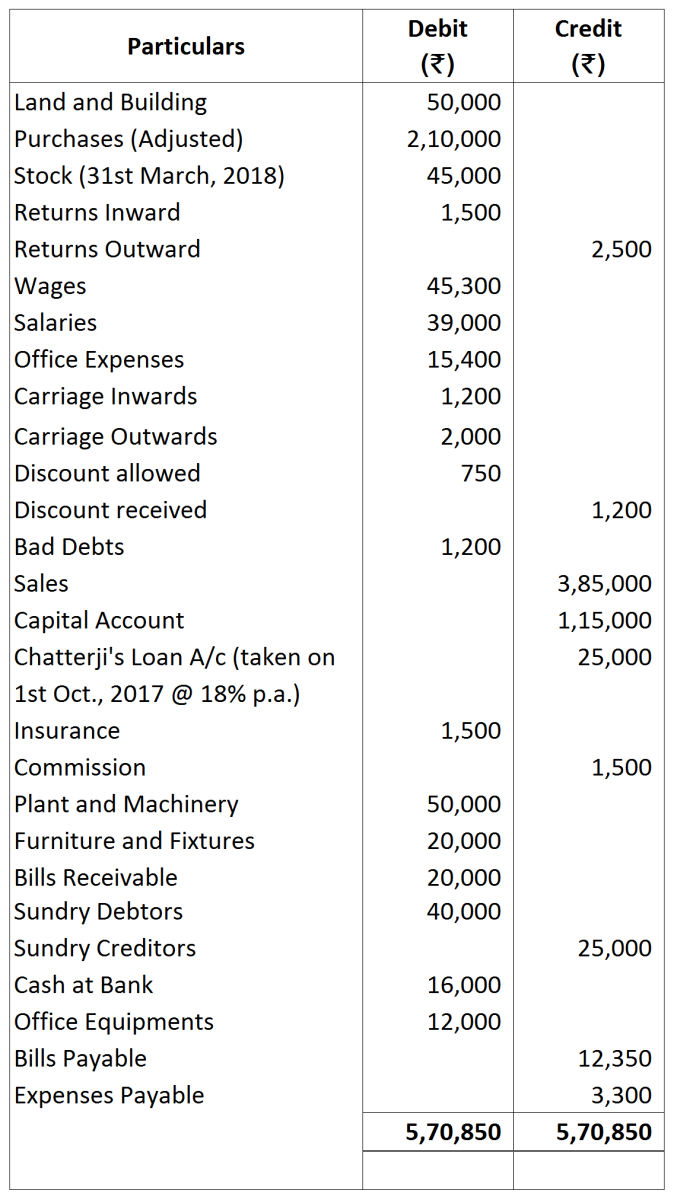
From the following Trial Balance of Shubho, prepare final accounts for the year ended 31st March, 2019 and Balance Sheet as at that date:

The following adjustments be taken care of:
  1. Depreciate Land and Building @ 6%, Plant and Machinery @ 10%, Office equipments @ 20% and Furniture and Fixtures @ 15%.
  2. Calculate Provision for Doubtful Debts at 2% on Sundry Debtors.
  3. Insurance premium includes ₹ 250 Insurance Premium paid in advance.
  4. Provide salary to Shubho ₹ 15,000 p.a.
  5. Outstanding Salaries ₹ 11,500.
  6. 10% of the final profit is to be transferred to General Reserve.
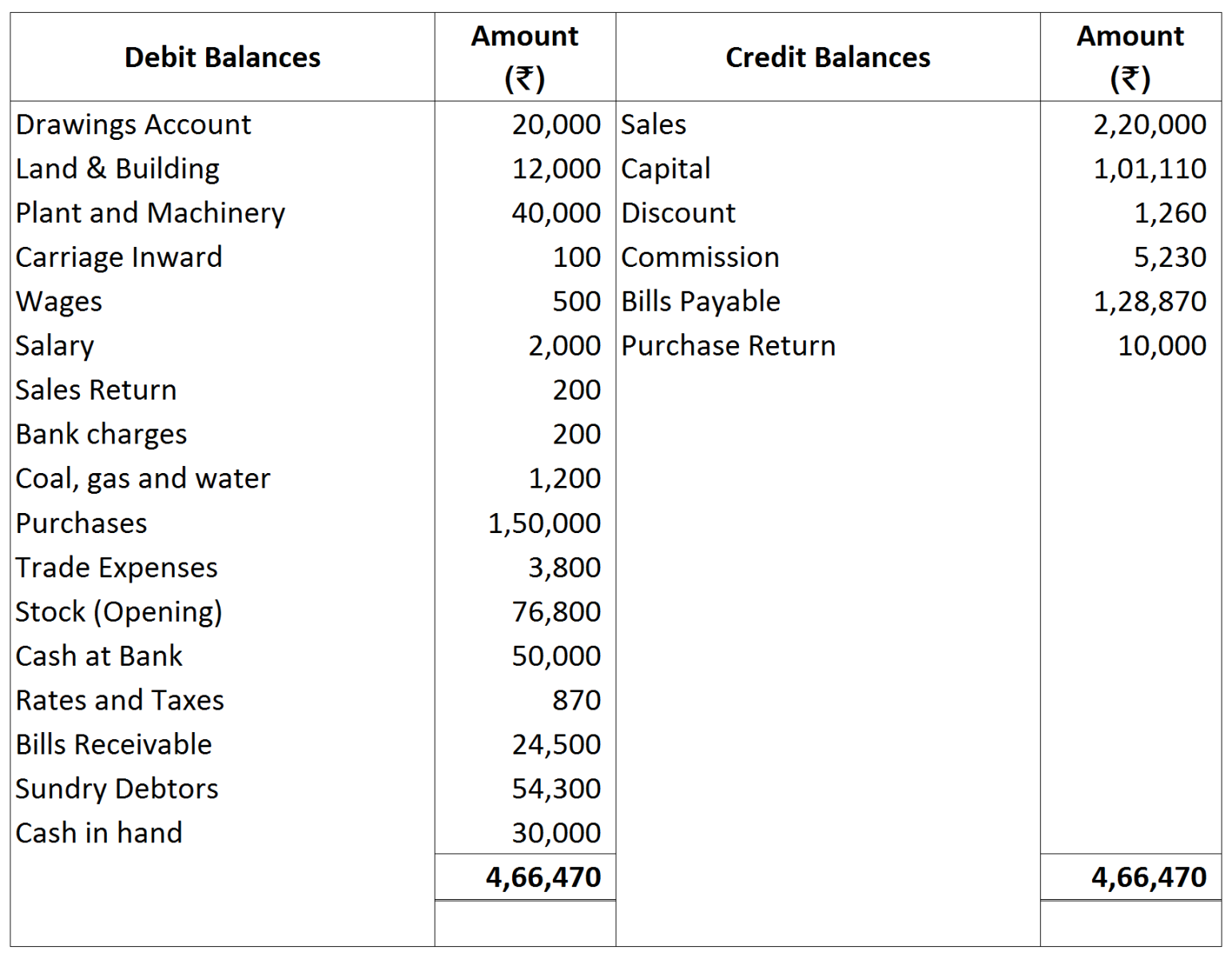
From the following balances taken from the books of Hari & Co., prepare Trading and Profit and Loss Account for the year ended $31^{st}$ March, $2019$ and Balance Sheet as at that date:

Closing Stock was valued at ₹ $1,82,100$.
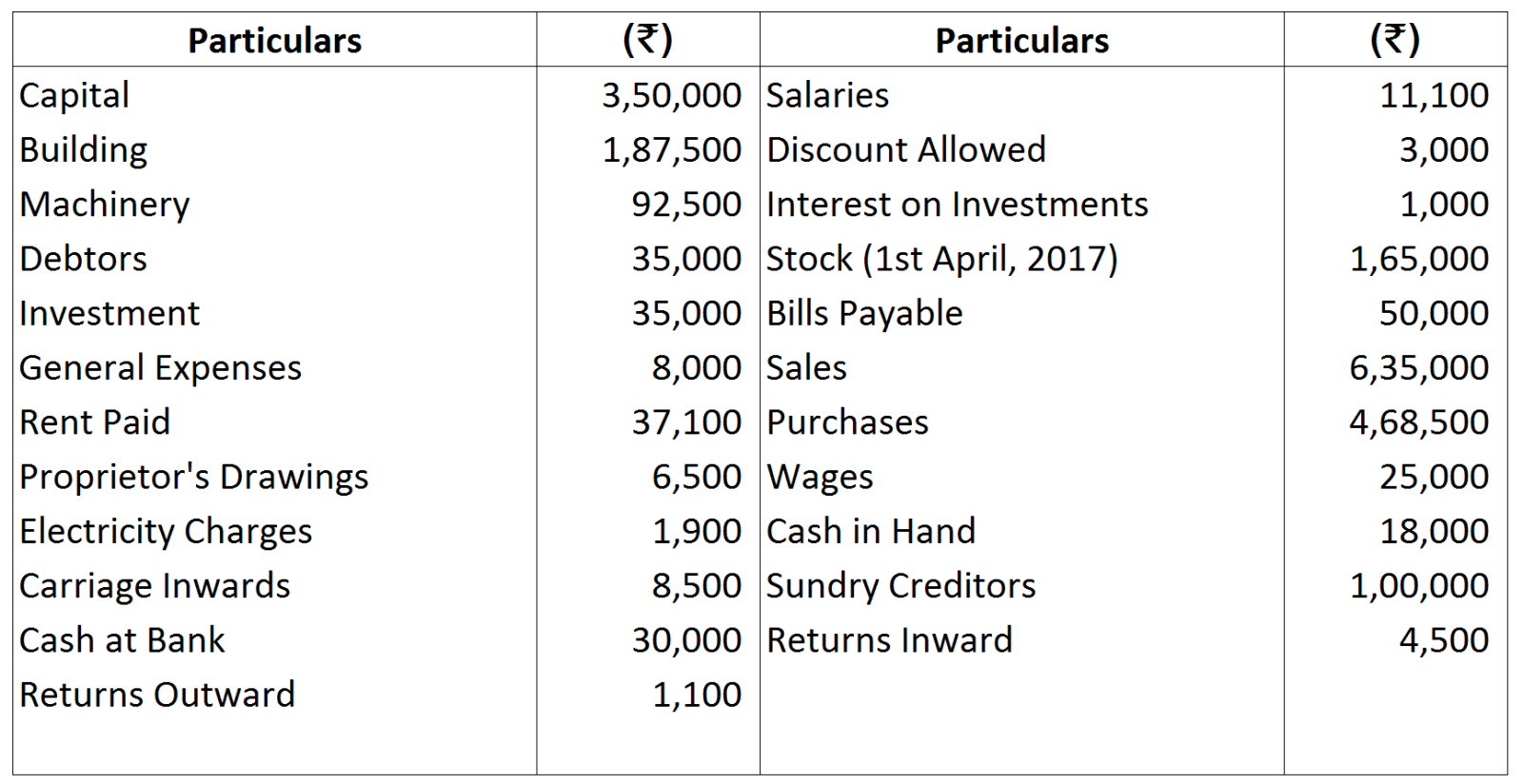
Prepare Trading and Profit and Loss Account for the year ended 31st March, 2019 and Balance Sheet as at that date from the following Trial Balance:

Adjustments:
  1. Taxes ₹ 3,000 are outstanding but Insurance ₹ 500 is prepaid.
  2. Commission ₹ 1,000 received in advance for the next year.
  3. Interest ₹ 2,100 is to be received on Deposits and Interest on Bank Loan ₹ 3,000 is to be paid.
  4. Provision for Doubtful Debts to be maintained at ₹ 10,000.
  5. Depreciate Furniture by 10%.
  6. Stock on 31st March, 2019 is ₹ 45,000.
  7. A fire occurred on 1st April, 2019 destroying goods costing ₹ 10,000. These goods were purchased paying CGST and SGST @ 6% each.
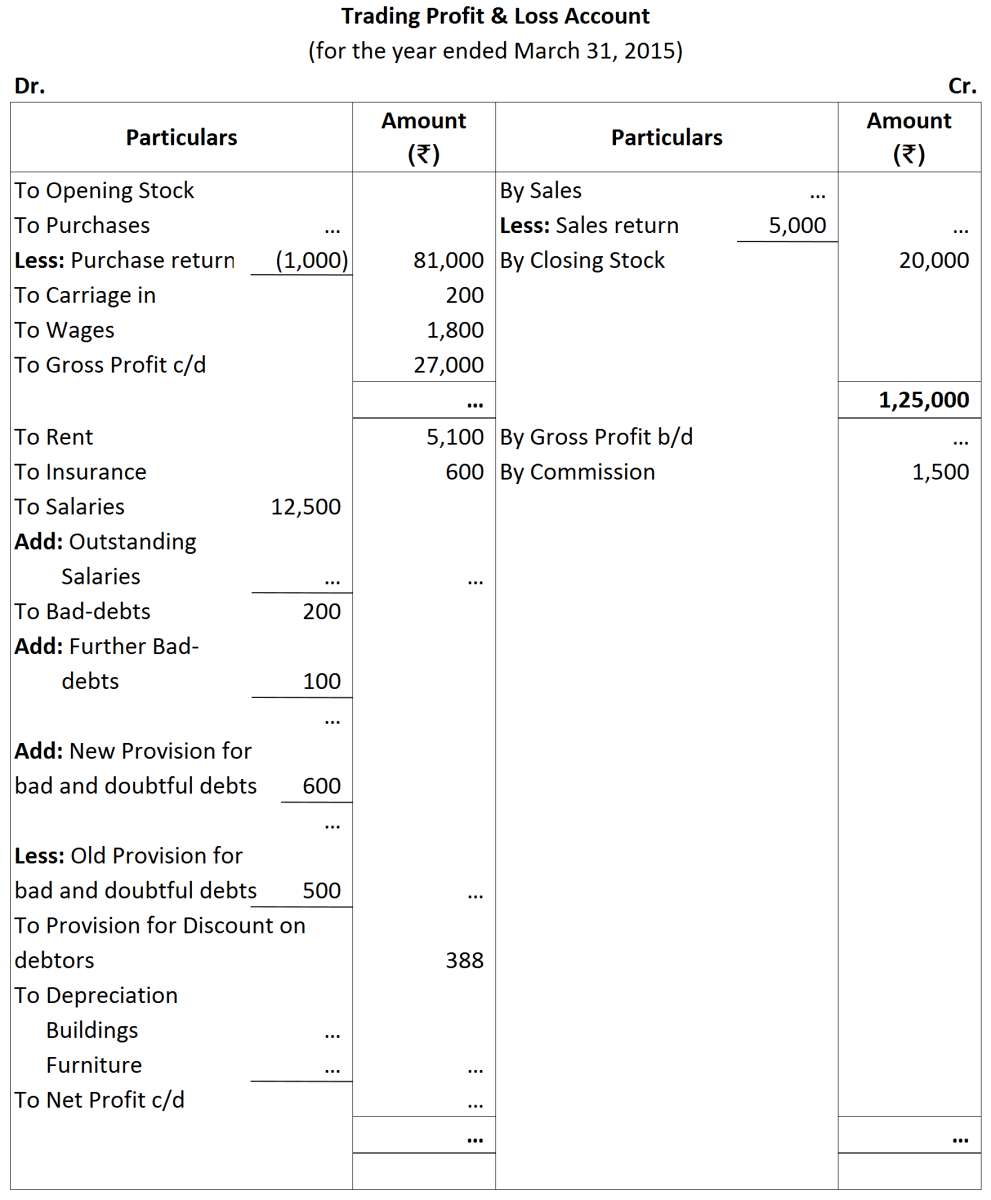
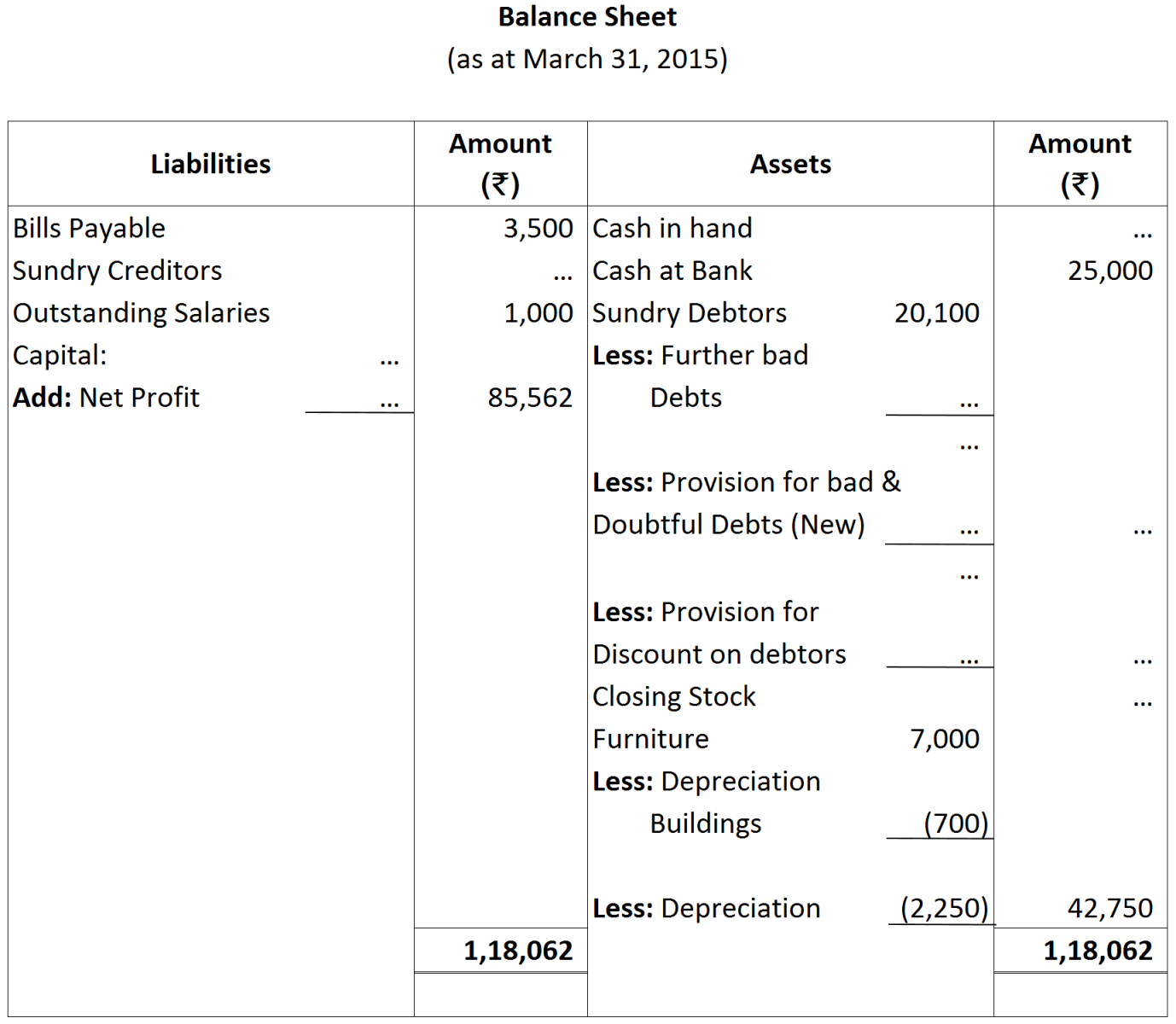
From the following Trial Balance, extracted from the books of Raga Ltd., prepare a Profit and Loss Account for the year ended 31st March, 2019 and a Balance Sheet as at that date:

The additional informations are as under:
  1. Closing stock was valued at the end of the year at ₹ 20,000.
  2. Depreciation on Plant and Machinery charged at 5% and on Land and Building at 10%.
  3. Make a provision for discount on debtors at 3%.
  4. Make a provision at 5% on debtors for Bad-debts.
  5. Salary outstanding was ₹ 100 and Wages prepaid were ₹ 40.
  6. The manager is entitled to a Commission of 5% on Net Profit after charging such Commission.
Describe the series of SQL statements to produce trial balance data base design for Model-II is used.
Prepare Two-column Cash Book of Bimal, Lucknow from the following transactions:
2019
 
June 1
Cash Balance
5,000
June 1
Bank Balance
17,500
June 5
Cash received from sale of personal asset deposited in firm's account
5,000
June 6
Cheque received as advance against sale, paid into bank
50,000
June 7
Paid S. Bose by cheque
12,500
 
Discount received
200
June 9
Paid wages in cash
3,000
June 20
Received a cheque from A. Mukherjee and sent it to bank
6,000
June 21 Drawn from Bank 5,000
June 29 Paid office salaries in cash 4,000
June 30 Sold goods in cash for ₹ 8,000 plus CGST and SGST @ 6% each and banked the same  
June 30 Paid rent by cheque including CGST and SGST @ 6% each 1,120
June 30 Paid into Bank 7,500
Fill in the missing figures in the following:
Why is Statement of Affairs not called a Balance Sheet?
Rectify the following errors found in the books of Bheem. Trial Balance had ₹ 930 excess credit. The difference has been posted to a Suspense Account:
  1. The total of Returns Inward Book has been cast ₹ 1,000 short.
  2. The purchase of an office table costing ₹ 3,000 has been passed through the Purchases Book.
  3. ₹ 3,750 paid for wages to workmen for making showcases had been charged to the Wages Account.
  4. A purchase of ₹ 670 had been posted to the Creditors' Account as ₹ 600.
  5. A cheque for ₹ 2,000 received from Nakul had been dishonoured and was passed to the debit of the Allowances Account.
  6. An amount of ₹ 15,720 due from Prasad written off as had in a previous year, was recovered and credited to the Personal Account of Prasad.
After rectification reflect the transactions in the Suspense Account.
Write three advantages of AIS.