Question
Explain Heisenberg's uncertainty principle and also explain its importance.

Answer

SELF

Need a full question paper?

Generate a complete, print-ready paper with questions like this in minutes — across 16+ boards, with answer keys.
Start Generating Free

Similar questions

Determine the solubilities of silver chromate, barium chromate, ferric hydroxide, lead chloride and mercurous iodide at $298K$ from their solubility product constants given in Table $7.9$. Determine also the molarities of individual ions.
Attempt any five of the following:
1. Convert methane into ethane.
2. Write IUPAC name of the following: $CH _3\left( CH _2\right)_4 CH \left( CH _2\right)_3 CH _3 CH _2- CH \left( CH _3\right)_2$
3. To which category of compounds does cyclohexane belong?
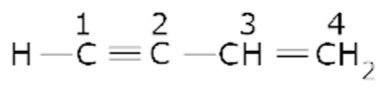
4. Name the type of hybridization in C (2) and C (3) in the following molecule
Image

5. What are Arenes?
6. n-propylmagnesium bromide on hydrolysis gives propane. Is there any other Grignard reagent which also gives propane? If so, give its name, structure and equation for the reaction.
7. How will you distinguish between acetylene and ethylene?
Balance the following redox reactions by ion-electron method:
$MnO_4^-(aq) + I^-(aq) \rightarrow MnO_2(s) + I_2(s)$ (in basic medium).
What is the type of hybridisation of carbon atoms marked with star.
  1. $\text{CH}_{3}=\text{CH}-\text{C}-\text{O}-\text{H}$
  2. $\text{CH}_{3}-\text{CH}_{2}-\text{OH}$
  3. $\text{CH}_{3}-\text{CH}_{2}-\text{C}-\text{H}$
  4. $\text{CH}_{3}-\text{CH}=\text{CH}-\text{CH}_{3}$
  5. $\text{CH}_{3}-\text{C}\equiv\text{CH}$
Comprehension given below is followed by some multiple choice questions. Each question has one correct option. Choose the correct option.
Molecular orbitals are formed by the overlap of atomic orbitals. Two atomic orbitals combine to form two molecular orbitals called bonding molecular orbital (BMO) and anti bonding molecular orbital (ABMO). Energy of anti bonding orbital is raised above the parent atomic orbitals that have combined and the energy of the bonding orbital is lowered than the parent atomic orbitals. Energies of various molecular orbitals for elements hydrogen to nitrogen increase in the order.
Different atomic orbitals of one atom combine with those atomic orbitals of the second atom which have comparable energies and proper orientation. Further, if the overlapping is head on, the molecular orbital is called ‘Sigma’, and if the overlap is lateral, the molecular orbital is called ‘pi’. The molecular orbitals are filled with electrons according to the same rules as followed for filling of atomic orbitals. However, the order for filling is not the same for all molecules or their ions. Bond order is one of the most important parameters to compare the strength of bonds.
Although geometries of $\mathrm{NH}_3$ and $\mathrm{H}_2 \mathrm{O}$ molecules are distorted tetrahedral, bond angle in water is less than that of ammonia. Discuss.
i. A beam of helium atoms move with a velocity of $2.0 \times 10^3 \mathrm{~ms}^{-1}$. Find the wavelength of the particle constituting the beam, ( $\mathrm{h}=6.626 \times 10^{-34} \mathrm{~J} \mathrm{~s}$ ).
ii. An electron is moving with a kinetic energy of $2.275 \times 10^{-25}$ J. Calculate its de-Broglie wavelength. (Mass of electron $\left.=9.1 \times 10^{-31} \mathrm{~kg}, \mathrm{~h}=6.6 \times 10^{-34} \mathrm{~J} \mathrm{~s}\right)$
The ionization constant of $HF , HCOOH$ and HCN at 298 K are $6.8 \times 10^{-4}, 1.8 \times 10-4$ and $4.8 \times 10^{-9}$ respectively. Calculate the ionization constants of the corresponding conjugate base.
Dihydrogen gas is obtained from natural gas by partial oxidation with steam as per following endothermic reaction:
$\text{CH}_4\text{ (g) + H}_2\text{O}\rightleftharpoons\text{CO (g) + 3H}_2\text{ (g)}$
  1. Write as expression for $K_p$ for the above reaction.
  2. How will the values of $K_p$ and composition of equilibrium mixture be affected by.
  1. increasing the pressure
  2. increasing the temperature
  3. using a catalyst?
Give one method for industrial preparation and one for laboratory preparation of $CO$ and $CO_2$ each.
Nitrogen laser produces a radiation at a wavelength of 337.1 nm . If the number of photons emitted is $5.6 \times 10^{24}$, calculate the power of this laser.