Question
Explain how high vacuum can be obtained by adsorption.
Generate a complete, print-ready paper with questions like this in minutes — across 16+ boards, with answer keys.
| Column A | Column B | ||
| i. | $BCl _3$ | a. | Angular molecule |
| ii. | $SiO _2$ | b. | Linear covalent molecule |
| iii. | $CO _2$ | c. | Tetrahedral molecule |
| d. | Planar trigonal molecule |
| Symbol | Atomic Number(Z) | Atomic Mass Number(A) | Neutron Number, N =A-Z | % Abundance | Stability |
| ${ }_6^{12} \mathrm{C}$ or $\mathrm{C}-12$ | 12 | 98.9% | |||
| 6 | 7 | 1.1% | Stable | ||
| ${ }_6^{14} \mathrm{C}$ or $\mathrm{C}-14$ | 6 | 14 | <0.00017% | Radioactive |
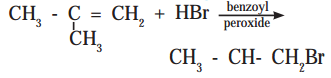
a. Write IUPAC name of the product.
b. State the rule that governs formation of this product.