Question
Explain how, nitrogen, oxygen and argon gases are separated form air.

Answer

Air is mixture of gases like nitrogen, oxygen, argon, carbon dioxide, helium, neon, krypton, xeon etc. The various gases of air are separated from one another by fractional distillation of liquid air. This separation is based on the fact that different gases of air have different boiling points(in liquid form).
The air is first filtered to remove dust, then water vapour and carbon dioxide are removed. Air is compressed to a high pressure and then cooled. The cooled air is then allowed to expand quickly into a chamber through a jet. This cools the air even more. This process of compression, cooling and rapid expansion of air is repeated again and again to make the air more and more cool so that it becomes liquid air. Now, the liquid air is fed into a tall fractionating column and warmed up slowly.
Liquid nitrogen has lowest boiling point of -196°C. So, on warming, it boils off first to form nitrogen gas and is collected at the upper part of the fractional distillation column. Liquid argon has a slightly higher boiling point of -186°C. So, it boils off next and collected as argon gas in the middle part of fractional distillation column. Liquid oxygen has a still higher boiling point of -183°C. So, liquid oxygen boils off last and collected as oxygen gas at the bottom of fractional distillation column.
Need a full question paper?

Generate a complete, print-ready paper with questions like this in minutes — across 16+ boards, with answer keys.

Start Generating Free

Similar questions

A girl of mass 50kg jumps out of a rowing boat of mass 300kg on to the bank, with a horizontal velocity of 3m/s. With what velocity does the boat begin to move backwards?

Describe structure and functions of plasma membrane.

Define animal husbandry. Write about its scope.

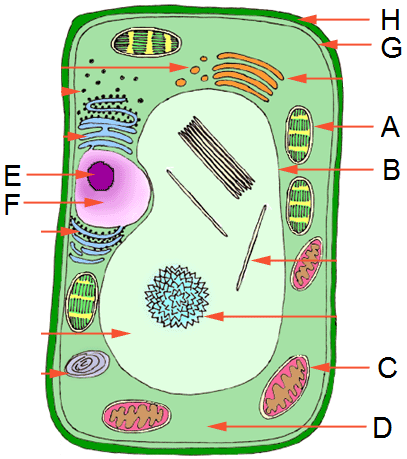
Given along side is a diagrammatic sketch of a certain generalised cell.
  1. Name the parts labeled as A-H.
  2. Is it a plant cell or an animal cell? Give two reasons in support of your answer.
  3. List the functions of parts marked as A, F and H.

Describe the Rutherford’s model of an atom. State one drawback of Rutherford’s model of the atom.
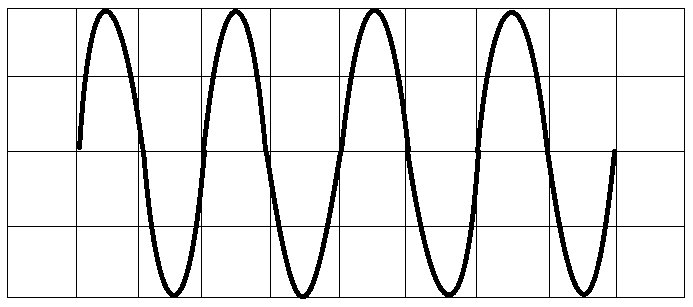
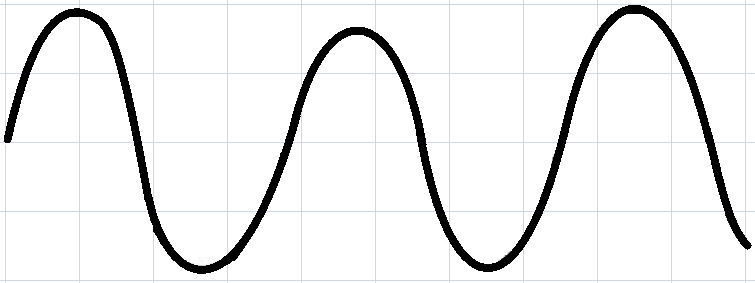
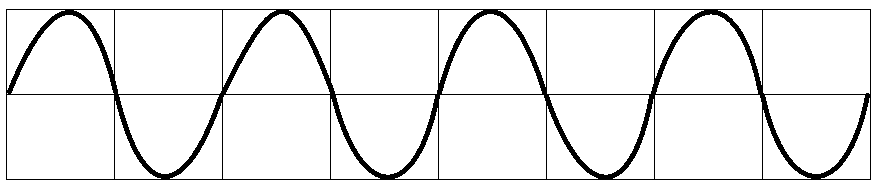
Consider the following sound waves marked A, B, C and D:

  1. Which two waves represent sounds of the same loudness but different pitch?

  1. Which two waves represent sounds of the same frequency but different loudness?

  1. State whether all these sound waves have been produced by the same vibrating body or different vibrating bodies?

  1. Which vibrating body/bodies could have generated the sound waves shown here?

Describe the mechanism of osmosis. Give its importance.
How can you obtain pure water from a salt-water mixture (or salt-solution)? Draw a meat and labelled diagram of the apparatus you would use to obtain pure water from a salt-water mixture (or salt-solution).
A gun of mass 3kg fires a bullet of mass 30g. The bullet takes 0.003s to move through the barrel of the gun and acquires a velocity of 100m/s. Calculate:
  1. The velocity with which the gun recoils.
  2. The force exerted on gunman due to recoil of the gun.