Question
Explain how, nitrogen, oxygen and argon gases are separated form air.

Answer

Air is mixture of gases like nitrogen, oxygen, argon, carbon dioxide, helium, neon, krypton, xeon etc. The various gases of air are separated from one another by fractional distillation of liquid air. This separation is based on the fact that different gases of air have different boiling points(in liquid form). The air is first filtered to remove dust, then water vapour and carbon dioxide are removed. Air is compressed to a high pressure and then cooled. The cooled air is then allowed to expand quickly into a chamber through a jet. This cools the air even more. This process of compression, cooling and rapid expansion of air is repeated again and again to make the air more and more cool so that it becomes liquid air. Now, the liquid air is fed into a tall fractionating column and warmed up slowly. Liquid nitrogen has lowest boiling point of -196°C. So, on warming, it boils off first to form nitrogen gas and is collected at the upper part of the fractional distillation column. Liquid argon has a slightly higher boiling point of -186°C. So, it boils off next and collected as argon gas in the middle part of fractional distillation column. Liquid oxygen has a still higher boiling point of -183°C. So, liquid oxygen boils off last and collected as oxygen gas at the bottom of fractional distillation column.
Need a full question paper?

Generate a complete, print-ready paper with questions like this in minutes — across 16+ boards, with answer keys.

Start Generating Free

Similar questions

Describe structure and functions of plasma membrane.
How is green revolution different from white revolution?
What is feed? What are different type of feed? How is it differ with respect to age and functions?
  1.  
  1.  
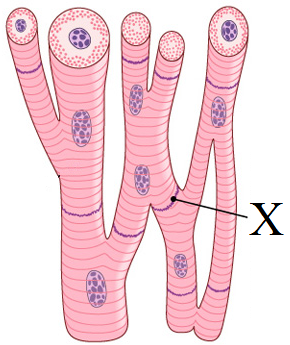
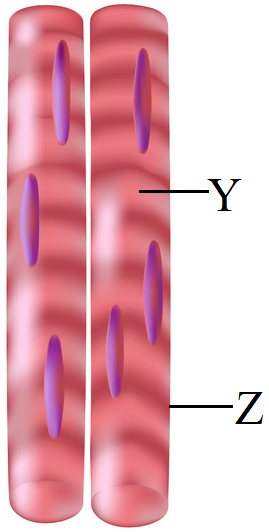
  1. Identify figures $A$ and $B.$
  2. Label$ X, Y$ and $Z.$
  3. Which one act as impulse booster?
  4. Which one is under control our will?
$A , B$ and $C$ are all liquids. Liquid $A$ has a comparatively low boiling point. On heating, liquid a vaporizes completely without leaving behind any residue. Liquid $A$ is being used increasingly as a fuel in motor vehicles either alone or by mixing with petrol. Liquid $B$ has a very high boiling point. It also vaporizes completely on heating, without leaving any residue. Liquid $B$ is a conductor of electricity and used in making thermometers. Liquid $c$ has a moderate boiling point. On heating, liquid $C$ vaporises leaving behind a white solid $D$ which is used in cooking vegetables. The condensation of vapours from $C$ give a liquid $E$ which turns anhydrous $CuSO _4$ to blue.
a. Which liquid could be an element$?$ Name this element.
b. Which liquid could be a mixture$?$ Name this mixture.
c. Which liquid could be a compound$?$ Name this compound.
d. What could the solid $D$ be$?$
e. What do you think is liquid $E$ ?
Define soil erosion. Give its causes, effects and preventive measures.
Name major phyla of Animal kingdom. Write down one character and one example of each of them.
What principles should be taken in account for the prevention of diseases?
What is air pollution? How is it caused? Give its effects.
Discuss why pesticides are used in very accurate concentration and in very appropriate manner$?$