An Entrepreneur — Entrepreneurship STD 11 Commerce — Question
CBSE BoardEnglish MediumSTD 11 CommerceEntrepreneurshipAn Entrepreneur5 Marks
Question
Explain Maslow‟s Theory of Motivation.
✓
Answer
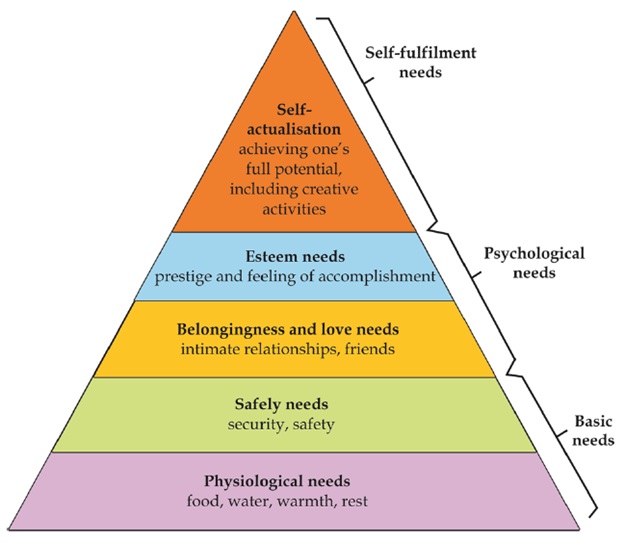
Maslow’s Hierarchy of Needs Theory: This theory was proposed by Abraham Maslow and is based on the assumption that people are motivated by a series of five universal needs. These needs are ranked, according to the order in which they influence human behaviour, in hierarchical fashion.
Physiological needs-are deemed to be the lowest - level needs. These needs include the needs such as food and water. As long as physiological needs are unsatisfied, they exist as a driving or motivating force in a person's life. A hungry person has a felt need. This felt need sets up both psychological and physical tensions that manifest themselves in overt behaviours directed at reducing those tensions (getting something to eat). Once the hunger is sated, the tension is reduced, and the need for food ceases to motivate. At this point (assuming that other physiological requirements are also satisfied) the next higher order need becomes the motivating need.
Safety needs- the needs for shelter and security - become the motivators of human behaviour. Safety needs include a desire for security, stability, dependency, protection, freedom from fear and anxiety, and a need for structure, order, and law. In the workplace this needs translates into a need for at least a minimal degree of employment security; the knowledge that we cannot be fired on a whim and that appropriate levels of effort and productivity will ensure continued employment.
Social needs-include the need for belongingness and love. Generally, as gregarious creatures, human have a need to belong. In the workplace, this need may be satisfied by an ability to interact with one's co-workers and perhaps to be able to work collaboratively with these colleagues.
After social needs have been satisfied, ego and esteem needsbecome the motivating needs. Esteem needs include the desire for self - respect, self - esteem, and the esteem of others. When focused externally, these needs also include the desire for reputation, prestige, status, fame, glory, dominance, recognition, attention, importance, and appreciation.
The highest need in Maslow's hierarchy is that of self-actualization; The need for self-realization, continuous self-development, and the process of becoming all that a person is capable of.
Need a full question paper?
Generate a complete, print-ready paper with questions like this in minutes — across 16+ boards, with answer keys.