Question
Explain the difference between M.K.S. and S.I. unit system.

Answer

 The unit system that is based on units of seven basic quantities (length, mass, time, electric current, temperature, illumination intensity and amount of substance) is called international system of units or SI.
The basic units of the SI system are as follows:
(i) Meter (m): It is the unit of length.
(ii) Kilogram (kg): It is the unit of mass.
(iii) Second (s): It is the unit of time.
The unit system that is based on the above mentioned three basic units of mechanics is called 'meter-kilogram- second system' (MKS system of units).
(iv) Ampere (A): It is the unit of electric current.
(v) Kelvin (K): It is the unit of temperature.
(vi) Candela (cd): It is unit of light intensity.
(vii) Mole: It is unit of amount of substance.
Apart from these, there are also two supplementary basic units (1) Radian (unit of angle) and (2) Steradian/unit of cubic angle. This is also considered under SI system.
Need a full question paper?

Generate a complete, print-ready paper with questions like this in minutes — across 16+ boards, with answer keys.

Start Generating Free

Similar questions

For three moving objects the distances are found to be directly proportional to the times $t, t^2$ and $t^3$. What is the nature of the net force on each object?
State and explain Work-Energy theorem.
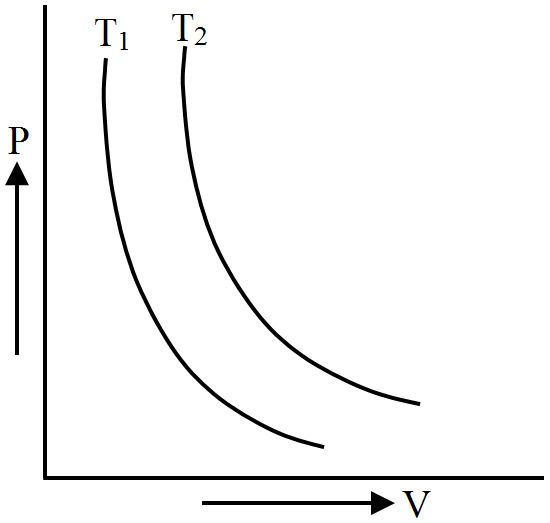
Isothermal curves for a given mass of gas are shown at two different temperatures $T_1$ and $T_2$. State whether $T_1 > T_2$ or $T_2 > T_1$. Justify your answer.
The potential barrier existing across an unbiased $p-n.$ junction is $0.2$ volt. What minimum kinetic energy a hole should have to diffuse from the $p-$side to the $n-$side if,
  1. The junction is unbiased.
  2. The junction is forwardbiased at $0.1$ volt.
  3. The junction is reverse$-$biased at $0.1$ volt?
A stone dropped from the top of a tower of height 300 m splashes into the water of a pond near the base of the tower. When is the splash heard at the top given that the speed of sound in air is $340 m s ^{-1} ?\left(g=9.8 m s ^{-2}\right)$
Two stationary particles of masses $M_1$ and $M_2$ are a distance d apart. A third particle lying on the line joining the particles, experiences no resultant gravitational force. What is the distance of this particle from $M_1$?
What should be the average velocity of water in a tube of diameter $2.0cm$ so that the flow is laminar? The viscosity of water is $0.001N m^{-2}s$.
Briefly explain Magnus effect.
To what depth must a rubber ball be taken in deep sea so that its volume is decreased by $0.1 \%$. (The bulk modulus of rubber is $9.8 \times 10^8 \mathrm{~N} \mathrm{~m}^{-2}$, and the density of sea water is $10^3 \mathrm{~kg} \mathrm{~m}^{-3}$.)
Discuss the variation of 'g' with depth. What happens to 'g' at the centre of earth?