Question
Explain the difference between prokaryotic and eukaryotic DNA.

Answer

Difference between Prokaryotic and Eukaryotic DNA :
S.No.Prokaryotic DNAEukaryotic DNA
1It is found in cytoplasm, mitochondria and chloroplast.It is found in nucleus.
2Much less in amount, less than 0.1 Pg.Much more (> 1 Pg) in amount than prokaryotic DNA.
3It is usually circular, double stranded.It is usually linear, double stranded.
4It is naked, without histone.It is coated with histone.
5It can code for fewer proteins.It can code for far more proteins.
6Non-coding introns are absent.DNA is mosaic of exons (coding regions) and introns (noncoding region).
7G : C contents are more than A : T.A : T contents are more than G : C.
8On beating it is denatured as a tangled mass.It is denatured into 2 separate strands.
9It exists singly.It exists in pairs.
10Repeated sequences absent.Present.
11Very little part of DNA is functionless.Greater part of DNA is noncistronic and functionless.

Need a full question paper?

Generate a complete, print-ready paper with questions like this in minutes — across 16+ boards, with answer keys.
Start Generating Free

Similar questions

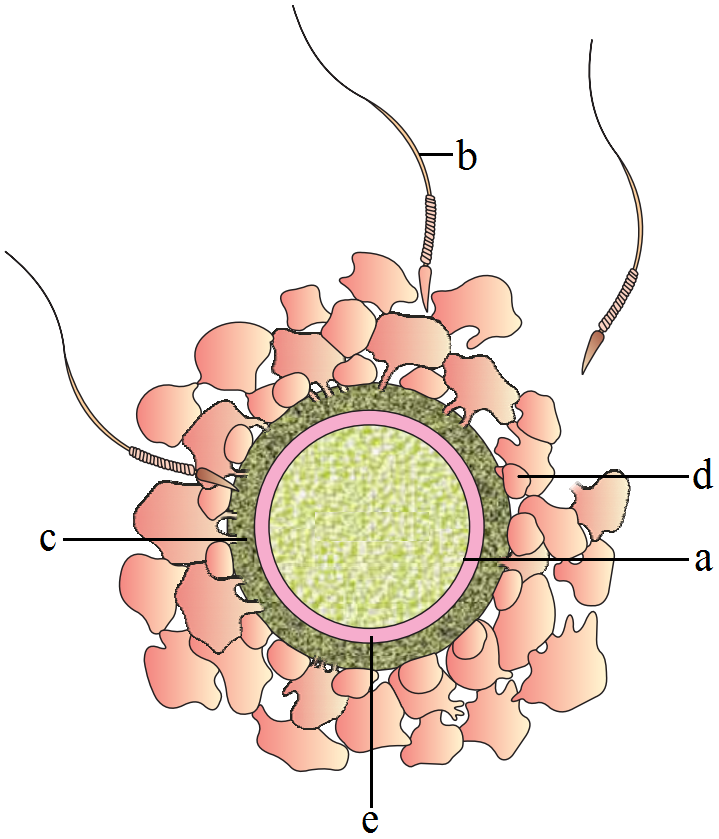
Study the illustration given and answer the questions that follow:
Explain the role of hormones in the formation and release of ‘a’.
Discuss why Drosophila has been used extensively for genetical studies.
Give an account of the methods used in sequencing the human genome.
A single base mutation in a gene may not ‘always’ result in loss or gain of function. Do you think the statement is correct? Defend your answer.
The biology teacher was explaining about restriction enzymes and came to a point explaining that these enzymes are extracted from bacteria and are called as molecular scissors. Varun got curious and asked some questions for more clarity on the concept to his teacher.
  1. From which part of microorganisms are restriction enzymes derived?
  2. Why are restriction enzymes called molecular scissors?
  3. What if some strands are needed to be cut from within. Would that lead to wastage of DNA?
  4. What values are shown by Varun?
Write the scientific name of the bacteria that causes pneumonia. What happens in this disease? What are its symptoms?
With the help of one example each, provide genetic explanation for the following observations:
$F_1-$generation resembles both the parents.
Enumerate the salient features of human genome.
Answer the following questions:
Give a schematic representation of oogenesis in human female indicating the chromosomal number at each step. Mention at what stage of female life does each phase occur.
Explain the different ways of diagnosing cancer.