Question
Explain the ecological efficiency.

Answer

In each ecosystem, organisms obtain their food and convert the food into biomass for providing energy to next trophic level.
Ecological efficiencies are the percentage ratios between energy flow at different trophic levels of a food chain.
The unit of measurement of energy is Kcal/m2 /year. At the producer level, photosynthetic efficiency and net production efficiency are important. The efficiency with which a producer uses, incident solar radiation is measured by photosynthetic efficiency.
Photosynthetic efficiency $($ Producer level $)=$$\frac{\text { Gross Primary Productivity }}{\text { Incident Total Solar Radiation }}\times 100$
$\begin{array}{l}\text { Net production efficiency }= \frac{\text { Net Primary Productivity }}{\text { Gross Primary Productivity }} \times 100\end{array}$
Assimilatory efficiency (trophic levels) $=$ $\frac{\text { Net Primary Productivity }}{\text { Food Energy Ingested }} \times 100$

Need a full question paper?

Generate a complete, print-ready paper with questions like this in minutes — across 16+ boards, with answer keys.
Start Generating Free

Similar questions

Describe a palindrome with the help of an example.
A and B are two different cloning vectors in two different bacterial colonies cultured in chromogenic substrate. Bacterial colonies with cloning vector A were colourless, whereas those with B were blue coloured. Explain by giving reasons the cause of difference in colour that appeared.
What is meant by polynucleotide? Write its components.
Sperms have a tail whereas egg does not, why?
Which type of cell division forms spermatids from the secondary spermatocytes?
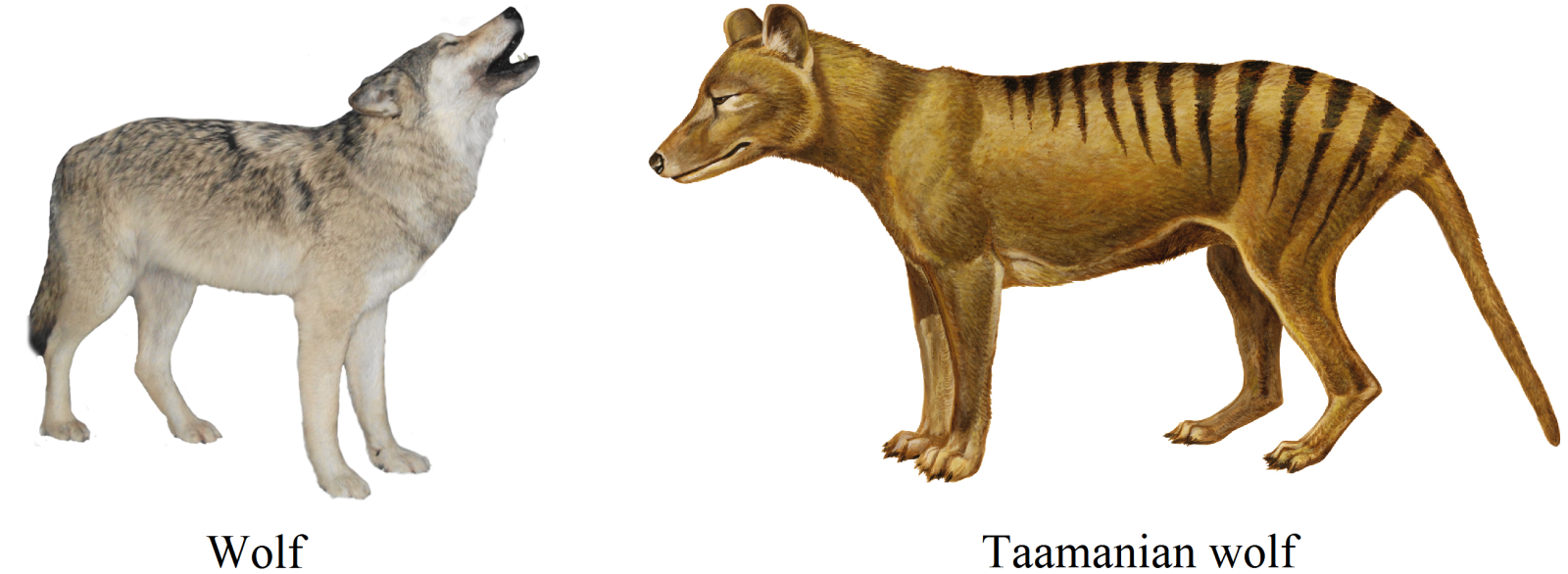
Refer to the figure given below and answer the questions that follow:

  1. Recognize and explain the process by which Tasmanian wolf evolved.
  2. Give one example of an animal that has evolved along with Tasmanian wolf.
  3. Compare and contrast the two animals shown?
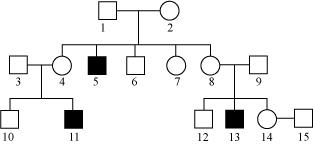
Haemophilia is a sex-linked recessive disorder of humans. The pedigree chart given below shows the inheritance of haemophilia in one family. Study the pattern of inheritance and answer the questions given.

  1. Give all the possible genotypes of the members 4; 5 and 6 in the pedigree chart.
  2. A blood test shows that the individual 14 is a carrier of haemophilia. The member numbered 15 has recently married the member numbered 14. What is the probability that their first child will be a haemophilia male?
Draw a well labelled diagram of microscopic structure of human sperms.
Write the mode of pollination in Vallisneria and water lily. Explain the mechanism of pollination in Vallisneria.
How does pollen tube enter the ovule?