Question
Explain the meaning of vaccination.

Answer

  • Vaccination is the administering of vaccine. Vaccine is the ‘antigen’, given to a person or even to animals for acquiring immunity against particular pathogens or diseases.
  • In olden days, vaccipes were prepared with the help of completely or partially killed pathogens. But this method causes some inconvenience. Some persons were allergic to such raw vaccines or they contracted the same disease through such vaccines.
  • Hence in recent times the vaccines are produced by using biotechnology. These vaccines are artificial which are synthesised in the laboratories.
  • The antigen is produced with the help of gene of the pathogen. Such vaccine becomes safe for administering.
  • These antigenic proteins are injected to people to make their immune systems strong. This process of vaccination is absolutely safe. The vaccines are more thermostable and active for a long period of time.

Need a full question paper?

Generate a complete, print-ready paper with questions like this in minutes — across 16+ boards, with answer keys.

Start Generating Free

Similar questions

A metal $X$ which is resistant to corrosion is produced by the electrolysis of its molten oxide whereas another metal $Y$ which is also resistant to corrosion is produced by the reduction of its oxide with carbon. Metal $X$ can be used in powder form in thermite welding whereas metal $Y$ is used in making cathodes of ordinary dry cells.
  1. Name the metals $X$ and $Y.$
  2. Which of the two metals is more reactive : $X$ or $Y?$
  3. Name one ore or metal $X$. Also write its chemical formula.
  4. Name one ore of metal $Y.$ Also write its chemical formula.
  5. Name one alloy of metal $X$ and one alloy of metal $Y.$
Write short note: Disaster Management Authority.
Observe the figure and answer the following questions
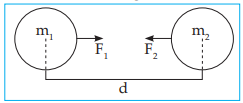
Image

Question
(i) What are the masses of the objects shown?
(ii) What is the distance between their centres?
(iii) Write gravitational force between them.
(iv) Why gravitation constant is called universal constant?
(v) What will happen to gravitational force if mass of one of the objects is doubled?
(vi) What is the value of universal constant in SI?
Write a short note.
Moon missions
The radius of planet $A$ is half the radius of planet $B$. If the mass of $A$ is $M_A,$ what must be the mass of $B$ so that the value of g on B is half that of its value on $A?$
Explain with diagrams what is meant by the “series combination” and “parallel combination” of resistances. In which case the resultant resistance is:
  1. Less, and
  2. More, than either of the individual resistances?
Gas A, which is the major cause of global warming, combines with hydrogen oxide $B$ in nature in the presence of an environmental factor $C$ and a green material $D$ to form a six carbon organic compounds $E$ and a gas $F$. The gas $F$ is necessary for breathing.
  1. What is gas $A?$
  2. What is the common name of $B?$
  3. What do you think could be $C?$
  4. What is material $D?$ Where is it found$?$
  5. Name the organic compound $E.$
  6. What is gas $F? $ Name the natural process during which it is released.
State one use each of the following metals:
Copper, Aluminium, Iron, Silver, Gold, Mercury
At which trophic level a person is feeding when he is eating:
  • Roasted chicken.
  • Bread.
  • Eggs.
  • Apple.
  • Fish.
Consider the following organic compounds:
$CH_3OH, C_2H_5OH, CH_3COCH_3, CH_3COOH, C_2H_5COOH, C_4H_9COOC_2H_5, CH_4, C_2H_6, CH_3CHO, HCHO$
Out of these compounds:
  1. Which compound is most likely to be sweet-smelling?
  2. Which compound on treatment with conc. $H_2SO_4 $ at $170^\circ C$ forms an alkene?
  3. Which compound on repeated chlorination forms chloroform?
  4. Which compound is added to alcohol to denature it?
  5. Which compound is a constituent of vinegar?
  6. Which compound is used to sterilise wounds and syringes?