Question
Explain the methods for making host cell competent to insert the r DNA.

Answer

→ Since DNA is a hydrophilic molecule, it cannot pass through cell membranes.
→ In order to force bacteria to take up the plasmid, the bacterial cells must first be made 'competent' to take up DNA.
Micro-injection :
→ In a method known as micro-injection, recombinant DNA is directly injected into the nucleus of an animal cell.
Biolistics/ Particle bombardment :
→ In another method, suitable for plants, cells are bombarded with high velocity micro- particles of gold or tungsten coated with DNA in a method known as biolistics or gene gun.
Conformational change in the cell wall :
→ This is done by treating them with a specific concentration of a divalent cation, such as calcium, which increases the efficiency with which DNA the bacterium through pores in its cell wall.
→ Recombinant DNA can then be forced into such cells by incubating the cells with recombinant DNA on ice, followed by placing them briefly at 42°C (heat shock), and then putting them back on ice.
→ This enables the bacteria to take up the recombinant DNA.

Need a full question paper?

Generate a complete, print-ready paper with questions like this in minutes — across 16+ boards, with answer keys.
Start Generating Free

Similar questions

How is a transgenic tobacco plant protected against Meloidogyne incognita? Explain the procedure.
Polymerase chain reaction:
  1. Is a method of synthesising human protein from human DNA
  2. Uses restriction enzymes
  3. Can produce billions of copies of a DNA fragment
  4. Takes place naturally in bacteria
Write a short note on endosperm development.
Explain packaging of DNA Helix###Explain the formation of nucleosome in Eukaryotic cell
Read the following and answer any four questions from (i) to (v) given below:

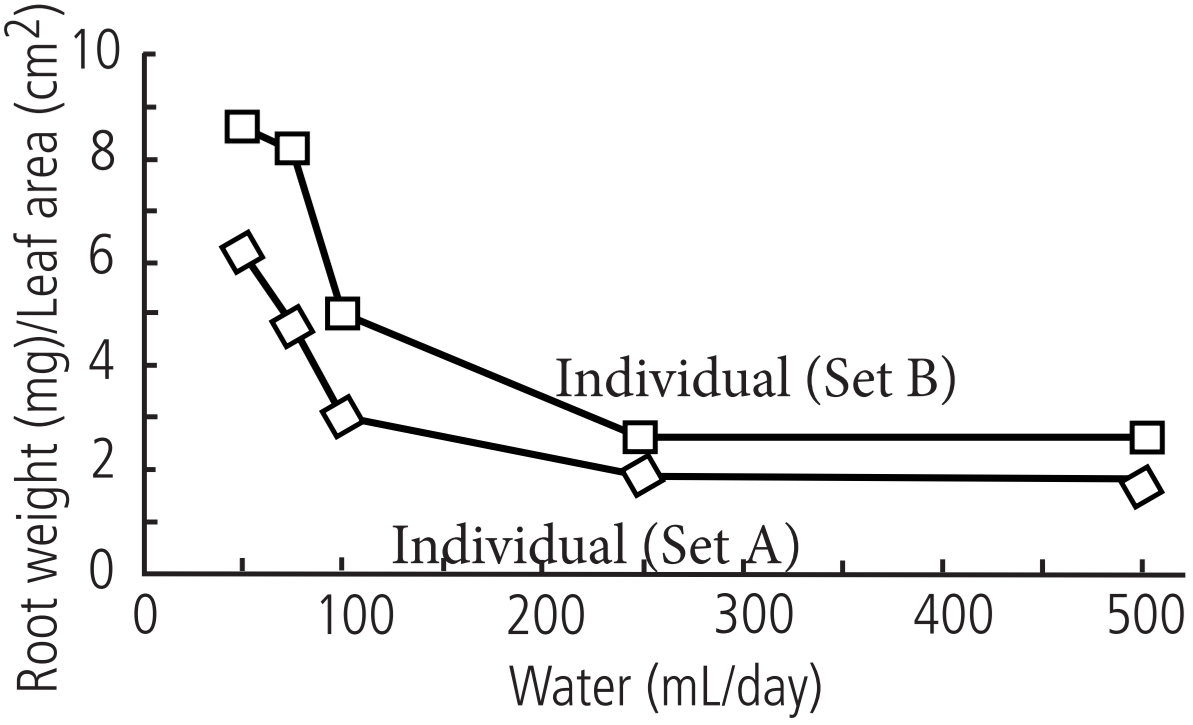
Ananya is a biologist, her research guide assigned project, i.e., to determine the effect ofin tra-specific competition on the growth of sapling of Eucalyptus. For this, she designed an experiment in which two sets of pots were used. ln the first set (set A) only I sapling was planted per pot and in the other set (set B) 16 saplings were planted per pot. To check for the effect of intra-specific competition on allocation of resources, a decreasing amount of water was added to each set. The results have been graphically indicated. Which of the following conclusions can indicated as follows:

  1. Which of the following statements can be concluded from the given study?
  1. More resources are allocated to the root during low water conditions.
  2. Competition for water among individuals of a population causes more root growth as compared to individuals who are growing alone.
  3. Lesser leaves are formed under low water conditions.
  4. Root growth is higher in individual grown singly as compared to individuals in populations.
  1. Which of the following associations is an example of competitions?
  1. Cuscuta and hedge plant.
  2. Balanus and Cathamalus.
  3. Cactus and moth.
  4. Orchid and mango.
  1. If '+' sign is assigned to beneficial interaction, '-' sign to detrimental and O sign to neutral interaction, then the population interaction of competition refers to:
  1. +, +
  2. -, -
  3. +, -
  4. +, 0
  1. lntraspecific competition is more severe due to:
  1. similar needs.
  2. similar adaptations.
  3. common resources.
  4. all of these.
  1. Assertion: Two members of a competing species may co-exist.

Reason: Different individuals of a species have different resource requirements.

  1. Both assertion and reason are true and reason is the correct explanation of assertion.
  2. Both assertion and reason are true but reason is not the correct explanation of assertion.
  3. Assertion is true but reason is false.
  4. Both assertion and reason are false.
The bacterium Bacillus thuringiensis is widely used in contemporary biology as:
  1. Agent for production of dairy products.
  2. Source of industrial enzyme.
  3. Indicator of water pollution.
  4. Insecticide.
Read the following and answer any four questions front (i) to (v) given below:
Gene regulation is the mechanism of switching off and switching on of the genes depending upon the requirement of cells and the state of development. Gene regulation is of two types : negative and positive. In negative generegulation the genes continue expressing their effect till their activity is suppressed. Positive gene regulation is the one in which the genes remain non-expressed unless and until they are induced to do it. Operon model is a co-ordinated group of genes such as structural gene, operator gene, promoter gene, regulator gene which function together and regulate a metabolic pathway as a unit, e.g., lac operon, trp operon, ara operon, etc.
  1. Regulation of gene expression occurs at the level of.
  1. Transcription
  2. Processing/splicing
  3. Translation
  4. All of these.
  1. Inducible operon system usually occurs in A pathways. Nutrient molecules serve as B to stimulate production of the enzymes necessary for their breakdown. Genes for inducible operon are usually switched C and the repressor is synthesised in an D form.
S.no
A
B
C
D
(a)
anabolic
corepressor
on
inactive
(b)
anabolic
inducer
off
active
(c)
catabolic
inducer
off
active
(d)
catabolic
corepressor
on
inactive
  1. An mRNA molecule transcribed from the lac operon contains nucleotide sequences complementary to.
  1. Structural genes coding for the enzymes.
  2. the operator region
  3. the promotor region
  4. the repressor gene.
  1. Which statement correctly describes the control of transcription of the genes involved in the breakdown of lactose in Estherichia coli?
  1. A repressor protein binds to the operator and the genes are switched on.
  2. A repressor protein binds to the operator and the genes are switched off.
  3. A transcription factor binds to the promoter and the genes are switched on.
  4. A transcription factor binds to the promoter and the genes are switched off.
  1. Function of catabolic activator protein in lac operon is.
  1. To form mRNA
  2. Help to bind RNA polymerase
  3. Code for repressor
  4. To activates lac gene when glucose is absent.
Explain: separation and isolation of DNA fragments.###How will you make separation and isolation of DNA fragments by using gel electrophoresis?
Read the following and answer any four questions from (i) to (v) given below:

Over population causes number of family problems. Strategies like birth control methods help to control population explosion. Natural methods of birth control do not involve medications or devices to prevent pregnancy, but rather rely on behavioural practices and/ or making observations about menstrual cycle.

  1. Which method helps in contraception by temporary absence of sex?
  1. Coitus interruptus.
  2. Withdrawal method.
  3. Rhythm method.
  4. Lactational amenorrhea method.
  1. Assertion: The effectiveness of coitus interruptus method is limited.

Reason: Some sperms may pass into vagina before ejaculation.

  1. Both assertion and reason are true, and reason is the correct explanation of assertion.
  2. Both assertion and reason are true, but reason is not the correct explanation of assertion.
  3. Assertion is true, but reason is false.
  4. Both assertion and reason are false.
  1. Why is lactational amenorrhea effective for about 4-5 months after parturition?
  1. Ovulation occurs on about the 14th day of menstruation.
  2. Ovulation does not occur during intense lactation.
  3. This method inhibits mobility of sperms.
  4. Both (b) and (c).
  1. Which fact is not the basis of periodic absence method of birth control?
  1. Ovum remains alive for about 1-2 days.
  2. Ovulation occurs on about 14th day of menstruation.
  3. Sperms survive for about 3 days.
  4. Alteration in uterine endometrium.
  1. On which days of menstrual cycle should coitus be avoided to prevent fertilisation?
  1. 10-17
  2. 6-13
  3. 1-5
  4. 15-28
What is chromosomal disorder? Explain any two aneuploidy with characters in humans.###Mention any two autosomal genetic disorders with their symptoms.