Question
Explain the need for drawing up the special purpose books.

Answer

Special purpose books are beneficial in:
i. Accuracy: As each journal is managed by a different accountant having specific expertise, it improves accuracy and reduces defects.
ii. Efficiency: Increases efficiency by dividing the workload.
iii. Concise Descriptions: The journal describes the purpose of recording. For example, a record in the purchase journal will be understood by default that it is a purchase-related transaction.
iv. Minimal Posting: Reduces the volume of posting as totals can be done periodically.
v. Fraud Prevention: As the recording of different journals are assigned to a different individual, fraud prevention is prevented.
vi. Faster process: As multiple books are handled by multiple accountants, the recording work moves faster.

Need a full question paper?

Generate a complete, print-ready paper with questions like this in minutes — across 16+ boards, with answer keys.
Start Generating Free

Similar questions

From the following items prepare a Bank Reconciliation Statement on 31st May 2015:
  1. Bank balance as per Cash Book on 31st May 2015 ₹ 17,600.
  2. Cash and cheques totalling ₹ 36,000 were sent to bank during May but one cheque of ₹ 11,800 was shown in the Pass Book on 2nd June.
  3. As per instructions bankers have directly collected ₹ 4,100 from a customer but there is no mention of it in the Cash Book.
  4. Three cheques for ₹ 10,000, ₹ 12,000 and ₹ 4,800 respectively were drawn on 27th May but the cheque for ₹ 4,800 was encashed on 1st June.
  5. On 31st May bankers had debited ₹ 45 as bank charges but had intimated it on 3rd June.
  6. ₹ 16,200 were withdrawn from bank on 25th May but there is no entry for it in the Cash Book.
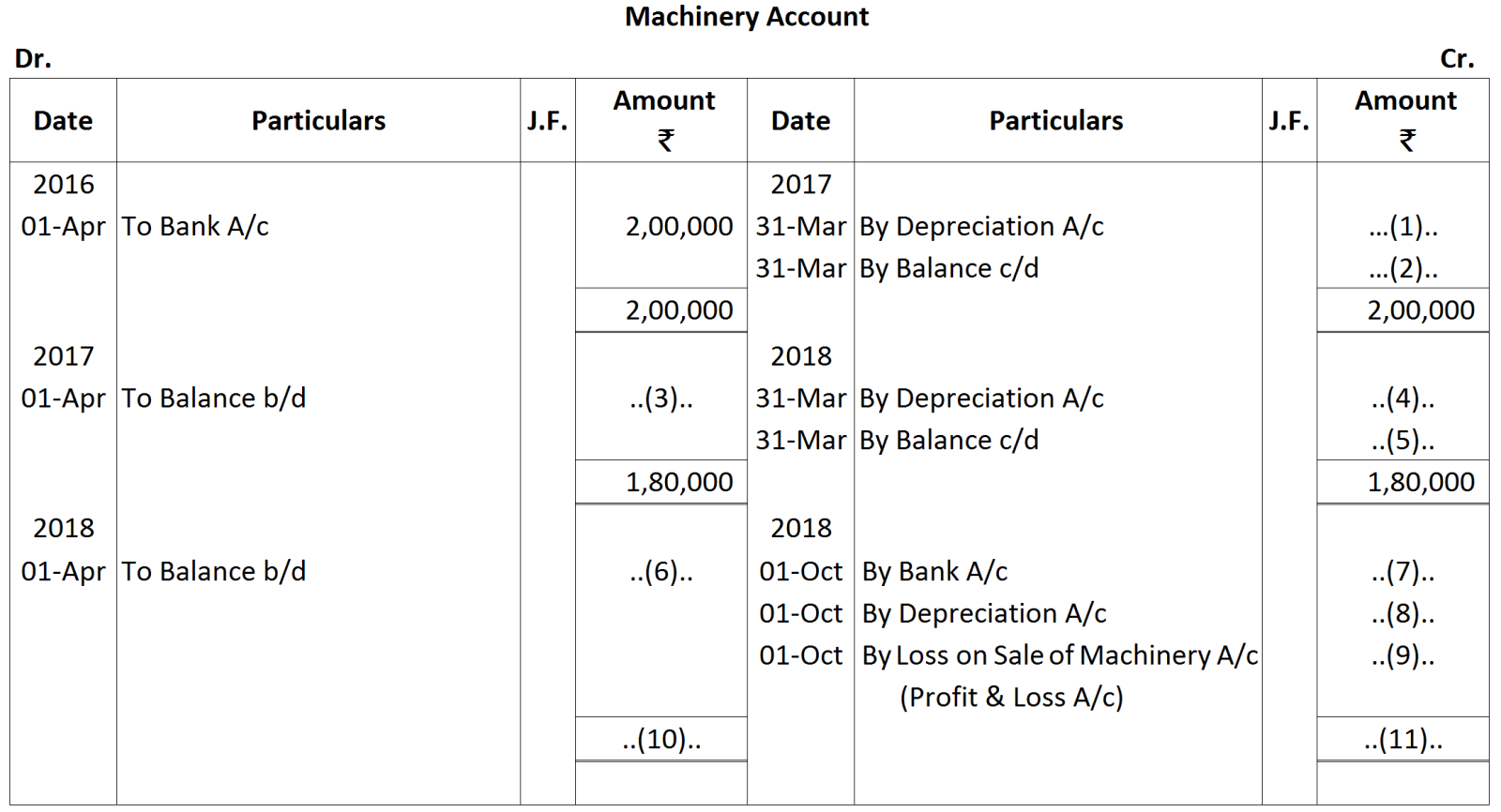
In the following Machinery Account, determine the missing values, if depreciation is to be charged @ 10% p.a. on the Original Cost. On 1st October, 2018, the machinery was sold for ₹ 1,20,000.
Enumerate the steps to ascertain the correct cash book balance.
Rectify the following errors:
  1. Credit sales to Mridula ₹ 5,000 were recorded as ₹ 5,400.
  2. Credit purchases from Nayna ₹ 8,000 were recorded as ₹ 8,800.
  3. Goods returned to Priya ₹ 12,000 were recorded as ₹ 12,200.
  4. Goods returned from Rashi ₹ 10,000 were recorded as ₹ 11,000.
On which side of the Trial Balance, the following Ledger balances will appear:-
  1. Purchases Return
  2. Furniture
  3. Bank Loan
  4. Discount allowed
  5. Capital
  6. Drawings
  7. Return Inwards
  8. Bills Receivable
State four advantages of Accounting Standards.
On 31st March 2015 your bank Pass Book showed a balance of ₹ 6,000 to your credit. Before that date you had issued cheques amounting to ₹ 1,500 of which cheques worth ₹ 900 only have been presented. You also deposited cheques worth ₹ 2,000 of which cheque of ₹ 800 paid by you into bank on 29th March is not yet credited in Pass Book. You had also received a cheque for ₹ 160 which although entered by you in the bank column of the Cash Book, was omitted to be paid into the bank. On 31st March a cheque of ₹ 250 received by you was paid into the bank but the same was omitted to be entered in the cash book. There was a credit of ₹ 85 for interest on current account and debit of ₹ 10 for bank charges. Draw up a Reconciliation Statement showing adjustment between your Cash Book and pass book.
Rectify the following errors assuming that there is no Suspense Account:
  1. The Returns Inward Book has been overcasted by ₹ 200.
  2. Purchases Book carried forward ₹ 75 less.
  3. Sales Book carried forward ₹ 41 less on Page 10 and ₹ 43 more on Page 12.
  4. Goods sold to Gautam were posted as ₹ 215 instead of ₹ 251.
Prepare the Bank Reconciliation Statement from the following particulars for the period ending 31st December, 2012.
  1. Overdraft as per Pass Book on 31-12-2012 ₹ 7,600.
  2. Cheques deposited but not collected by the bank ₹ 8,560.
  3. Incidental charges not recorded in Cash Book ₹ 80.
  4. Cheques were issued for ₹ 7,800 but only ₹ 4,400 were presented for payment.
  5. Insurance premium paid by bank not recorded in the Cash Book ₹ 4,200.
  6. On 31st December, 2012 cash was deposited in bank ₹ 385 but the cashier debited the bank column with ₹ 485 by mistake.
B owed ₹ 20,400 to A. On 15th January, 2019, he accepted a bill for ₹ 20,000 for two months drawn by A in full settlement of his debt. On 18th January, 2019, A endorsed the bill to his creditor C. The bill was duly met on the date of maturity. Pass Journal entries in the books of A, B and C.