Question
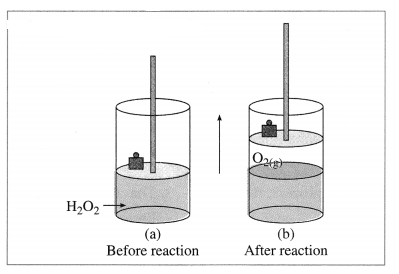
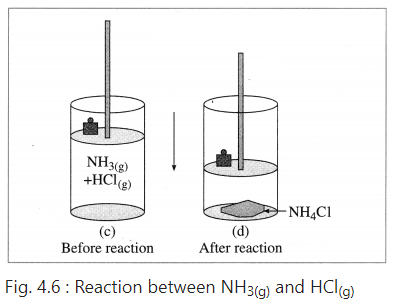
Explain the process of (A) expansion and (B) compression with suitable examples.

Need a full question paper?

Generate a complete, print-ready paper with questions like this in minutes — across 16+ boards, with answer keys.
Start Generating Free

Similar questions

Give one example of the reaction where order and molecularity are the same.
Mention any two factors that influence the rate of chemical reaction.
If for the reaction A → products, a straight line graph passing through origin is obtained between the rate of reaction against concentration of A, what would be the order of reaction? Why?
How will you represent first-order reactions graphically.
Find the order of following reactions whose rate laws are expressed as follows. $C_A$ and $C_B$ are the concentrations of reactants $A$ and $B$ respectively :

(1) $-\frac{d c}{d t}=k C _A^0$
(2) $-\frac{d c}{d t}=k C _A^{3 / 2}$
(3) $-\frac{d c}{d t}=k C _A^{1 / 2} \times C _B^2$
(4) $-\frac{d c}{d t}=k C _A^{5 / 2} \times C _B^0$
(5) $-\frac{d c}{d t}=k C _A^{1 / 3} \times C _B^{2 / 3}$
Explain the fact that in alkyl aryl ethers, the alkoxy group is ring activating and ortho/para directing towards electrophilic aromatic substitution.
Write the names and electronic configuration of group 17 elements.
Explain Friedel$-$Craft’s acylation reaction.
Describe different types of reversible electrodes with examples.
Explain dehydration of alcohols.
###
What is dehydration of alcohols? Give the chemical reactions showing dehydration of primary $\left(1^{\circ}\right)$, secondary $\left(2^{\circ}\right)$ and tertiary $\left(3^{\circ}\right)$ alcohols.
Derive the relationship between density of substance, its molar mass, and the unit cell edge length. Explain how you will calculate the number of particles, and a number of unit cells in x g of metal.
Write the names and structural formulae of oxoacids of chlorine.