Budding It is a mode of asexual reproduction in which one or more unequal and small projections called buds are produced that remain attached initially to the parent cell, but eventually get separated and mature into new organisms (cells), e.g. yeast, Hydra, etc.
Depending on the place where the bud arises, budding can be of two types:
- External budding (Hydra and yeast): In Hydra, (multicellular organism) regenerative cells are used for reproduction during budding. A bud develops as an outgrowth due to the repeated cell divisions at one specific site. These buds develop into tiny individuals which on getting fully matured, detach themselves from the parent body becoming new independent individuals.
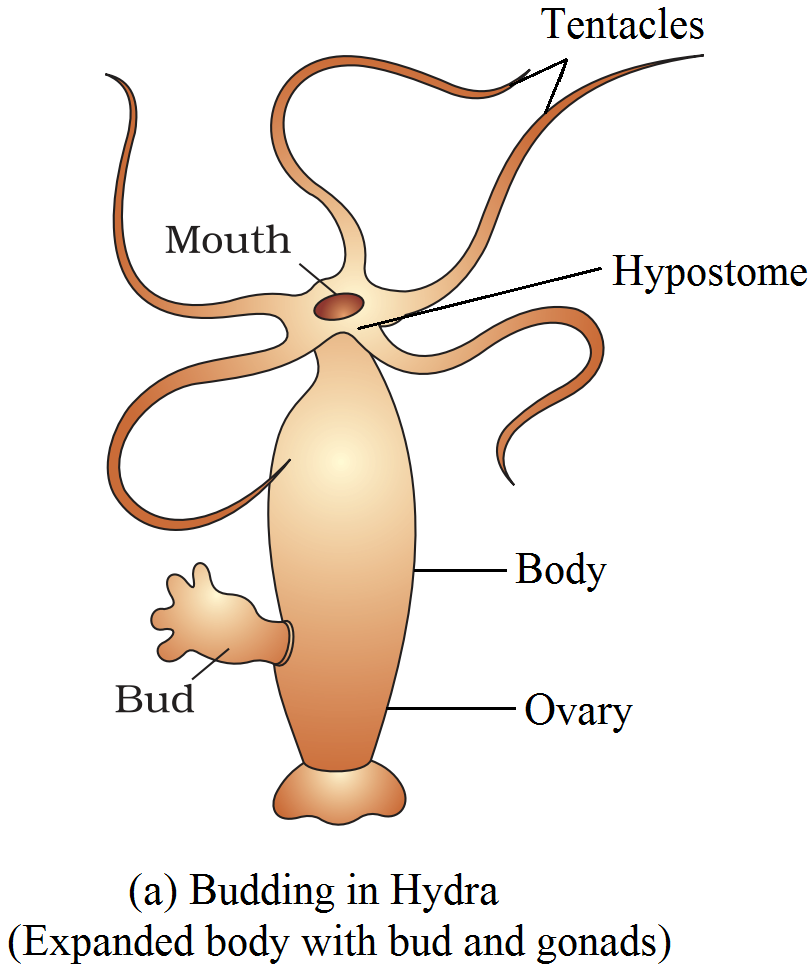
The same process occurs in yeast, where nucleus divides by the process of budding into a new bud which gets detached from parent yeast.
- Internal budding (Gemmule formation): A mass of cells enclosed within a common opaque envelop, rich in food, which germinates into a new plant, is called a gemmule.
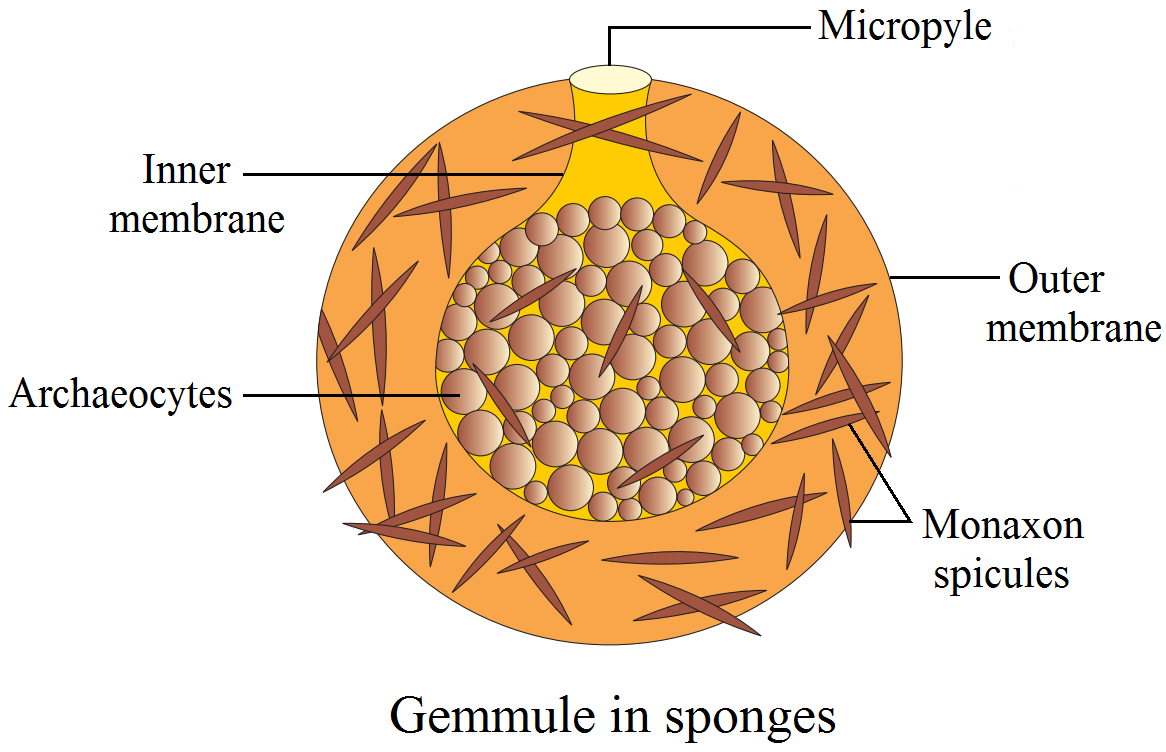
Gemmule formation is common in freshwater sponges (e.g. Spongilla) and a few marine sponges. Each gemmule has a group of cells called archaeocytes surrounded by the protective covering. During adverse environmental conditions, a mass of archaeocytes comes out via micropyle (a minute pore) that grows into a colony.