Question
Explain the process of preparing income statement and balance sheet.

Answer

The process of preparing Income Statement (now Statement of Profit and Loss) as per Revised Schedule VI is explained below in a chronological order.
  1. Prepare a Trial Balance on the basis of the balances of various accounts in the ledger.
  2. Record Revenue from Operations i.e. Sales less Sales Return.
  3. Add Other Incomes to Revenue from Operations (such as profit on sale of assets, cash discount received etc.) to ascertain Total Revenue.
  4. Deduct all the expenses incurred by the company from Total Revenue (such as cost of material consumed, finance cost, depreciation and amortisation etc.) to ascertain Profit before Tax.
  5. Deduct Tax paid by the company from Profit before Tax to ascertain the Profit or loss for the period.
The process of preparing Balance Sheet as per the Revised Schedule VI is explained below in a chronological order. As per the this schedule, the Balance Sheet is prepared in vertical format and divided into two parts i.e. Equity and Liabilities and, Assets.
  1. Under the head Equity and Liabilities: Shareholders' Funds, Share Application Money Pending Allotment, Non-Current Liabilities and Current Liabilities are recorded.
  2. After recording Equity and Liabilities, Assets are recorded. Under this head all the Non-Current Assets (such as Tangible and Intangible Assets, Capital Work-in-Progress etc.) and Current Assets (such as Inventories, Trade Receivables, and Current Investment etc.) are recorded.
At the end, total of two heads is ascertained, which must be equal.

Need a full question paper?

Generate a complete, print-ready paper with questions like this in minutes — across 16+ boards, with answer keys.
Start Generating Free

Similar questions

Calculate Inventory Turnover Ratio from the following:
From the following information, calculate trade receivables turnover ratio and average collection period:
X Ltd. forfeited 900 Equity Shares of ₹ 100 each for the non-payment of allotment money of ₹ 30 per share and the first call of ₹ 20 per share. The second and final call of ₹ 25 per share has not been made. The forfeited shares were reissued for ₹ 90 per share, ₹ 75 paid-up. Journalise the above.
What is Comparative Statement of Profit & Loss? How is it prepared?
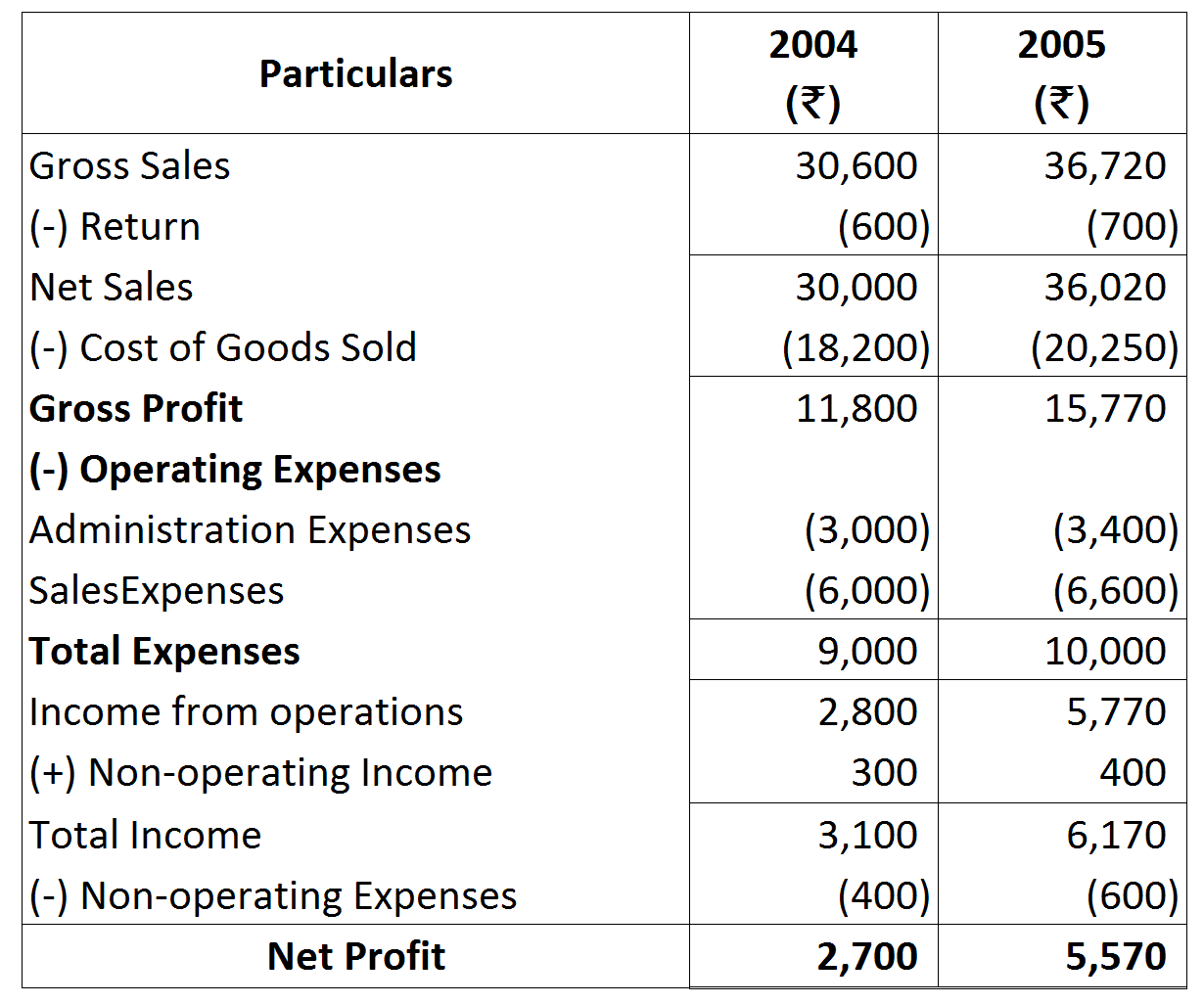
Convert the following income statement into Common Size Statement and interpret the changes in 2005 in the light of the conditions in 2004.
A Limited Company forfeited 100 Equity Shares of the face value of ₹ 10 each, ₹ 6 per share called-up, for non-payment of first call of ₹ 2 per share. The forfeited shares were subsequently reissued as fully paid-up @ ₹ 7 each.
Give necessary entries in the company's journal.
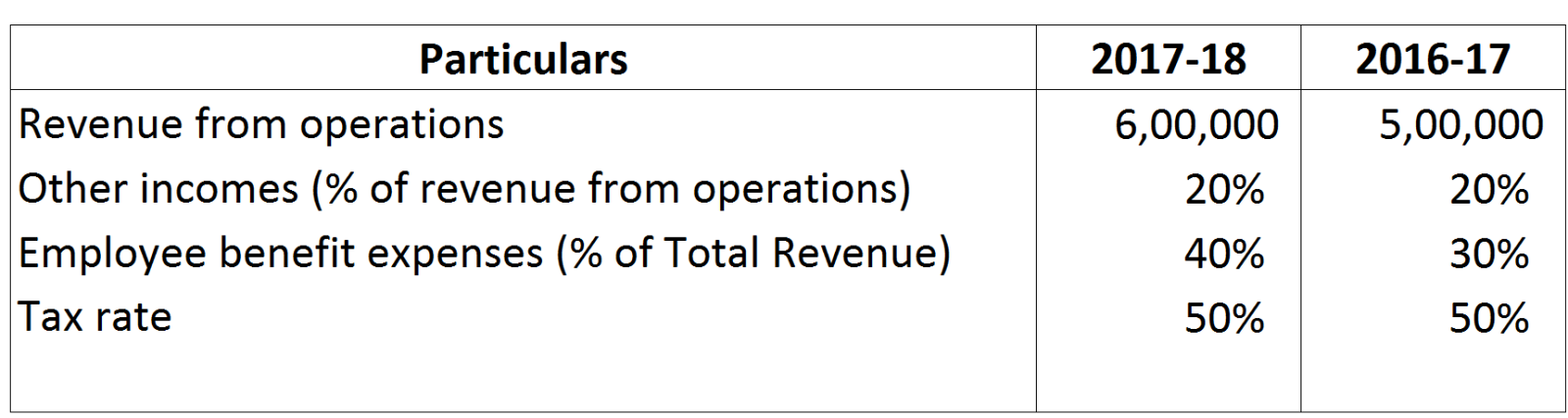
From the following information extracted from the Statement of Profit and Loss for the years ended $31^{st}$ March, $2017$ and $2018$, prepare a Comparative Statement of Profit & Loss.
Calculate Gross Profit Ratio from the following data:
Average Inventory ₹ 3,20,000; Inventory Turnover Ratio 8 Times; Average Trade Receivables ₹ 4,00,000; Trade Receivables Turnover Ratio 6 Times; Cash Sales 25% of Net Sales.
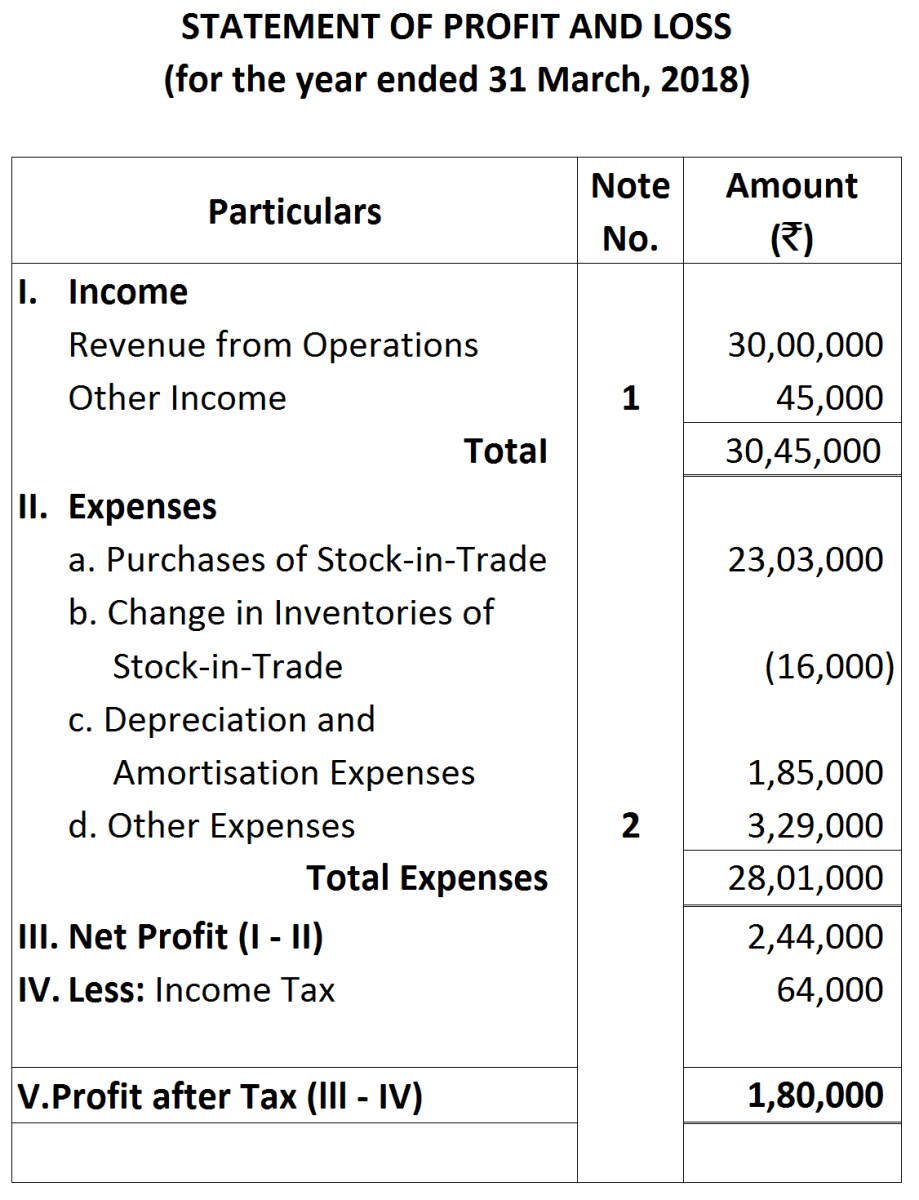
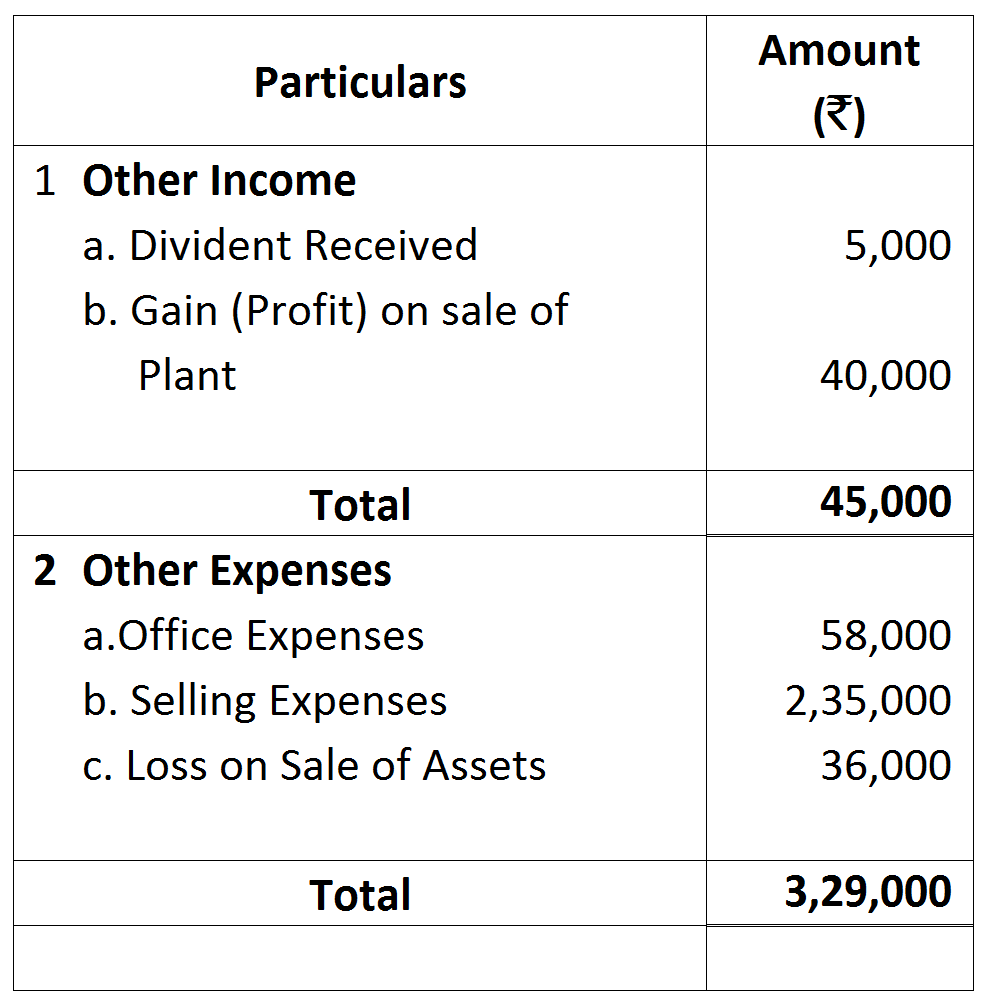
Following information is related to ABC Ltd.: Notes to Account:
Other Informatiom:
Balance as on 31st march, 2018 (₹)
Balance as on 31st march, 2017 (₹)
Trade paybles
2,78,000
2,50,000
Trade receivables
4,52,000
4,15,000
inventories
3,00,000
2,84,000
Office expenses Outstanding.
-
5,000
Selling expenses Outstanding.
25,000
22,000
A Ltd. issued 2,000; 9% Debentures of ₹100 each on the following terms:
₹ 20 on application; ₹ 20 on allotment; ₹ 30 on first call; ₹ 30 on final call.
The public applied for 2,400 debentures. Applications for 1,800 debentures were accepted in full. Applications for 400 debentures were allotted 200 debentures and applications for 200 debentures were rejected. Pass necessary Journal entries.