Question
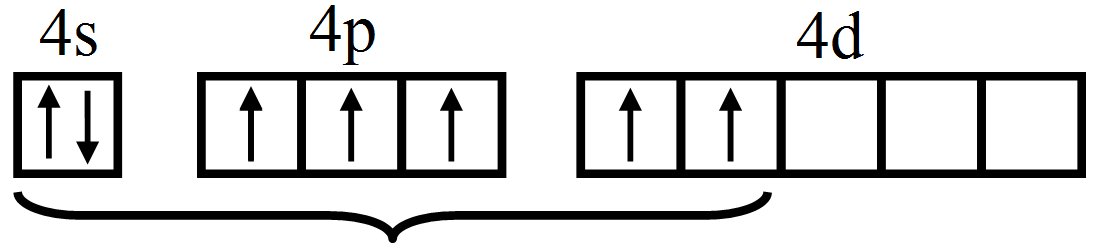
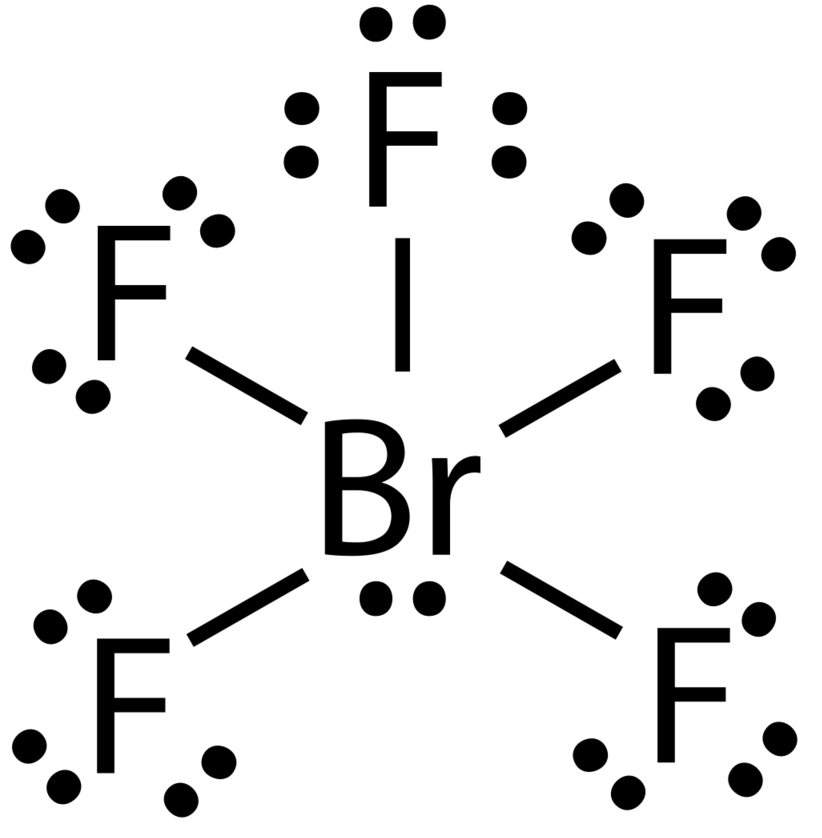
Explain the shape of BrF5.

Need a full question paper?

Generate a complete, print-ready paper with questions like this in minutes — across 16+ boards, with answer keys.

Start Generating Free

Similar questions

Describe the change in hybridisation (if any) of the Al atom in the following reaction.
$
AlCl_3+Cl^{-} \rightarrow AlCl_4^{-}
$
1. Two litres of an ideal gas at a pressure of 10 atm expands isothermally at $25^{\circ} C$ into a vacuum until itstotal volume is 10 litres. How much heat is absorbed and how much work is done in the expansion against a constant external pressure of 1 atm?
2. What is free energy in terms of thermodynamics?
3. Define a system.
  1. What is the oxidation number of 'S'in H2SO5
  2. Balance the following equation:

$\text{Zn}\text{(s)}+\text{NO}_3^-\text{(aq)}\xrightarrow{ \ \ \ \ \ \ \ \ }\text{Zn}^{2+}\text{(aq)}+\text{NH}_4^+\text{(aq)}+\text{H}^+$ (Acidic medium)

100mL of a liquid is contained in awn insulated container at a pressure of 1bar. The pressure is steeply increased to 100bar. The volume of the liquid is decreased by 1mL at this constant pressure. Find $\Delta\text{H}$ and $\Delta\text{U}.$
A vessel contains 1.6g of dioxygen at STP (273.15K, 1 atm pressure). The gas is now transferred to another vessel at constant temperature, where pressure becomes half of the original pressure. Calculate
  1. Volume of the new vessel.
  2. Number of molecules of dioxygen.
Emission transitions in the Paschen series end at orbit $n =3$ and start from orbit n and can be represeted as $v =$ $3.29 \times 10^{15}(Hz)\left[1 / 3^2-1 / n ^2\right]$ Calculate the value of n if the transition is observed at 1285 nm . Find the region of the spectrum.
Calculate the percentage of copper in a sample of CuCl2.
(Atomic mass of Cu = 63.5u, Cl = 35.5u)
Balance the following equations by the oxidation number method.
$\text{Fe}^{2+}+\text{H}^++\text{Cr}_2\text{O}^{2-}_7\xrightarrow{ \ \ \ \ \ \ \ \ \ }\text{Cr}^{3+}+\text{Fe}^{3+}+\text{H}_2 \text{O}$
State the law of thermodynamics that was first formulated by Nernst in 1906. What is the utility of this law? The equilibrium constant for the reaction $\text{A}\rightleftharpoons\text{B}$ is 1.8 × 10-7 at 298K. Calculate the value of $\Delta\text{G}^\circ$ for the reaction (R = 8.314JK-1mol-1). Predict the feasibility of the reaction under standard states.
Choose the correct answer.

$\Delta\text{U}^\ominus$of combustion of methane is – X kJ mol–1. The value of $\Delta\text{H}^\ominus$ is:

  1. $=\Delta\text{U}^\ominus$

  2. $>\Delta\text{U}^\ominus$

  3. $<\Delta\text{U}^\ominus$

  4. $=0$